Pizza was delivered by jetpack in Britain

Britain witnessed an unusual food delivery in June 2023. At the Glastonbury Festival, a Domino’s courier flew across the site in a Gravity Industries jet suit while carrying pizzas for hungry festival-goers.
The stunt was more than a striking advertisement. It showed how powerful flight technology might move food across difficult ground. It also raised a practical question: could jetpack delivery ever become part of an everyday delivery service?
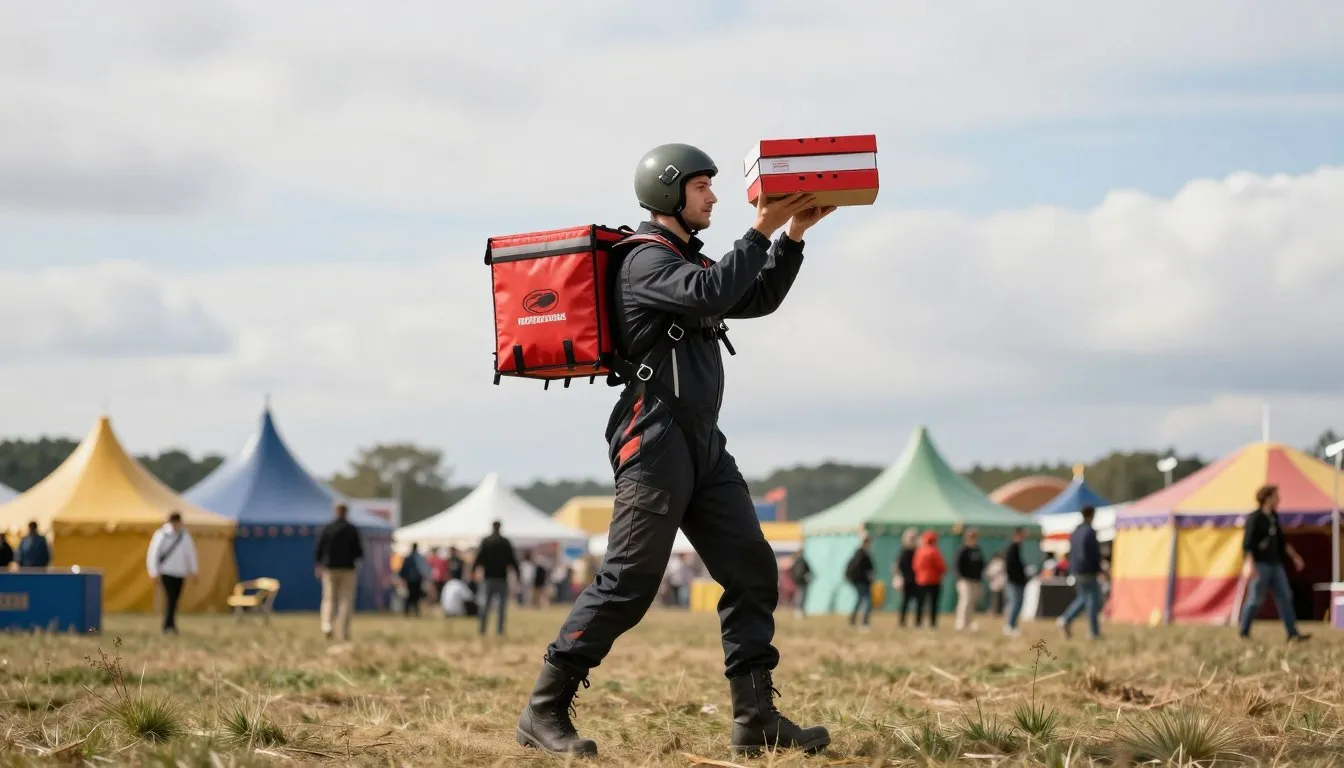
The Glastonbury demonstration
The flight took place at Glastonbury Festival, one of Britain’s best-known music events. The delivery was designed as a tribute to Elton John’s song Rocket Man, which matched the airborne theme of the event and the performer’s appearance that year.
A Domino’s courier used a Gravity Industries jet suit to transport pizza to people at the festival. The moment was filmed and shared online, turning a short flight into a widely discussed technology story.
The demonstration did not show a full commercial network. It was a controlled display that connected food, music and engineering. The pizzas were carried in a box, rather than loaded into a large aircraft or an automated delivery drone.
“The jet suit allows us to deliver pizzas in a way that is fast, exciting and completely different from a normal delivery.” Sam Wilson, Domino’s representative, as reported in coverage of the demonstration
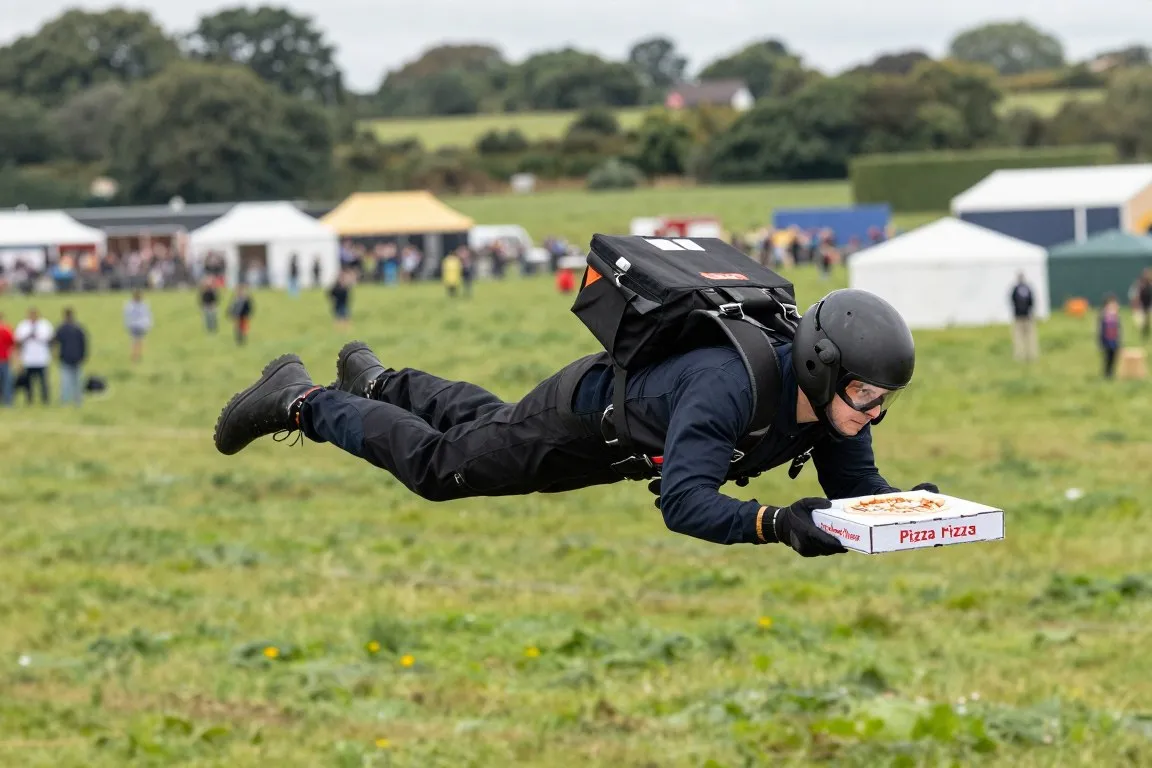
Technology behind the flight
The Gravity Industries suit used five gas-turbine engines. Together, they produced about 1,050 horsepower and up to 144 kilograms of thrust. These figures explain how the suit can lift a pilot and a small payload from the ground.
Reported performance figures included a top speed of around 80 kilometres per hour, a possible maximum altitude of 3.6 kilometres and a range of up to 5 kilometres. Flight time was limited to about four minutes.
Those numbers sound impressive, yet they describe a short and demanding flight. A pilot must control thrust, body position and direction at the same time. The suit also creates intense noise, heat and exhaust, which makes busy public spaces difficult to manage.
- Five gas-turbine engines supplied the lifting power.
- The reported thrust reached up to 144 kilograms.
- The top speed was about 80 kilometres per hour.
- The possible range was up to 5 kilometres.
- The flight time lasted about four minutes.
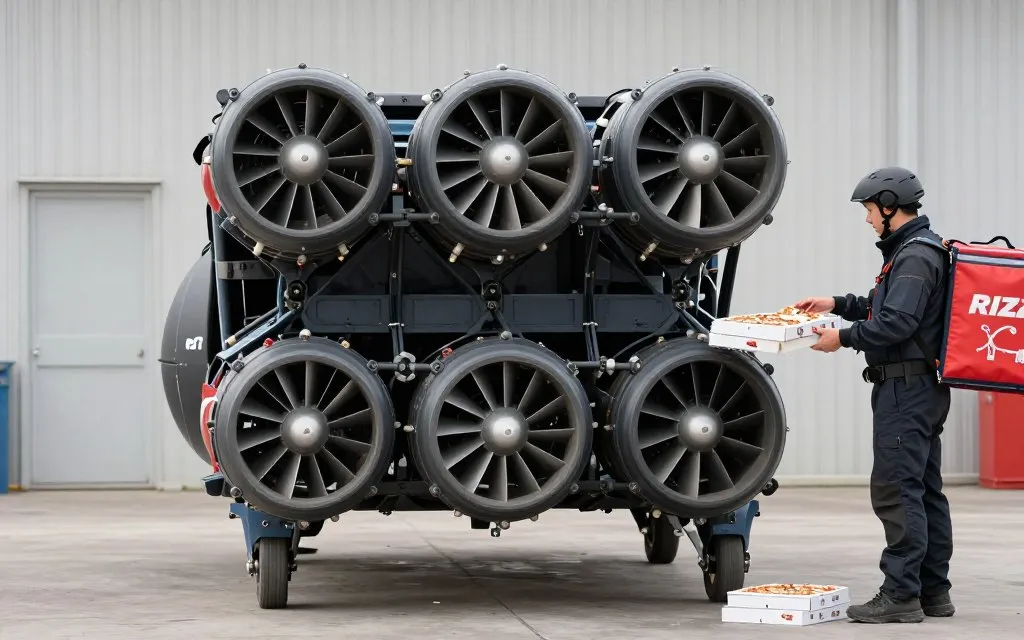
For this reason, the technology is better suited to demonstrations, rescue research or specialist access than routine food transport at present. The short flight time would also require careful planning between the restaurant, launch point and customer.
Jetpack and standard delivery compared
Conventional pizza delivery remains far more practical for most customers. Cars, motorbikes and bicycles can carry several orders, stop safely and work for much longer than four minutes. They can also use existing roads and delivery systems.
A jetpack could offer an advantage in places where roads are blocked or absent. A festival field, remote work site or emergency area might benefit from a direct route through the air. Even there, safety rules, weather and the need for a trained pilot would affect the service.
| Factor | Jet suit delivery | Conventional delivery |
|---|---|---|
| Travel range | Reported range up to 5 kilometres | Longer routes using roads and local networks |
| Flight or travel time | About four minutes of flight time | Suitable for extended delivery shifts |
| Payload | A small pizza box carried by one pilot | Several pizzas and drinks in one vehicle |
| Operating needs | Trained pilot, launch area and strict safety control | Road access, vehicle and standard staff training |
| Best current use | Public demonstration or specialist access | Everyday customer orders |
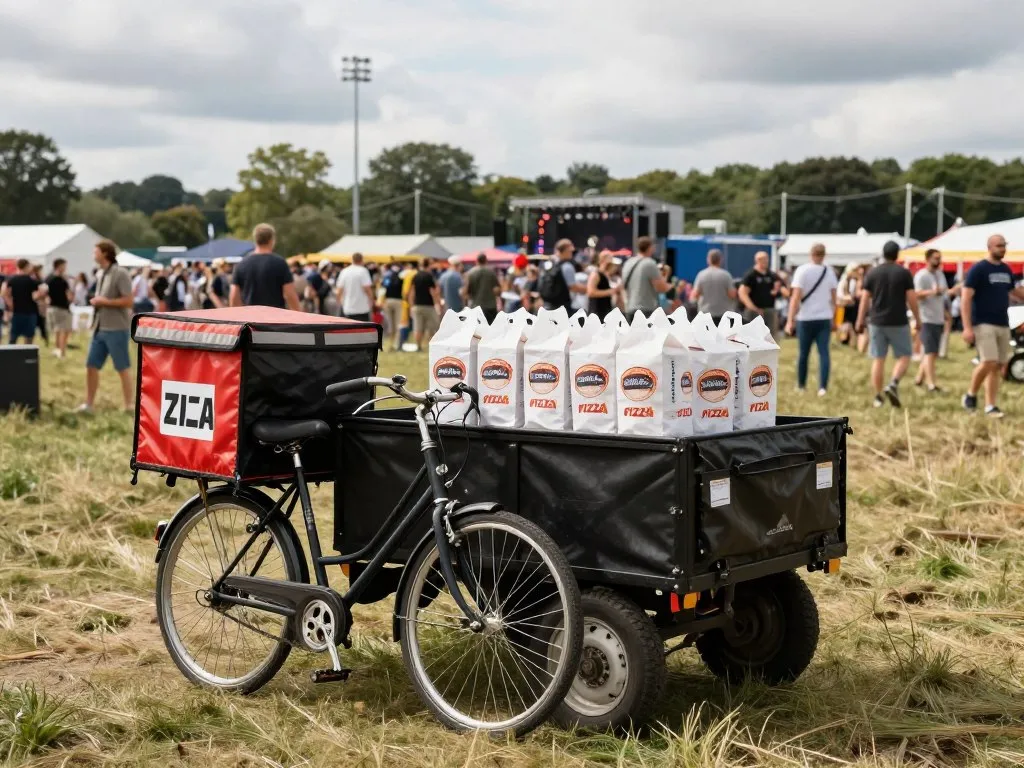
The financial cost is another major barrier. The suit was reported to cost roughly $400,000. Fuel, maintenance, insurance and pilot training would add further expense. A normal delivery service could not easily pass those costs to customers buying one meal.
Future possibilities for airborne food
The Glastonbury flight demonstrated a possibility, not a finished service. In future years, improved batteries, quieter engines or autonomous aircraft could make short-distance deliveries easier. However, the specific jet suit used for the demonstration still required a skilled man or woman at the controls.
Any wider rollout would need clear rules for crowded areas. Operators would have to protect people on the ground, keep food secure and manage sudden changes in wind or rain. A pizza that arrives quickly is not useful if the flight creates unacceptable risk.
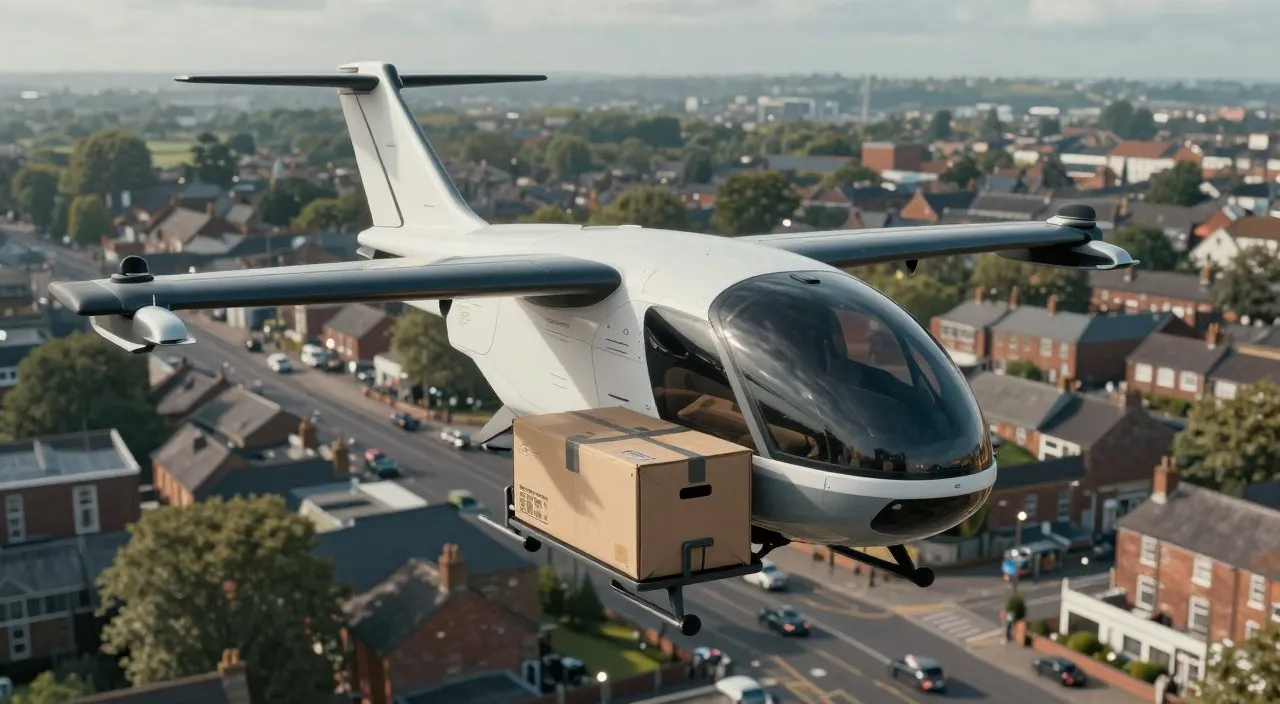
The festival stunt succeeded because it had a clear setting and a simple story. Elton John, Rocket Man, Domino’s and a flying suit created a memorable link between entertainment and engineering. That combination made the advertisement feel like a public event.
For everyday customers, though, reliable ground transport is likely to remain the best choice for many years. The British jetpack pizza delivery was a remarkable moment, but its lasting value may be the attention it brought to new forms of transport rather than a sudden change to how people order food.