Astronomers have discovered a mirror-like exoplanet LTT9779b
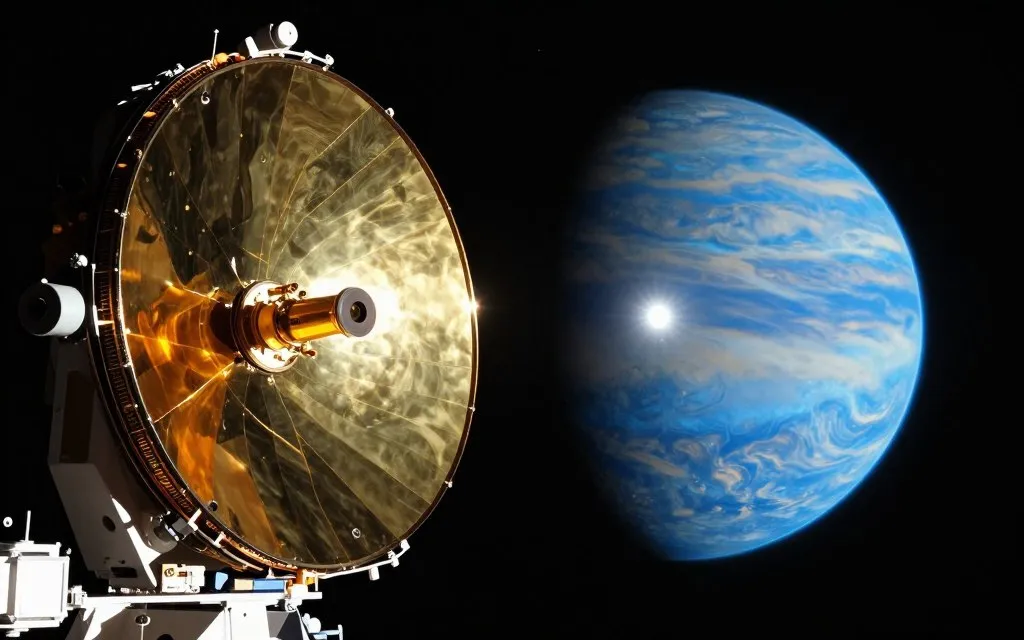
Far beyond the solar system, a blue-white planet circles its star in less than one Earth day. LTT 9779b is not only scorching hot. It also reflects about 80% of the light that reaches it, making it the shiniest exoplanet ever found.

That bright appearance hides a remarkable puzzle. The planet belongs to the hot Neptune desert, a region close to stars where worlds of its size should lose their atmosphere. Yet ltt 9779b still holds a thick envelope of gas and reflective clouds.
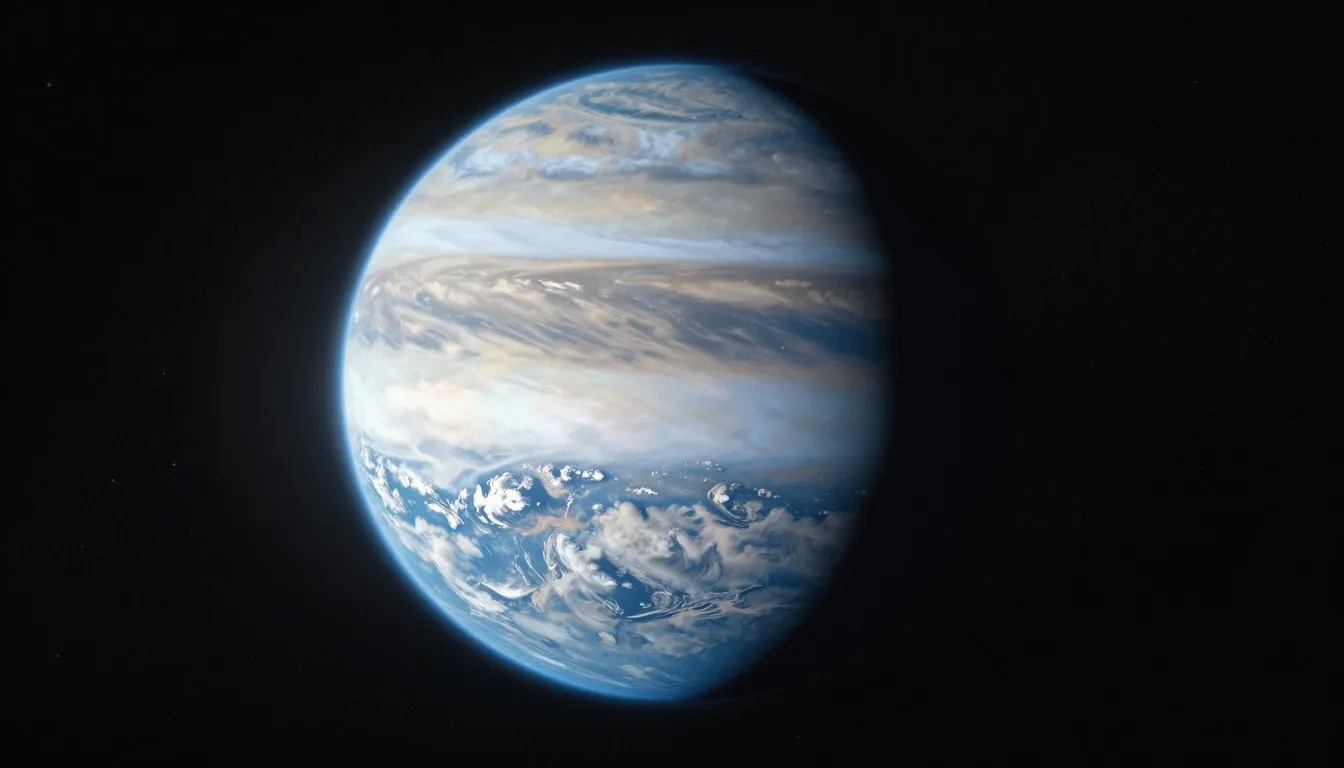
LTT 9779b mirror-like exoplanet under intense starlight
The European Space Agency’s Cheops mission studied ltt 9779 during a carefully timed transit. A transit occurs when a planet passes across the face of its star. The event causes a small dip in starlight, revealing the planet’s size and orbital period.
Cheops also measured the light reflected from the planet. By comparing the system’s brightness before, during, and after the planet moved behind its star, astronomers calculated its phase curve. This method showed that the planet reflects close to four-fifths of the incoming light.
LTT 9779b lies about 260 light-years from Earth. Its host star is slightly smaller and cooler than the Sun, but the planet orbits extremely close to it. One complete journey takes only about 19 hours.
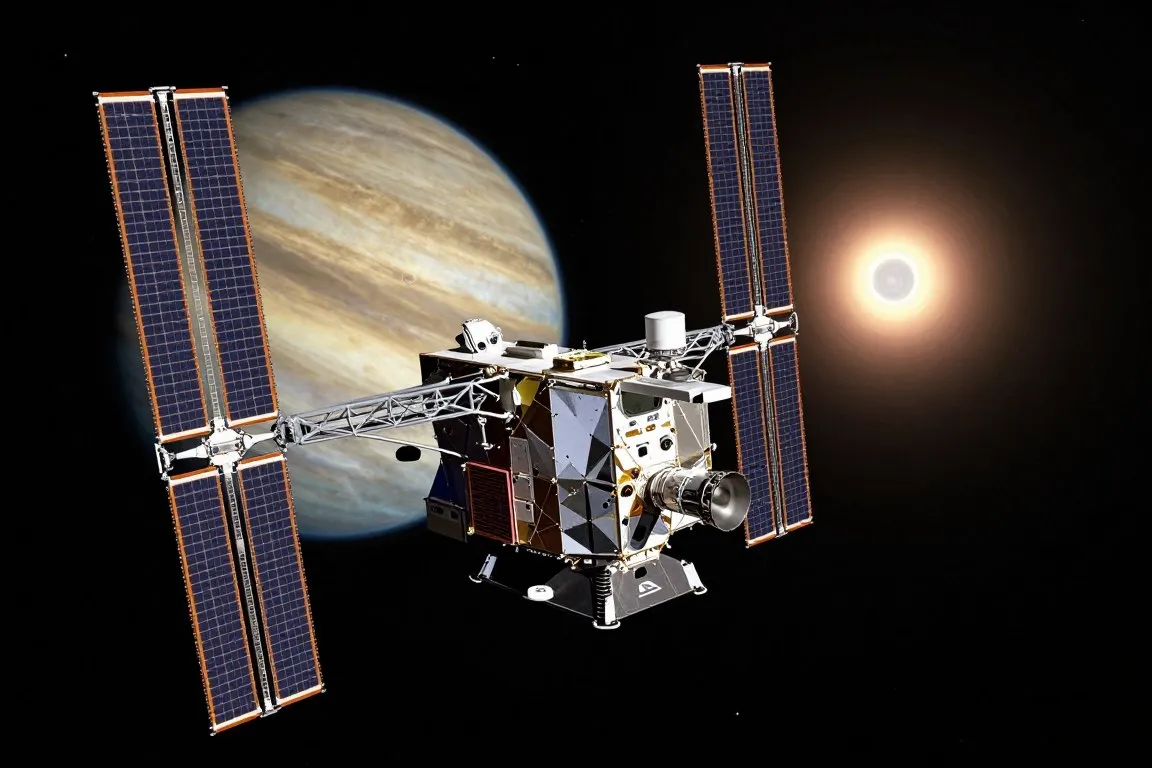
The exoplanet is roughly the size of Neptune, with a mass estimated at about 29 Earth masses. Its radius is close to 4.7 times that of Earth. These measurements place ltt 9779b between the size of Neptune and larger gas-rich planets.
Reflective clouds built from metal and minerals
Most hot giant planets absorb much of their star’s light. Their atmospheres can appear dark because heat breaks apart ordinary clouds or turns them into vapor. LTT 9779b behaves differently. Its cloud layer appears to contain materials that reflect visible light with unusual efficiency.
The day side may reach temperatures near 2,000 degrees Celsius. At such heat, water clouds cannot survive. Instead, atmospheric chemistry may allow droplets and crystals made from minerals such as titanium-bearing compounds and silicates to form high above the planet.
The clouds may include metal-rich substances. In this setting, “metal” does not mean a solid sheet of iron. It refers to elements and minerals that can exist as vapor, liquid droplets, or crystals in the atmosphere. These particles create a bright surface that acts like a natural mirror.
“This is a world that shouldn’t exist, but its clouds may be protecting its atmosphere.” — Paraphrased summary of the scientific puzzle described by researchers
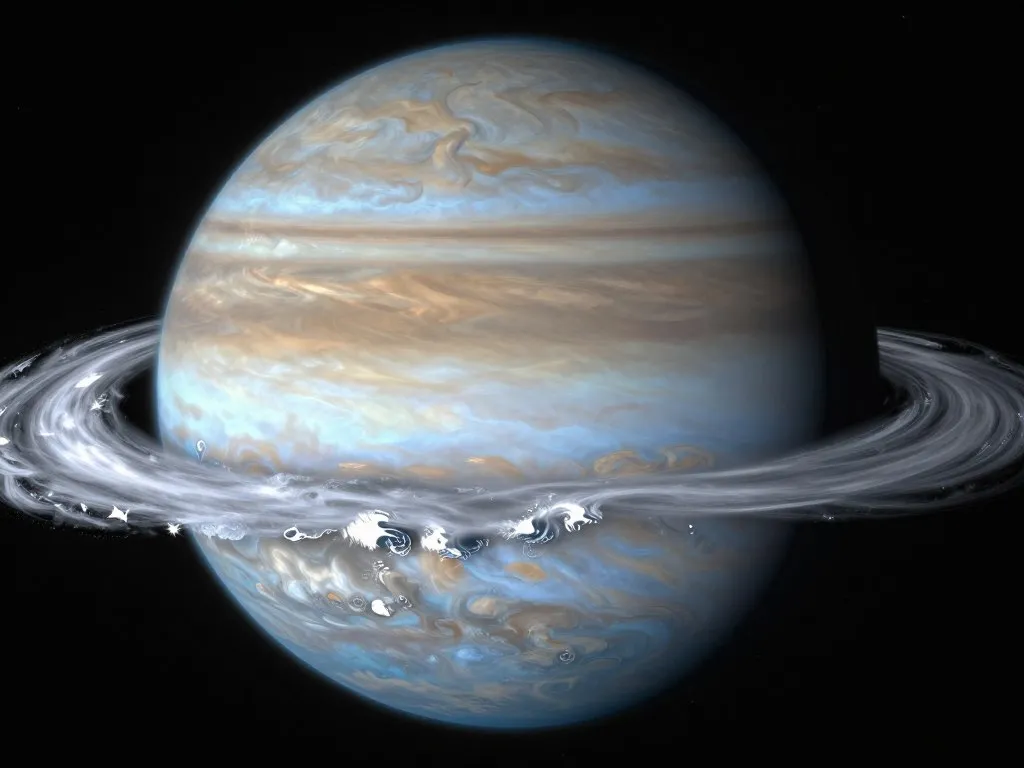
Clouds form through condensation. On Earth, warm air can hold water vapor until cooling produces droplets. On ltt 9779b, a similar process may occur with rock-forming materials. Winds could move vapor from the hot day side toward cooler areas, allowing a cloud layer to develop.
The hot Neptune desert and a difficult survival test
LTT 9779b occupies an unusual place in astronomy astrophysics. The hot Neptune desert is a shortage of Neptune-sized planets with very short orbits. Close to a star, powerful radiation can heat an atmosphere and drive gas into space.
A planet in this zone faces several threats:
- Stellar radiation can strip away hydrogen and helium.
- Strong winds can carry atmospheric gas into interplanetary space.
- Extreme heat can break apart molecules and weaken cloud formation.
- A close orbit leaves little time for a planet to recover from atmospheric loss.
Yet ltt 9779b remains large enough to keep a substantial atmosphere. Its high mass gives gravity a stronger grip on gas. Reflective clouds may provide another defense by sending light away from the atmosphere, reducing the energy absorbed by the planet.
| Feature | LTT 9779b | Typical hot Jupiter | Scientific value |
|---|---|---|---|
| Approximate size | About 4.7 Earth radii | About 10–14 Earth radii | Tests atmosphere survival in a smaller planet |
| Orbital period | About 19 hours | One to four days | Shows intense heating in an ultra-short orbit |
| Reflectivity | About 80% | Often much lower | Reveals an unusual reflective cloud layer |
| Location | Hot Neptune desert | Outside or near the desert | Challenges models of planetary evolution |
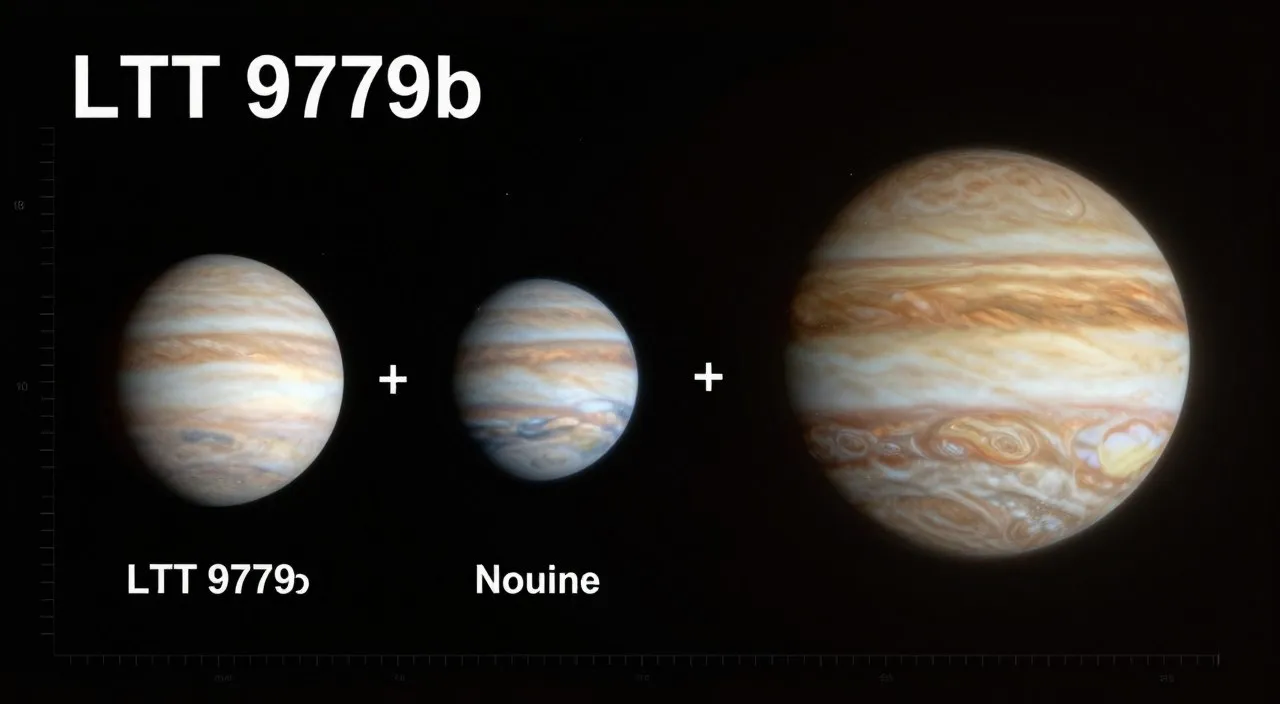
New observations from Webb and future instruments
Cheops established the planet’s remarkable brightness, but more observations are needed to identify its clouds. The James Webb Space Telescope can examine the atmosphere through transmission and emission spectroscopy. These techniques split light into colors and search for chemical fingerprints.
When ltt 9779b crosses its star, some starlight passes through the atmosphere. Molecules and minerals may absorb specific wavelengths. During an eclipse, James Webb space observations can compare the star’s light with the combined light of the star and planet.
Researchers are especially interested in titanium-bearing compounds, silicates, and other metal-rich clouds. Finding their signatures would explain how the planet stays bright while enduring temperatures that should destroy familiar clouds.
The discovery also helps scientists refine models of planet formation. LTT 9779b may have formed farther from its star before moving inward, or it may have begun with an unusually massive core. Its atmosphere could be a remnant that survived through high gravity and reflective clouds.
For now, ltt 9779b remains one of the most striking known exoplanets. It is a hot, fast-moving world with a bright cloud layer, a hostile atmosphere, and a place in the hot Neptune desert that continues to challenge planetary science.