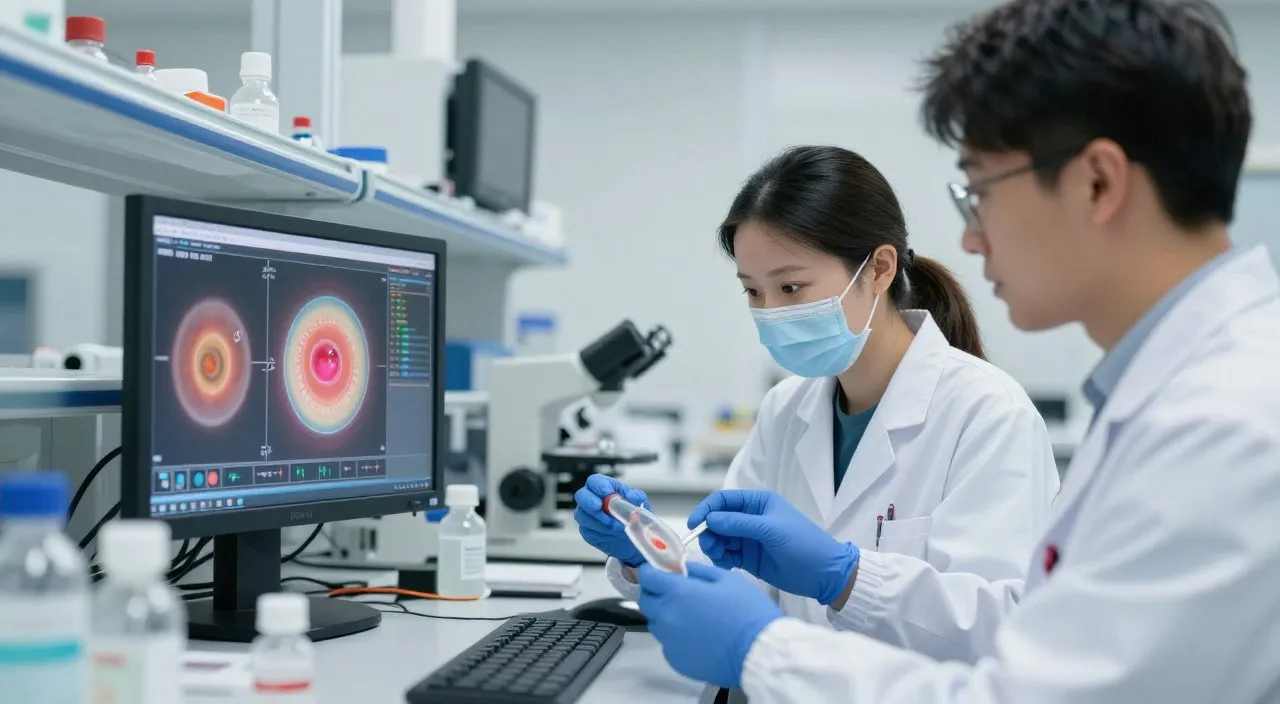
Scientists have created synthetic embryos from stem cells
Scientists have created early human embryo-like models without using eggs or sperm. The work offers a new way to study the first days of human development, but it does not represent the creation of a viable human pregnancy.
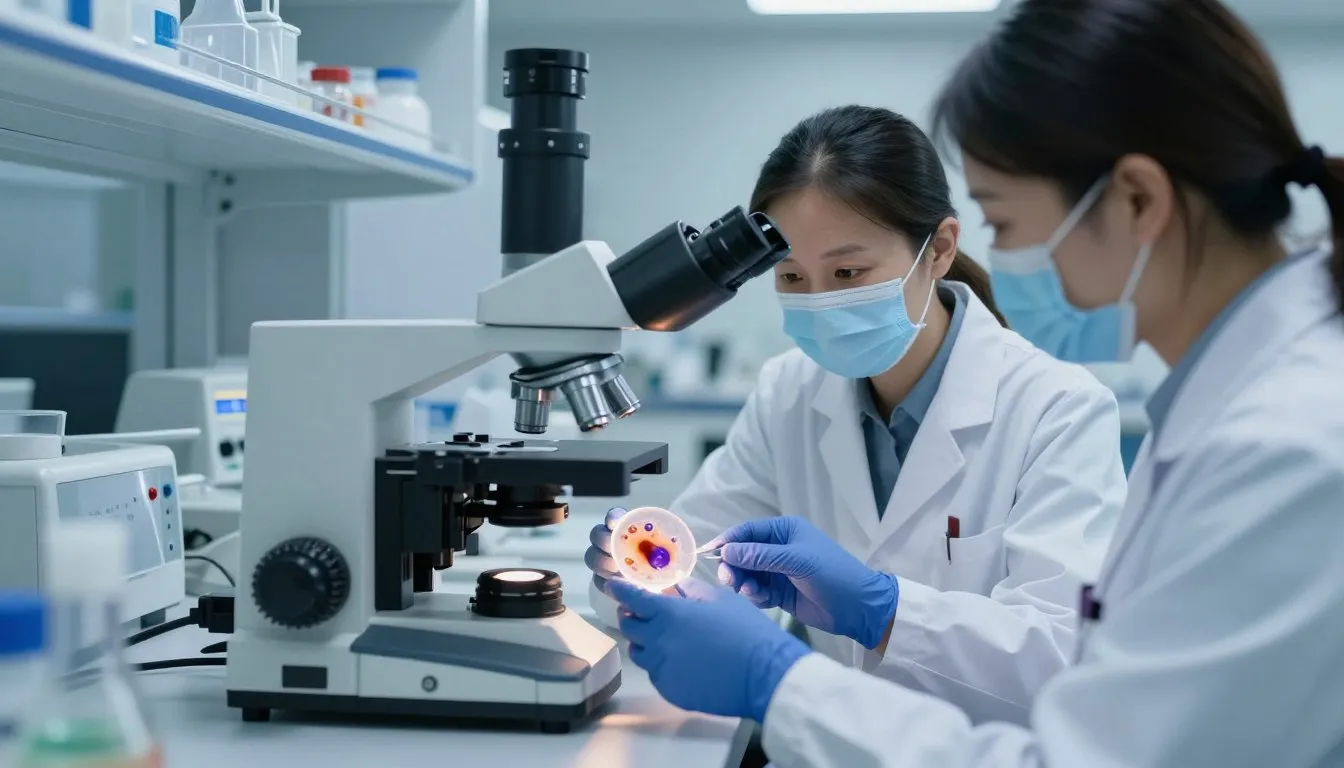
How synthetic embryos from stem cells are made
The models begin with pluripotent stem cells. These cells can produce many specialized cell types. Researchers guide them into organized groups that resemble the earliest stages of an embryo.
Some studies use embryonic stem cells, which come from very early embryos donated for research. Other teams work with an induced pluripotent stem cell, made by returning an adult cell to a flexible, embryonic-like state. Both approaches allow scientists to observe cell behavior in vitro.
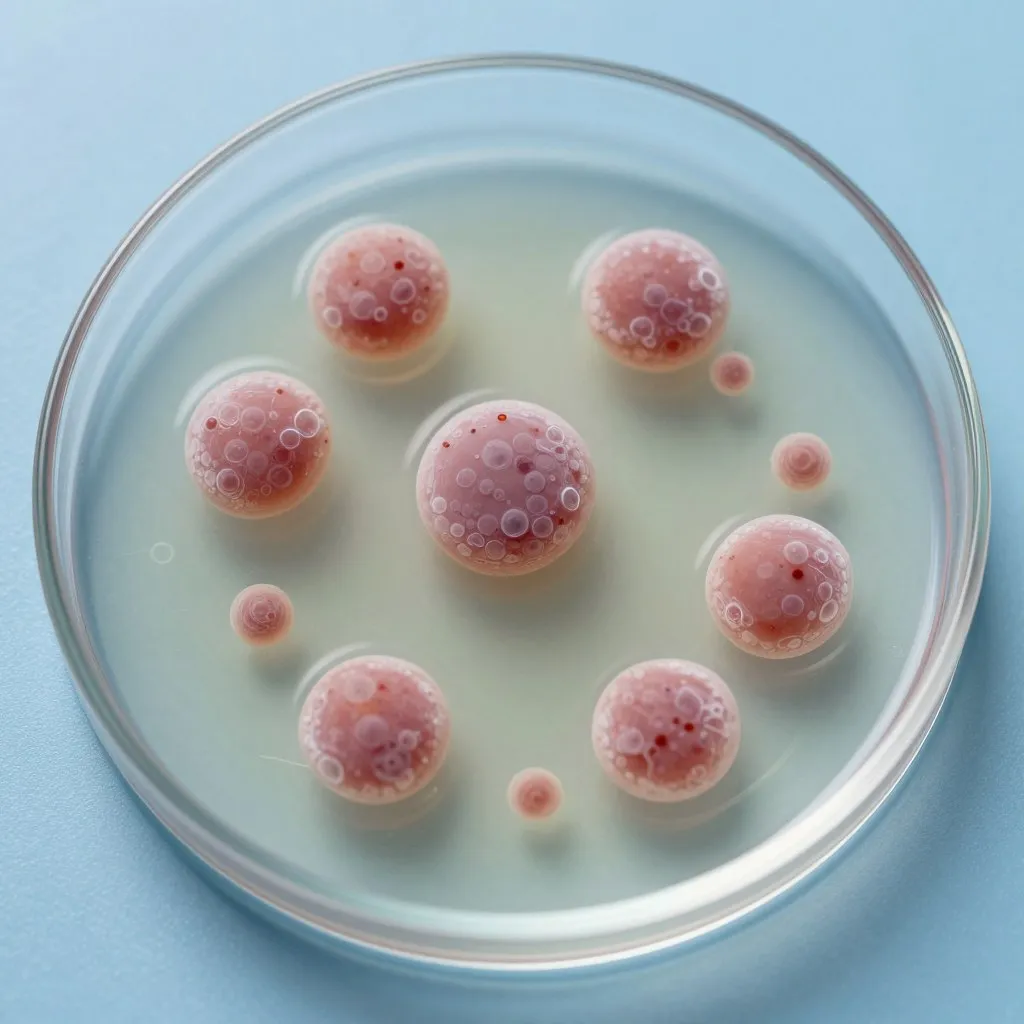
In the reported work, human stem cells formed structures containing three important cell groups. One group resembled cells that normally develop into the embryo. Another showed features of the yolk sac, while a third resembled the early placenta, including trophoblast-like cells.
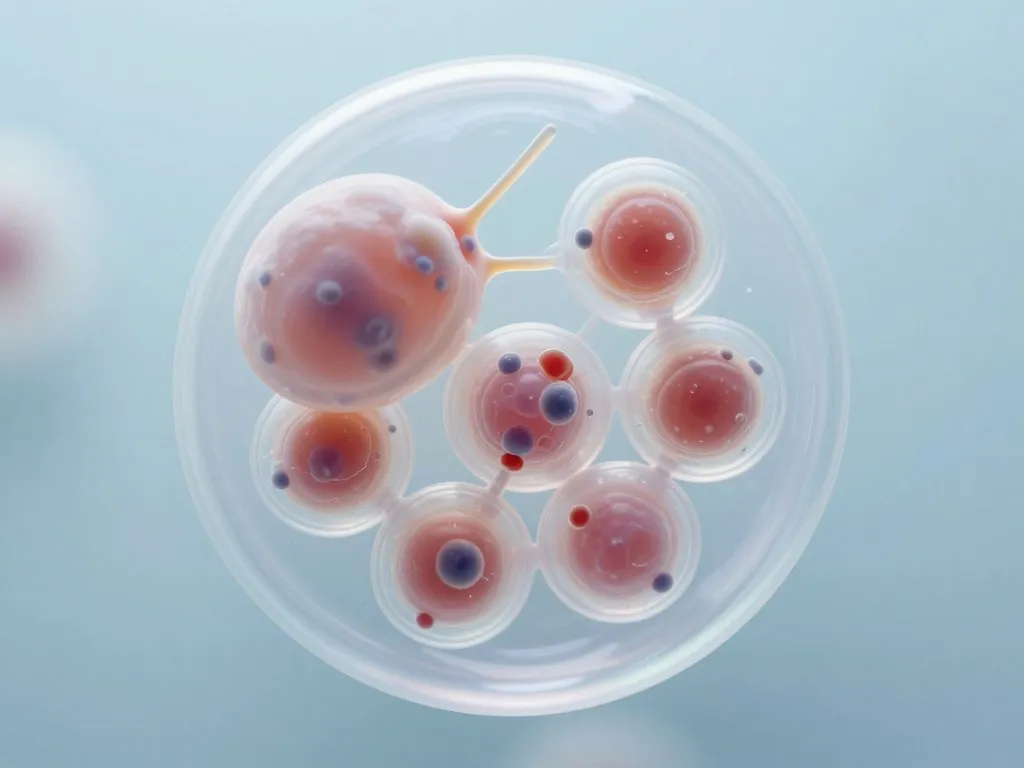
This process is called self-organization. Chemical signals, timing, and the physical environment influence differentiation. Researchers do not simply assemble a miniature embryo by hand. Instead, they create conditions that allow cells to communicate and form models with some features of early human development.
A model is not the same as a fertilized embryo
A synthetic embryo is not created through fertilization. It does not begin with the union of an egg and sperm, and it is not equivalent to an embryo produced during assisted reproduction. The term “synthetic” describes the laboratory method, not a claim that the structure is artificial in every biological sense.
| Feature | Stem cell embryo model | Fertilized embryo |
|---|---|---|
| Starting material | Pluripotent stem cells | Egg and sperm |
| How it forms | Directed culture and self-organization | Fertilization followed by natural development |
| Research purpose | Study early cell decisions and disease | Reproduction or approved research |
| Clinical status | Not a treatment and not approved for implantation | May be used in regulated fertility care |
Why this embryo model matters for human development
The first weeks of pregnancy remain difficult to study. In many countries, researchers cannot culture human embryos beyond 14 days, and access to donated embryos is limited. This leaves a major gap in knowledge about early human development.
Stem cell models may help fill part of that gap. They allow researchers to examine how cells divide, move, and specialize. They may also reveal why some embryos stop developing before a pregnancy can be detected.
“If you really model normal human embryonic development using stem cells, you can gain an awful lot of information about how we begin development, what can go wrong.” — Robin Lovell-Badge, Francis Crick Institute
Possible uses in reproductive biology
- Investigating genetic conditions that affect early development.
- Studying biological causes of repeated miscarriage.
- Observing how the embryo and placenta begin to communicate.
- Testing how environmental factors influence cell differentiation.
- Comparing normal and disease-related embryo models.
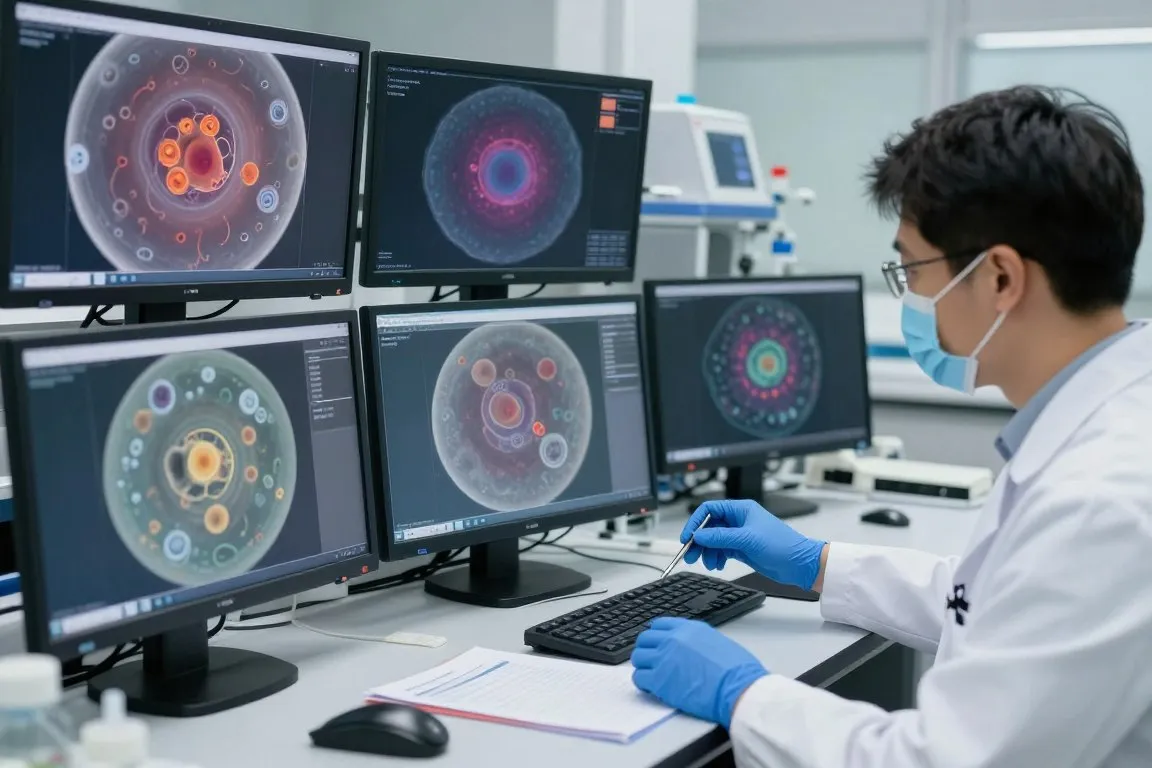
The models could also support regenerative medicine. Better knowledge of early cell decisions may improve methods for producing organoids, placental cells, and other specialized tissues. However, a research model is not automatically suitable for drug testing or patient care. Each proposed use requires careful validation.
Scientific and ethical limits of synthetic embryos
The most important limitation is developmental failure. The reported structures did not form the beginnings of a brain or a beating heart. They also could not progress into a viable pregnancy. Implantation into a uterus is not an accepted or lawful use of these models.
Researchers must therefore describe their results precisely. A model may resemble an embryo at one stage while lacking the complete organization needed for later development. Similar work in mouse models has produced valuable insights, but results from a mouse embryo model cannot be transferred directly to humans.
Why regulation is still developing
Existing laws were generally written around embryos created through fertilization. They may not clearly define structures made from human pluripotent stem cells. This creates uncertainty about consent, oversight, storage, research limits, and the point at which a model should receive special protection.
Scientific organizations have responded with updated guidelines. The International Society for Stem Cell Research has supported stronger review for embryo models, especially when they become more complete or show signs of organized development. Institutional ethics committees must also consider the source of the cells and the goals of each experiment.
What the breakthrough does not mean
- It does not mean scientists have created a human being in a laboratory.
- It does not offer a new fertility treatment.
- It does not show that a model can develop normally after implantation.
- It does not remove the need for donated embryos or other research systems.
- It does not settle the legal status of every future embryo model.
These limitations do not erase the value of the work. They define the questions that must be answered next: how faithfully the models represent human embryos, which developmental signals are missing, and how research can proceed with public trust.
The next stage of stem cell embryo research
Synthetic embryos from stem cells offer a window into early human development that conventional methods cannot easily provide. Their value lies in controlled observation, not reproduction. By studying the interaction of embryonic, yolk-sac, and trophoblast-like cells, scientists may gain new knowledge about miscarriage, genetic disorders, and pregnancy biology.
At the same time, the models remain incomplete and unsuitable for implantation. Future progress will depend on careful experiments, transparent reporting, and rules that keep pace with the science. The breakthrough is significant because it expands research access to early development, not because it creates a replacement for fertilized embryos or fertility treatment.