It is likely that humans settled America over 27 thousand years ago

For decades, the most accepted story placed the first settlement of the Americas at roughly 15,000 to 16,000 years ago. New discoveries now suggest a more complex timeline. At Santa Elina in central Brazil, researchers found ornaments made from the bones of giant ground sloths. The objects may be 25,000 to 27,000 years old, raising a striking possibility: humans settled America over 27 thousand years ago.
The finding is important, but it is not the final word. Archaeologists must still determine how the objects were made, who made them, and how people reached South America during the Ice Age.
Why Santa Elina Changed the Conversation
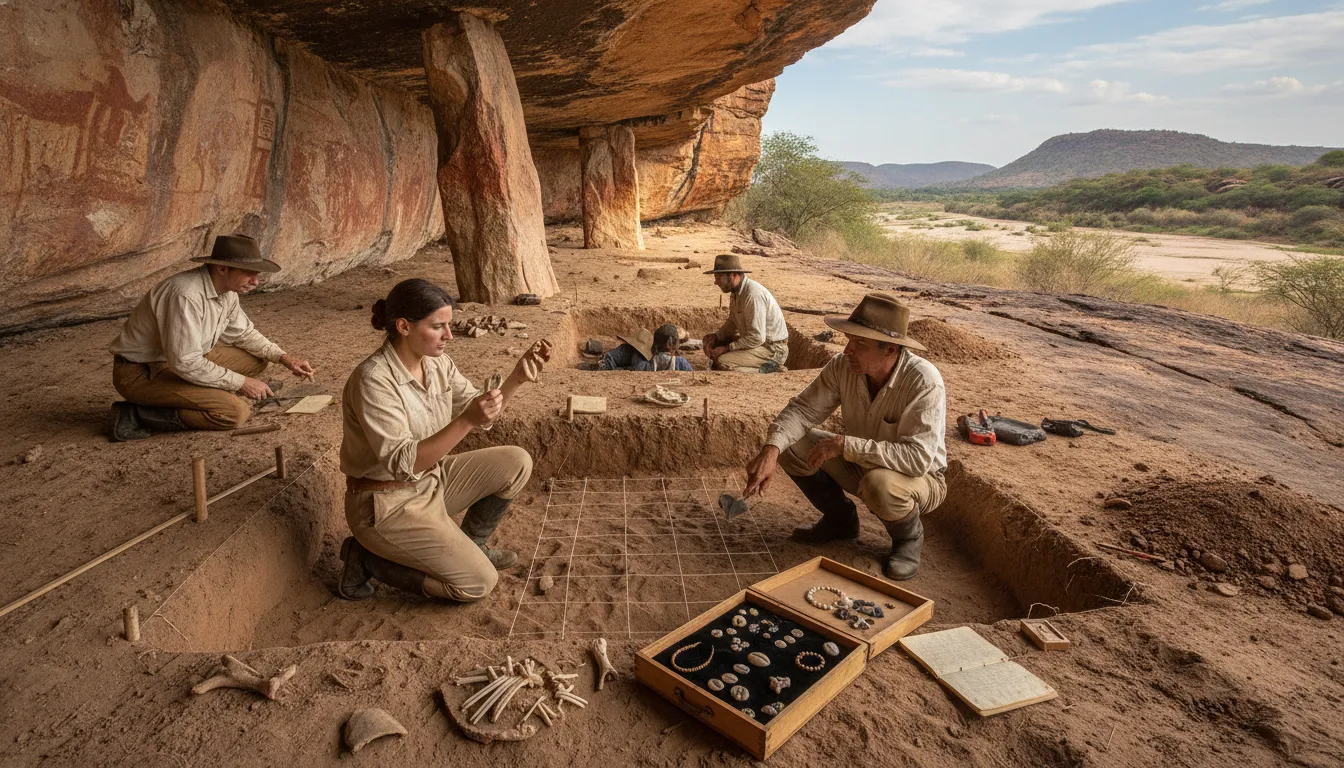
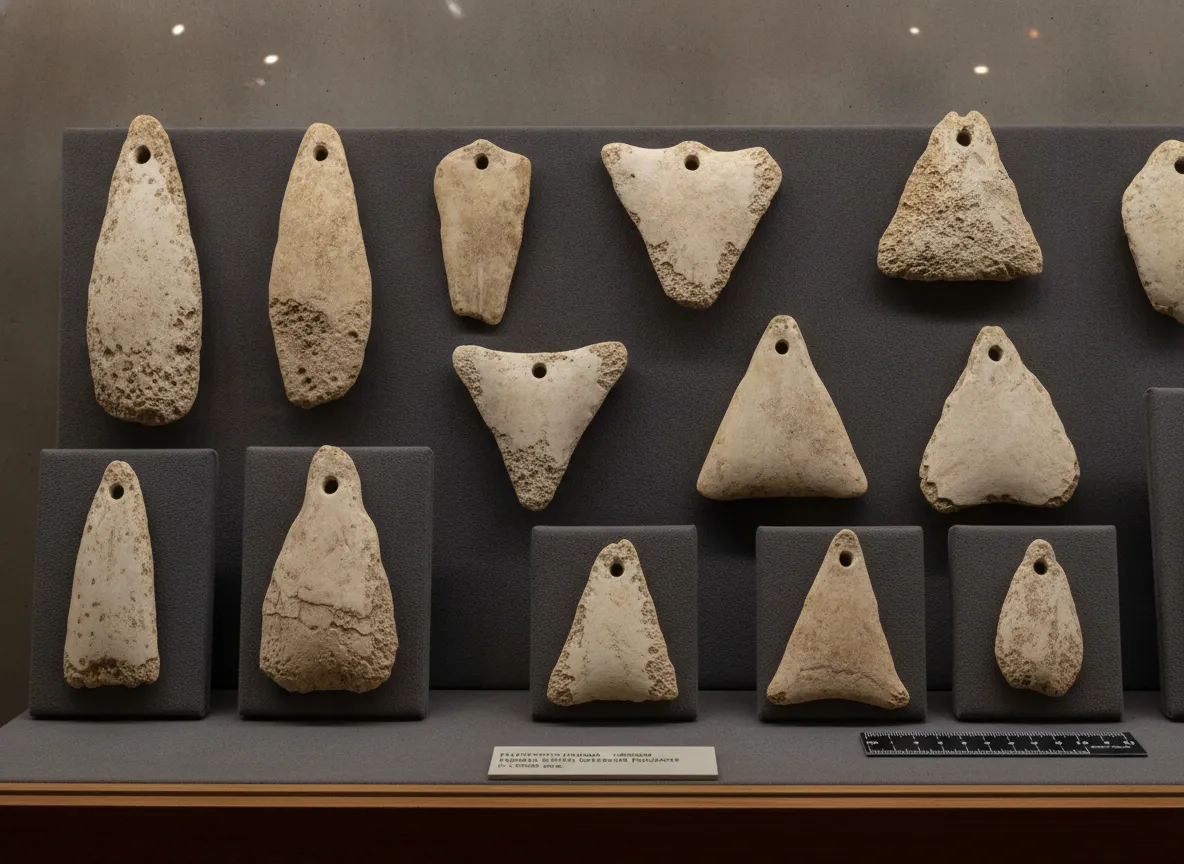
Santa Elina is a rock shelter in Mato Grosso, Brazil. Excavations there uncovered triangular and teardrop-shaped pendants made from osteoderms. These are hard bony plates that once protected the skin of giant ground sloths. The animals disappeared from much of the Americas thousands of years ago.
The ornaments were found in layers dated to between 25,000 and 27,000 years ago. Their surfaces include drilled holes and polished edges. Some also show marks that may have resulted from cutting, scraping, or use.
Researchers argue that the pendants are too carefully shaped to be the result of natural damage. If that interpretation is correct, people were present at the site during the Last Glacial Maximum, when ice sheets covered large parts of North America.
“These compelling findings, along with other sites in South and North America, challenge our understanding of human migration to America.” — Study authors, describing the significance of the Santa Elina ornaments
Still, the evidence has limits. The site does not contain a human skeleton from the same layer. It also lacks a clearly associated spear point or settlement floor. That makes the artifacts valuable, but open to continued testing.
How Could People Reach North and South America?
The traditional model begins in northeastern Asia. During the Ice Age, lower sea levels exposed Beringia, a broad land bridge linking Siberia and Alaska. This land bridge was not a narrow bridge over water. It was a large grassland region where animals and people could travel.
From Beringia, groups may have moved south through North America. One proposed route is the ice-free corridor between the Laurentide and Cordilleran ice sheets. However, that passage may not have become suitable for travel until after 16,000 years ago. If Santa Elina is truly 27,000 years old, the corridor could not explain that site.
Another possibility is a coastal route. People could have traveled along the Pacific shore using boats, shellfish, fish, sea mammals, and plants. Much of that coastline is now underwater because rising seas followed the end of the glacial period. This makes early coastal sites difficult to find.
| Evidence type | What it suggests | Main uncertainty |
|---|---|---|
| Santa Elina pendants | Human activity in Brazil 25,000–27,000 years ago | No human remains directly linked to the objects |
| Monte Verde site | People lived in southern Chile about 14,500 years ago | It does not explain when the first migration began |
| White Sands footprints | Humans were in New Mexico roughly 21,000–23,000 years ago | Dating and site interpretation remain closely examined |
| Genetic evidence | Native Americans share deep ancestry linked to ancient northern populations | Genes do not identify the exact migration route |

What Archaeologists Know—and What They Do Not
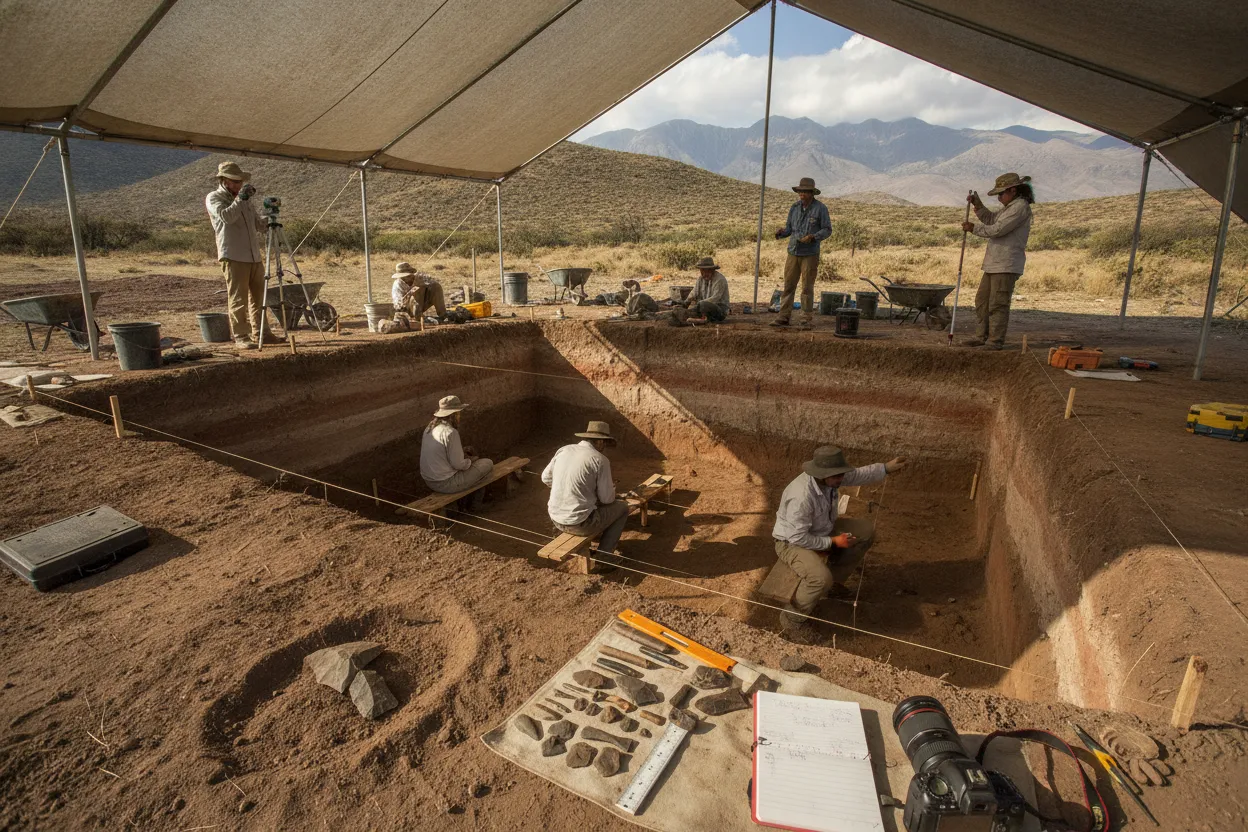
Archaeological dates are central to this question. Scientists use methods such as radiocarbon dating, optically stimulated luminescence, and uranium-series dating. Each method measures a different process. Reliable conclusions usually require several lines of evidence.
Monte Verde in Chile is among the strongest early sites in South America. Its tools, wood, plant remains, and settlement traces indicate occupation about 14,500 years ago. The site shows that people had already traveled far into South America by that time.
In New Mexico, footprints at White Sands have been dated to approximately 21,000 to 23,000 years ago. The footprints are significant because they represent direct evidence of human bodies. Even so, researchers continue to study the dating materials and the surrounding geology.
Genetic research adds another layer. Most Native Americans descend from ancient populations that separated from other Asian groups before spreading through the Americas. Some studies also point to later movements and regional mixing. Genetics can reveal relationships, but it cannot by itself identify a specific land route or site.
Why the Debate Matters
- Artifacts need context. An object is stronger evidence when its position, age, and association with other remains are clear.
- Natural damage can look intentional. Marks on bone must be compared with known human tools and animal activity.
- One site cannot tell the entire story. Early groups may have used several routes and lived in places now hidden by forests, soil, or seawater.
- Absence is not proof of absence. A lack of sites may reflect poor preservation rather than a lack of people.
A Broader View of the First Americans
The Santa Elina pendants do not prove every detail of an early migration theory. They do, however, add to a growing body of evidence that challenges a simple 15,000-year timeline. Possible traces in South America, New Mexico, and coastal regions suggest that humans may have arrived earlier than once believed.
The strongest conclusion is cautious. People were certainly in South America by about 14,500 years ago. Earlier evidence, including the Santa Elina ornaments, may push that history back by many thousands of years. Future excavations, improved dating, and closer study of ancient DNA will help test the claim.
The first settlement of the Americas was likely not a single event. It may have involved different peoples, routes, and waves across changing landscapes. The story remains unfinished, but each carefully studied site brings the past into sharper focus.