Will sex robots and dolls replace girlfriends by 2030?
According to Pew Research Center, sixty-three percent of American men under 30 describe themselves as single. During the same period, synthetic companionship options have expanded rapidly. Human partnership is thinning while artificial alternatives grow more available.
That collision raises a direct question. Within five years, can female sex robots or advanced companion dolls meaningfully replace living women as sexual partners, emotional companions, or both?

This article examines evidence, not hype. It reviews what sex robots may realistically do by 2030 and tracks broader companion technology forecasts. It also examines the dating and fertility conditions that make substitution more or less likely.
The thesis is clear: full replacement of living girlfriends is unlikely by 2030. Partial substitution for a minority of men is plausible and already visible in related markets. The more important questions are the downstream effects—lower competitive pressure for women, reduced incentives for pair-bonding, and possible contributions to declining birth rates.
The State of Sex Robot and Sex Doll Technology Heading Into 2030
Today’s most advanced products remain closer to interactive silicone than to autonomous partners. Leading manufacturers combine realistic silicone bodies with animatronic heads that can blink, track faces, and sync lips to speech. Conversational layers add memory and basic personality.
Rival products prioritize comfort and internal features over movement. Most bodies remain non-ambulatory.

The mechanical gap is the real constraint. No commercial humanoid sex robot walks, embraces, or performs ordinary household tasks. Weight, battery life, cleaning requirements, and price still limit adoption.
| Capability | Available in 2025 | Realistic by 2030 |
|---|---|---|
| Conversation | Fluid, LLM-driven AI chatbot companion | Voice with memory and emotional tone |
| Facial motion | Animatronic head: blinking, eye tracking, lip sync | Micro-expressions, smoother servos |
| Body movement | None; static silicone or TPE frame | Limited arm and neck articulation |
| Weight | 60–120 lbs | Lighter foam-core hybrids |
| Price | $2,000–$20,000+ | Premium tier stays above $10,000 |
Progress since 2023 has come mostly from software. Large language models improved conversational quality. Broader humanoid robotics programs exist, but they target industrial use, not bedrooms.
By 2030, expect better conversation and lighter, warmer bodies—not fully mobile android girlfriends.
Market Growth Forecasts: How Fast the Companion Robot Industry Is Expanding
Analysts place the global sex doll market in the low billions of dollars, with high-single to low-double-digit growth expected through the early 2030s. The wider adult technology segment grows at a similar pace.
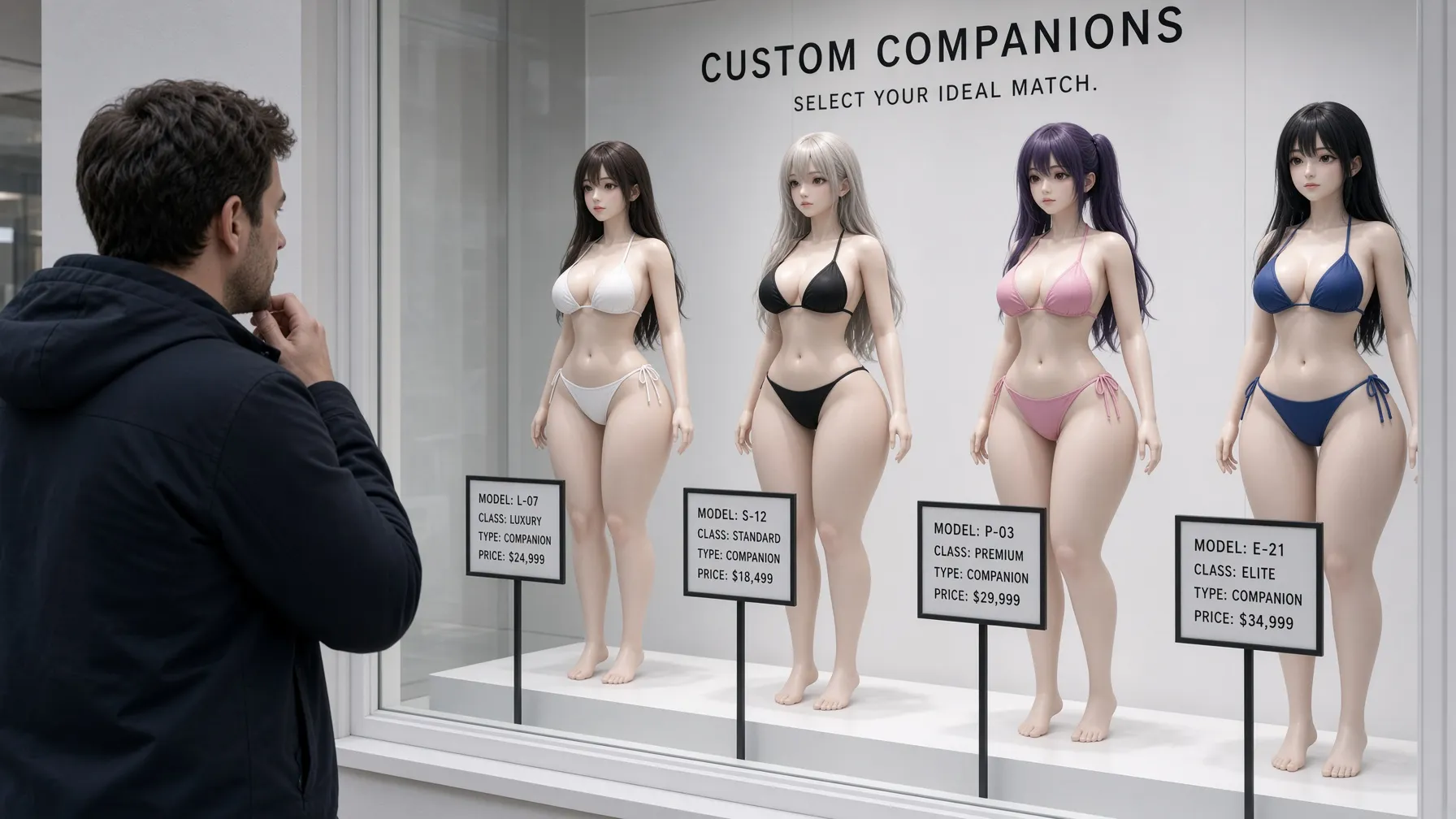
Broader companion and social robotics forecasts are stronger. Research firms project companion robot market growth well above 20% annually, driven more by elder care and loneliness intervention than by intimacy. Sex-robot forecasts largely follow that wave.
Software scales fastest. AI companion subscriptions cost a fraction of a physical doll and reach users instantly. Hardware remains constrained by manufacturing, shipping, and storage.
| Segment | Typical Price Point | Scalability |
|---|---|---|
| Premium silicone doll | $2,000–$8,000 | Low — manual labor, shipping, storage |
| Robotic head or animated unit | $10,000–$20,000+ | Very low — complex hardware |
| AI companion subscription | $5–$25 per month | Very high — instant global delivery |
Most manufacturers remain private. Stigma limits transparent reporting, and many projections are optimistic. Cost and reliability will remain the primary barriers through 2030.
What Dating and Loneliness Data Reveal About Substitution Risk
Pew Research found roughly 63% of men under 30 were unpartnered. About half of single Americans said they were not looking for dates. The General Social Survey has tracked falling sexual frequency among young adults for over a decade.
Loneliness statistics reinforce the point—the U.S. Surgeon General’s 2023 advisory compared chronic isolation to smoking 15 cigarettes a day.
"Social connection is a fundamental human need, as essential to survival as food, water, and shelter." — Dr. Vivek Murthy, U.S. Surgeon General’s Advisory on Our Epidemic of Loneliness and Isolation, 2023
| Signal | Source | Finding |
|---|---|---|
| Single young men | Pew Research Center | ~63% of men under 30 unpartnered |
| Dating withdrawal | Pew Research Center | ~50% of singles not seeking dates |
| Sexual frequency | General Social Survey | Sharp decline among adults 18–29 |
| App fatigue | Match Singles in America | Rising burnout with swipe-based apps |
| Isolation risk | Surgeon General, 2023 | Loneliness linked to early mortality |
These conditions create a pool of men for whom a low-effort artificial alternative can appear rational, even if it does not fully replace a living partner.
Why Some Men Are Turning to Synthetic Partners Instead of Real Girlfriends
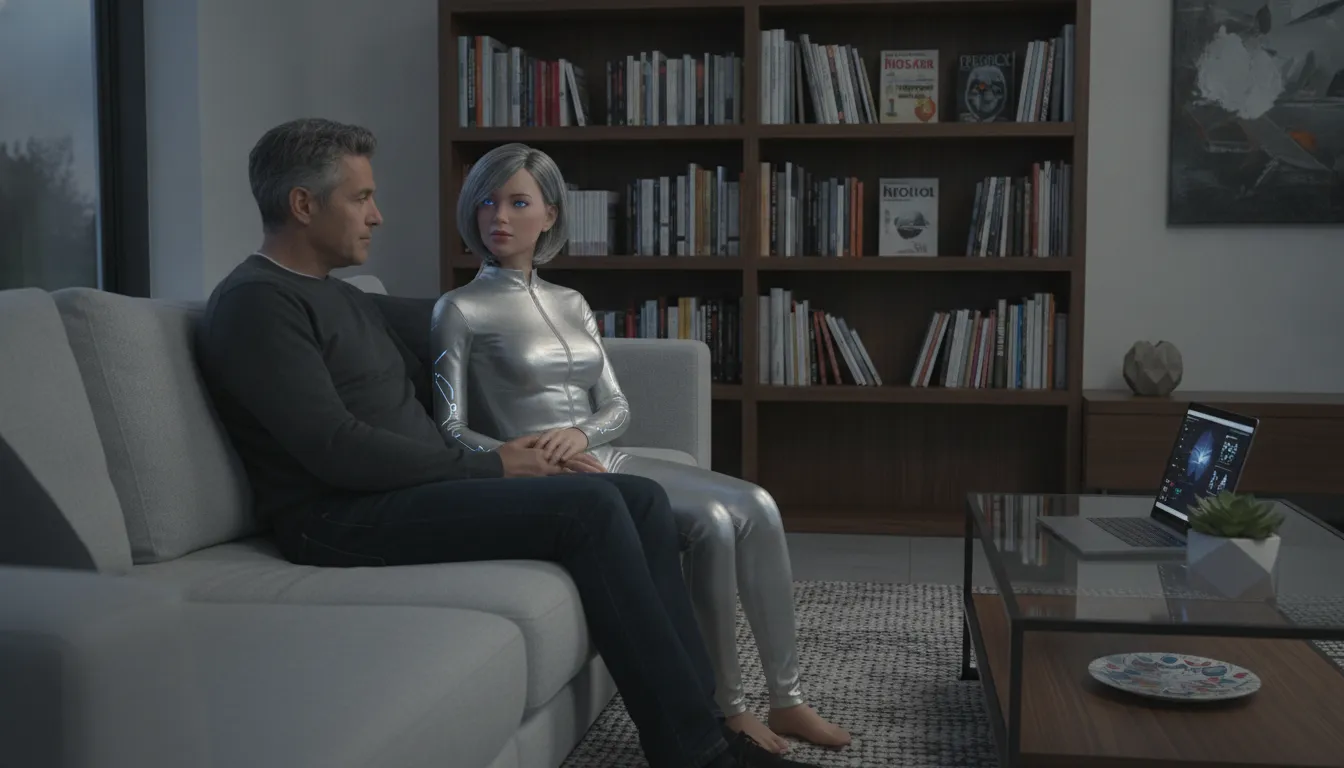
Owner reports and community surveys show that many buyers cite privacy, rejection avoidance, or simple availability rather than pure technological fascination. Some describe the product as a temporary bridge; others treat it as a primary outlet.
A clear shift appears in stated priorities: on-demand sexual access and low-conflict presence rank higher than long-term reciprocity.
| Primary Use | Typical Owner Profile | Reported Driver |
|---|---|---|
| Sexual companionship | Single men, ages 25–45 | Privacy and on-demand companionship |
| Conversation and presence | Widowers and remote workers | Loneliness after loss or relocation |
| Photography and collecting | Hobbyists | Artistic expression |
| Confidence building | Men with social anxiety | Fear of rejection |
If a visible minority of men reduce their active search for living partners, the remaining dating market becomes thinner for those who stay in it.
Psychologists Analyze the Human Need for Intimacy and Attachment
Clinical research suggests attraction to synthetic partners reflects ordinary attachment needs more than novelty. People seek responsive figures who answer distress. Machines never sulk, reject users, or require compromise.

Touch can trigger oxytocin, but bonding without reciprocity resembles a parasocial relationship more than partnership. When commercial AI companions have changed access rules in the past, some users reported grief that clinicians recognized as real.
| Psychological Factor | Short-Term Effect | Long-Term Risk |
|---|---|---|
| Acute loneliness | Measurable relief and reduced isolation | Avoidance of human social effort |
| Rejection tolerance | Zero rejection experienced | Lower resilience with real partners |
| Reciprocity skills | No negotiation required | Atrophy of compromise ability |
| Distress tolerance | Immediate soothing on demand | Reduced capacity to sit with discomfort |
Most analyses reach a split verdict: useful as a bridge for some, potentially harmful as a long-term destination for others.
Can AI Companions Simulate Love, Emotional Support, and Commitment?
Current systems handle recall and constant availability well. Persistent memory lets a chatbot remember details months later. Validation is unlimited.

Studies have found that some participants rate AI-written replies as more compassionate than responses from trained humans. What is missing is structural: simulated empathy carries no cost. A synthetic partner has no independent needs, rival plans, or capacity for genuine disappointment.
There are no shared bills, co-parenting, or legal parenthood. Support that costs the giver nothing may soothe, but it cannot confirm a person’s worth to another independent mind.
Support that costs the giver nothing may soothe, but it cannot confirm a person's worth to another mind.
| Relationship Element | AI Companion (2025) | Human Partner |
|---|---|---|
| Recall of personal history | Strong, via LLM memory | Imperfect, selective |
| Availability | 24/7, instant | Limited by work, mood, sleep |
| Mutual vulnerability | Absent — risk flows one way | Reciprocal and costly |
| Sacrifice under pressure | None possible | Common in long partnerships |
| Durability of commitment | Tied to company policy | Tied to personal choice |
| Physiological bonding | Partial | Full touch-based co-regulation |
| Children and family formation | Not possible | Possible |
These gaps limit full replacement even if conversational quality improves further by 2030.
Social, Ethical, and Legal Debates Surrounding Robot Girlfriends
Synthetic intimacy raises questions engineering cannot answer. Critics argue that selling simulated partners encourages objectification and weakens norms around consent, because refusal never occurs.
Other scholars emphasize adult autonomy and potential harm reduction for isolated users. They note that panic-driven restrictions have limited evidence of benefit.
American law has focused mainly on childlike dolls. Several states have enacted bans or penalties; federal efforts have stalled. Broader regulation of adult companion technology remains thin.
| Jurisdiction | Action Taken | Status |
|---|---|---|
| U.S. Congress | Proposals targeting childlike dolls | Passed House, stalled in Senate |
| Customs and Border Protection | Port seizures under existing statutes | Ongoing enforcement |
| Several U.S. states | Childlike doll bans or penalties | Enacted in multiple states |
| AI companion apps | No comprehensive federal framework | Largely unregulated |
Privacy is a persistent issue. Intimate data from companion systems can be vulnerable. Regulation continues to lag the products already available.
Will Sex Dolls Replace Girlfriends by 2030? Evidence-Based Predictions
The evidence points to a clear answer on full replacement: no. Most predictions of widespread substitution by 2030 assume hardware and cost reductions that remain unlikely. Warm skin, natural movement, and safe mobility are still expensive.
Earlier forecasts of human-robot marriage placed that possibility around mid-century, not within six years.
- Baseline: AI companion apps reach mainstream niche use, premium animatronic dolls hold low-single-digit market share, and marriage rates keep sliding for economic reasons.
- Optimistic tech: humanoid platform costs drop, mobile companions arrive after 2030.
- Contrarian: regulation, public backlash, and subscription fatigue cap growth early.
| Function of Partnership | Can Synthetic Companions Deliver It by 2030? |
|---|---|
| Sexual release | Yes, for many users already |
| Loneliness relief | Partially, through conversational AI |
| Shared income and housing | No economic contribution |
| Children and family formation | Not possible |
| Social standing and family ties | Little to no recognition |
| Reduced competition for living women | Possible at the margin |
For a small group—men with severe social anxiety, geographic isolation, disability, or prolonged grief—synthetic partners may become primary. For most people they will remain a supplement. The measurable risk is not mass replacement but selective exit from the dating market by enough men to thin the committed pool.

Downstream Risks: Fertility, Competition, and Living Women’s Responses
If 10–15 percent of single men in their 20s and 30s reduce their pursuit of living partners, several effects become plausible:
- Lower competitive pressure among men for the women who remain in the market
- Reduced incentives for pair-bonding among men who find partial needs met artificially
- Possible contribution to already-low fertility rates, because partnership remains the main context in which children are born in most developed countries
- Behavioral adjustments by living women—greater selectivity, earlier exit from dating, or status penalties directed at men who openly prefer synthetic options
- Atrophy of reciprocal skills among heavy users, making later transitions to living partners harder
None of these outcomes requires full replacement. Marginal substitution is sufficient to shift market dynamics and fertility incentives. Societies already below replacement fertility are most exposed.
Conclusion
Female sex robots and companion dolls are unlikely to replace living girlfriends for most men by 2030. Hardware, cost, and the absence of reciprocal stakes remain binding limits. Partial substitution for a visible minority is more probable and already foreshadowed by related technologies.
That narrower outcome still carries consequences: thinner committed dating pools, weaker incentives for some men to invest in real relationships, and potential downward pressure on birth rates. Living women may respond by raising standards or reducing their own participation. Those second-order effects deserve more attention than product specifications.
The future of intimacy will depend less on better machines and more on whether enough men and women continue to treat mutual, costly partnership as worth the effort.