Ticks have learned how to sex females more quickly
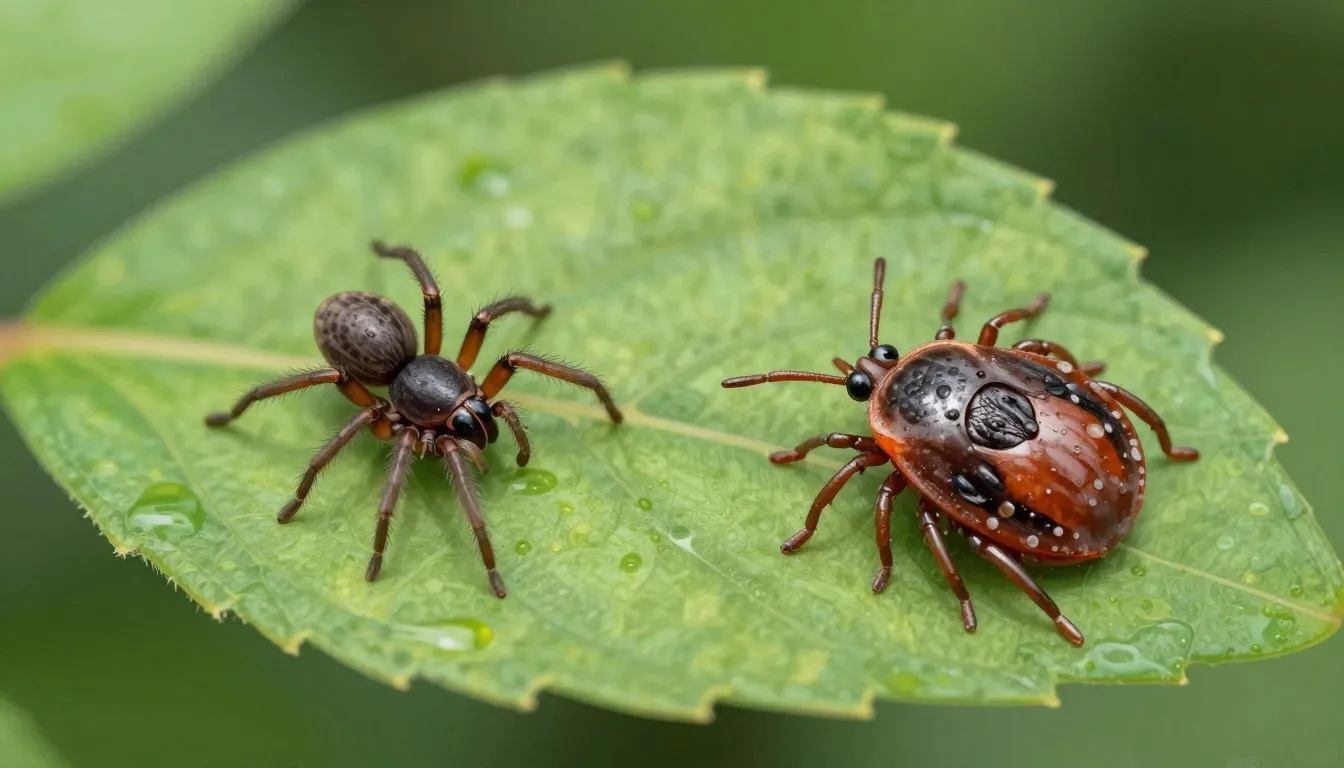
Spider mites are tiny arachnids, often smaller than the tip of a ballpoint pen. They feed on plants and can live in large colonies. This crowded setting creates strong competition among males for access to females.
According to the reported Austrian research, male spider mites watch for females that have recently reached sexual maturity. A female’s maturity is signaled by the shedding of her old exoskeleton. This process is known as molting.
The male may use his legs to remove the remaining exoskeleton. He is not simply attacking the female. Instead, he appears to help open access during the short period when she becomes fertile. The first male to mate gains a major reproductive advantage.
“Females only use the sperm of their first mate for fertilization.” Summary of the reported spider mite finding
This result does not show that a tick has learned a new skill during its own lifetime. In evolutionary terms, behavior can become more common when individuals with a useful inherited trait leave more offspring. Over many generations, selection may favor faster searching, positioning, or mating.
Tick life cycle, hosts, and mating stages
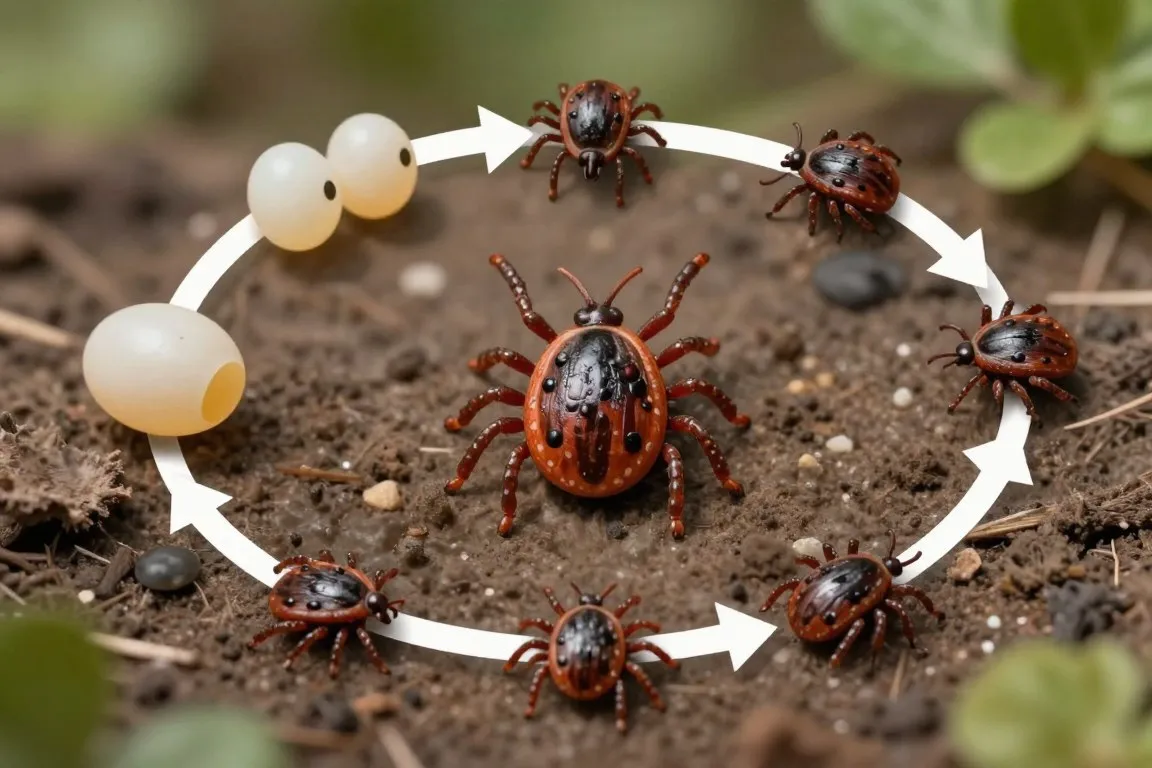
A tick life cycle usually includes four life stages: egg, larva, nymph, and adult. The exact timing varies by species, temperature, humidity, and host availability. Many ticks need a blood meal before moving to the next stage.
After eggs hatch, tick larvae seek a host. A larva may feed on a small animal, then drop into the environment and molt into a nymph. Nymphs are especially important in Lyme disease ecology because they are small and can be difficult to notice.
Adult ticks commonly seek larger hosts. Deer can provide blood meals for some species, although deer do not always infect ticks with the bacteria that cause Lyme disease. Small mammals, birds, pets, and people may also serve as hosts at different stages.
| Life stage | Typical host pattern | Main biological task | Public health relevance |
|---|---|---|---|
| Egg | No host | Develop and hatch | Environmental population growth |
| Larva | Small animals | Take the first blood meal | Usually not infected at hatching |
| Nymph | Wildlife, pets, or people | Grow toward adulthood | Important Lyme disease transmission stage |
| Adult | Medium or large mammals | Feed and reproduce | Can spread several diseases |
The American dog tick follows a related pattern, but it is not the main vector of Lyme disease in the United States. The blacklegged tick is more closely associated with Lyme disease transmission. Common names can therefore cause confusion when discussing tick species and disease.
Evolution, mating speed, and disease ecology
Faster mating can increase reproductive success when females mate only once or strongly favor the first male. In the spider mite example, this pressure may explain why males respond quickly to the signs of sexual maturity. The finding is an example of sexual selection, not proof of conscious learning.
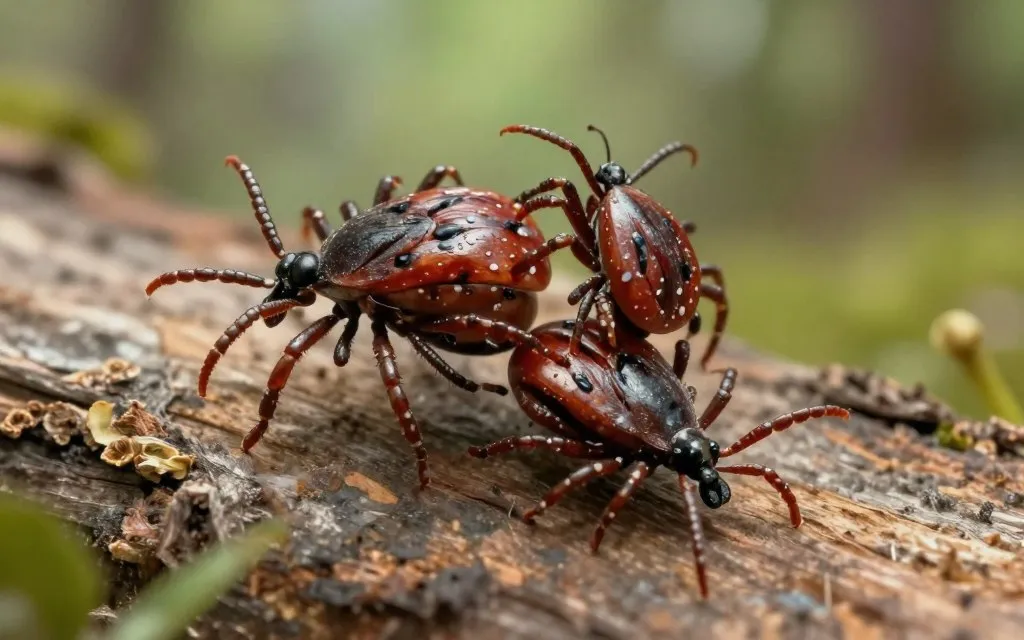
Tick mating is more complex. In many species, males and females meet on a host, often while one or both are taking a blood meal. Chemical signals, touch, host movement, and seasonal activity may all influence contact. A successful mating event allows females to produce eggs after feeding.
For ticks, population growth depends on more than mating speed. Eggs must survive, larvae must find hosts, and each later stage must obtain enough blood to molt or reproduce. Dry weather, cold winters, predators, and a lack of hosts can reduce survival.
The connection with disease ecology is indirect. A larger tick population may create more opportunities for bites, but disease risk also depends on the tick species, local bacteria, host community, and time spent attached. Lyme disease requires a suitable vector and the presence of bacteria such as Borrelia burgdorferi.
Seasonal activity and practical meaning
Tick activity changes through the year. In many parts of the United States, nymphs are active during spring and summer. Adult activity may rise in fall or during mild winter periods. These patterns differ by species and region.
People can lower exposure by staying on cleared paths, using an EPA-registered repellent, wearing long clothing, and checking skin after outdoor time. Pets also need regular checks, especially around the ears, collar, legs, and between the toes.
- Remove an attached tick promptly with fine-tipped tweezers.
- Pull upward with steady pressure rather than twisting.
- Clean the bite area and your hands after removal.
- Watch for illness and contact a health professional if symptoms appear.