Porn, games and betting: which addiction wrecks a man first
Porn, games and betting can all become difficult to control, but they do not harm every man in the same order. One person may lose money through betting first. Another may lose sleep and work time through gaming. A third may hide porn use until it damages intimacy and trust.
The key issue is not which behavior is always worst. The more useful question is how often it occurs, how quickly it escalates, what it costs, and whether the person can stop when he intends to stop.
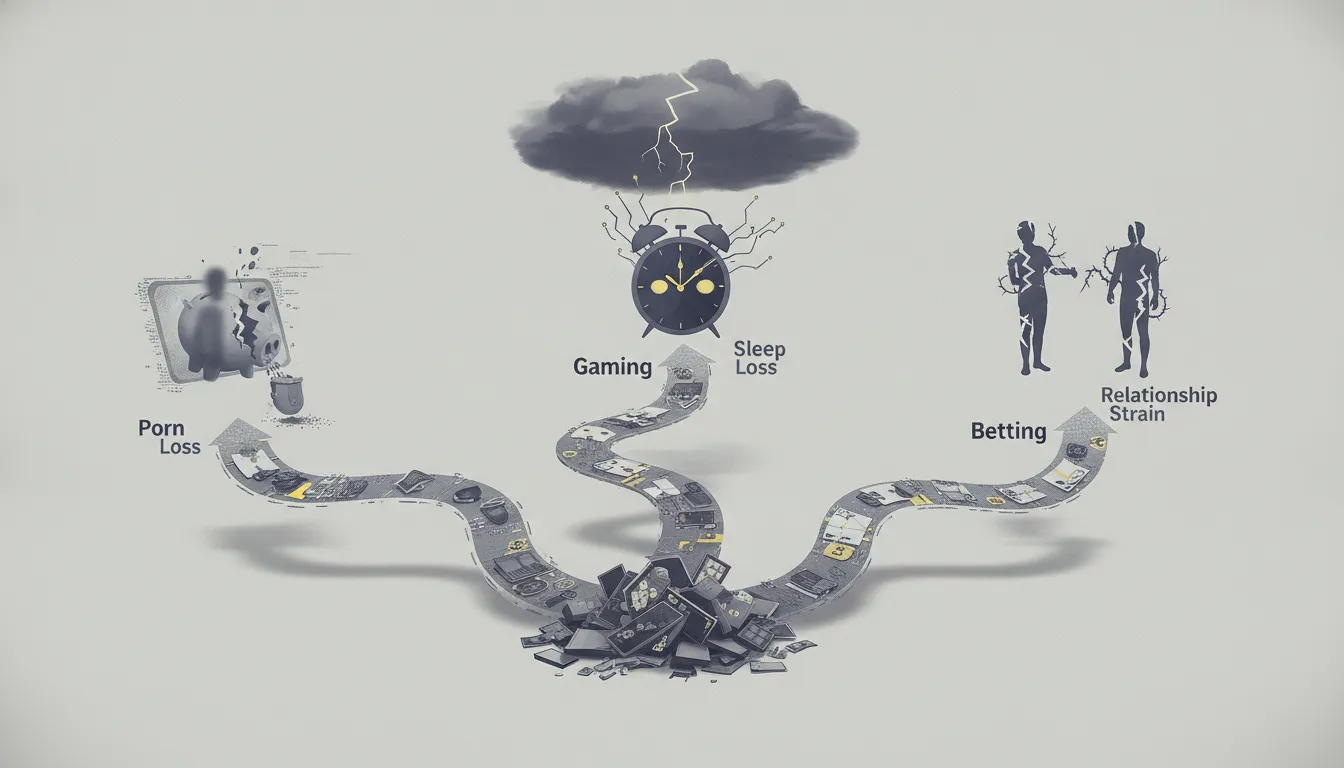
How porn, games, and betting create different risks
Porn use can become harmful when it is difficult to control, takes priority over normal responsibilities, or continues despite clear personal and relationship problems. Frequency alone does not establish a disorder. The important details include loss of control, distress, repeated failed efforts to reduce use, secrecy, and interference with daily life.
Some men use porn as a way to manage stress, boredom, loneliness, or difficult feelings. That short-term relief can become a repeated loop. A person feels uncomfortable, views porn, experiences temporary relief, and later returns to the same behavior when discomfort appears again. Over time, the behavior may take more time or become more secretive.
Relationship effects may include reduced intimacy, arguments about honesty, unrealistic expectations, or difficulty discussing sexual needs. These outcomes are not automatic. They depend on the couple, the person’s use, shared boundaries, and the meaning each partner gives to the behavior.
Gaming is different because the main reward often comes from play, progress, competition, social contact, or achievement. A game can be a normal leisure activity. Risk rises when sessions regularly replace sleep, work, study, exercise, meals, or contact with family and friends.
Some games use repeated rewards, ranked competition, limited-time events, or social pressure to keep players active. Those features do not make every player addicted. They can, however, make it harder for some people to stop at a planned time.
The financial risk of ordinary gaming is usually different from betting. A player may spend money on a game, equipment, or optional digital items. Betting directly exposes money to uncertain outcomes. The loss can be immediate, and the urge to recover it can lead to larger bets.
Betting can harm finances faster than the other two behaviors because money is placed at risk during the activity itself. A person may borrow, hide transactions, use household funds, or chase losses. The central danger is not a single loss. It is the repeated belief that another bet can repair earlier losses.
Betting can also affect mood and attention. Anticipation, disappointment, and the search for a win may occupy the person’s thoughts outside the betting session. Access through a phone can remove practical barriers that once limited how often a person could place bets.
- Possible secrecy around viewing
- Potential conflict about intimacy and trust
- Time loss when use becomes repetitive
- May be used to manage stress or loneliness
Porn use
- Possible loss of sleep and routine
- Reduced work or study attention
- Social withdrawal outside the game
- Spending may occur without direct betting
Gaming
- Direct exposure of personal money
- Risk of chasing losses
- Secrecy about transactions or debt
- Fast escalation when access is constant
Betting
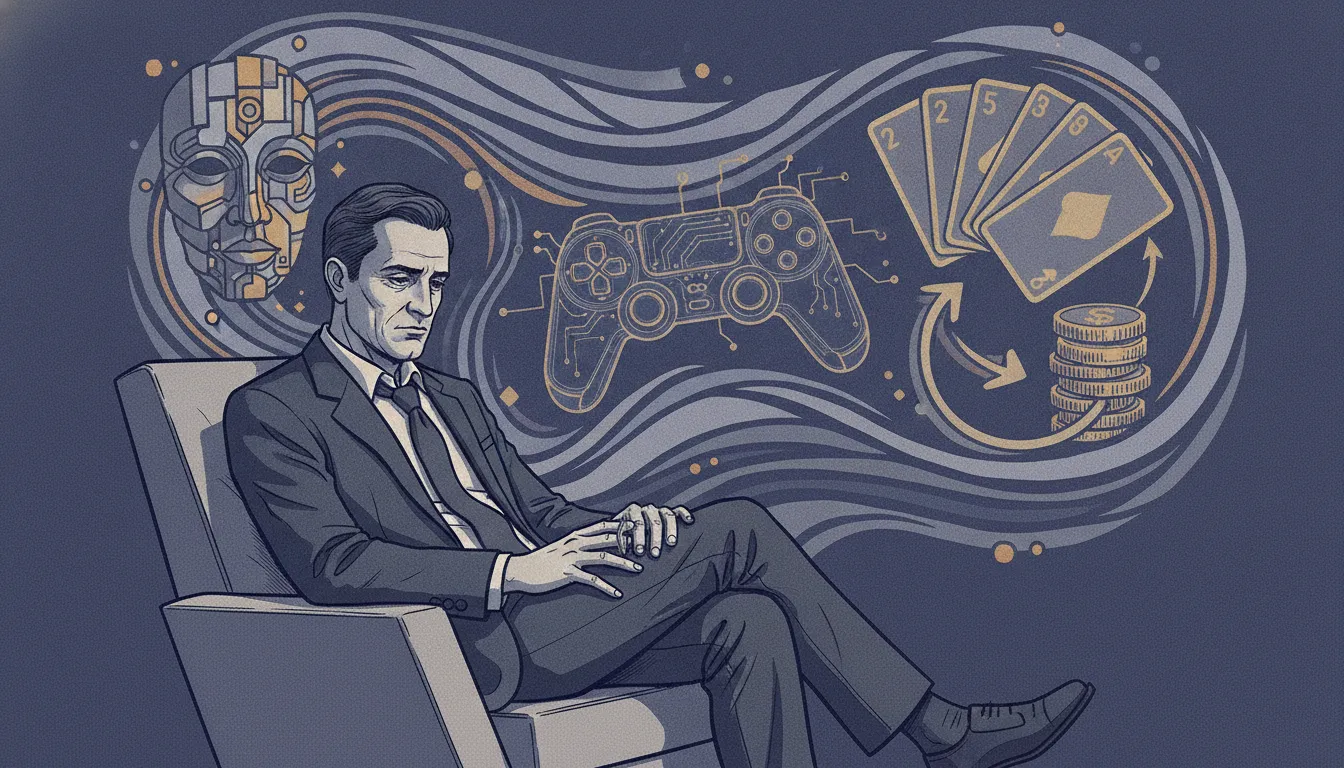





Which addiction wrecks a man first?
There is no universal order. Betting may cause the earliest visible crisis when a man has easy access to betting services, uses money impulsively, or believes losses can be recovered. A single period of heavy betting can create debt, conflict, and secrecy before other consequences become obvious.
Gaming may appear less destructive at first because it does not always involve large financial losses. Its effect can build through late nights, missed duties, reduced exercise, and weakened attention. A man may keep working and paying bills while his sleep and relationships decline.
Porn use may remain hidden for longer. The first visible problem may be a change in intimacy, emotional distance, or repeated arguments about honesty. If a person uses porn to avoid stress or difficult feelings, the behavior may become more important as other areas of life become harder.
These are possible patterns, not fixed stages. The same behavior may affect two men in completely different ways. One may use games for a limited period and stop without major harm. Another may lose control over sessions and neglect essential duties.
Several factors change the speed and severity of harm:
- Access affects how quickly a behavior can be repeated. A phone can provide constant access to games, porn, or betting.
- Frequency matters when use takes time from sleep, work, relationships, or basic care.
- Escalation may involve longer sessions, larger bets, more secretive use, or stronger stimulation.
- Financial exposure is especially important in betting, but spending can also occur through games and paid adult services.
- Secrecy can delay support and increase conflict when others discover the pattern.
- Mental health can affect why the behavior starts and why it continues.
Co-occurring anxiety, depression, trauma, attention problems, loneliness, or substance use may complicate the picture. It is not accurate to assume that one behavior caused every problem. A person may be using the behavior to cope with an existing problem, while the behavior also creates new problems.
Self-control should be examined in practical terms. Can the person stop when he plans to stop? Can he avoid using money needed for essentials? Can he sleep, work, and maintain relationships? Can he discuss the behavior honestly? These questions are more useful than a simple count of hours or sessions.
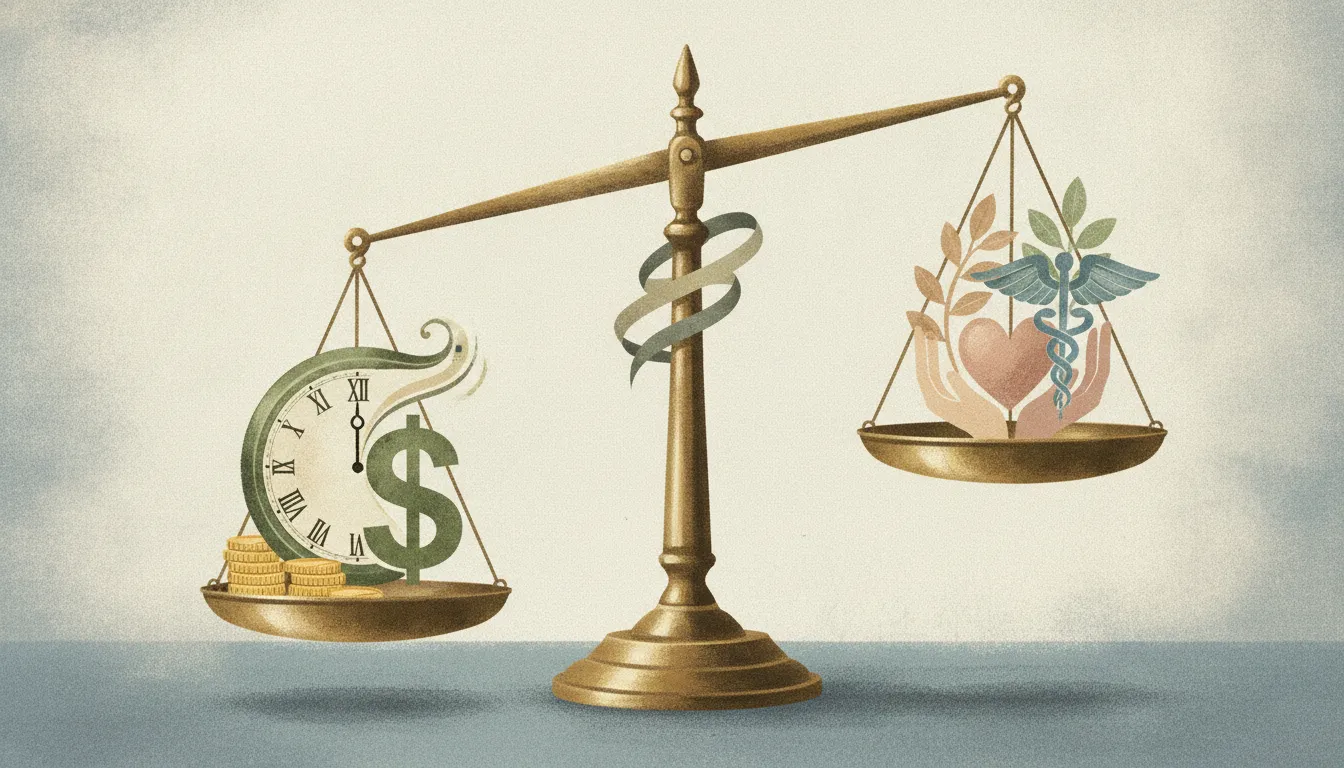






Warning signs across money, work, health, and relationships
Financial warning signs are strongest in betting but should not be ignored in other activities. They include spending more than planned, hiding purchases, using money reserved for bills, borrowing without a clear repayment plan, or trying to recover losses through further risk.
Time-related warning signs include staying up late, missing appointments, delaying work, skipping meals, or losing interest in activities that once mattered. A man does not need to spend every day on a behavior for it to become harmful. Repeated interference with important duties is enough to justify a closer look.
Relationship effects may involve lying, defensiveness, emotional withdrawal, reduced intimacy, or repeated arguments. Partners may disagree about what counts as acceptable use. The central issue is whether the behavior is discussed honestly and whether shared boundaries are respected.
Physical health can suffer through sleep loss, inactivity, missed meals, stress, and long periods in one position. Porn use, gaming, and betting do not create the same physical risks, but all three can contribute to neglect of basic routines when they become dominant.
Mental health effects can include shame, irritability, anxiety, low mood, restlessness, or a strong urge to escape ordinary life. These effects may come from the behavior, from the problems that existed before it, or from both. A careful assessment avoids assigning one simple cause.
A person can also move between behaviors. For example, he may game to avoid worry, use porn after gaming, or bet during a period of excitement linked to competition. One activity may become a trigger for another. Looking at the full routine is more accurate than examining only one screen or one account.
Immediate attention is appropriate when there is serious debt, threats to personal safety, inability to meet basic needs, severe depression, thoughts of self-harm, or dangerous substance use. In those situations, a qualified health or emergency professional is more appropriate than self-guided online advice.






What a useful response looks like
The first response should be specific rather than moralizing. Write down the behavior, the usual trigger, the time spent, the money involved, and the immediate consequence. A short record can show whether the main problem is access, stress, boredom, sleep loss, debt, or conflict.
Practical limits may include removing stored payment details, avoiding betting access, setting a fixed device-free period, keeping the phone outside the bedroom, or planning another activity for a known trigger time. These steps do not replace professional care, and they may not be enough when control is severely impaired.
Financial protection is especially important when betting is involved. Essential bills should be separated from discretionary funds. A trusted person may need to know about debt or unusual transactions. Concealing losses usually delays a realistic response.
Professional help can address the behavior and any related condition. A clinician may ask about mood, anxiety, sleep, substances, relationships, trauma, and attention. The goal is not to rank porn, games, or betting as morally good or bad. The goal is to understand the pattern and reduce harm.
A partner or family member also needs boundaries. Support does not require covering debts, accepting repeated lies, or allowing essential money to be used for betting. Clear limits can protect the household while the person seeks appropriate help.





Conclusion
No single behavior universally wrecks a man first; harm depends on access, frequency, escalation, financial exposure, secrecy, mental health, and loss of daily control.
Additional photos are available in the gallery below.