Plastic waste in the ocean increases with depth

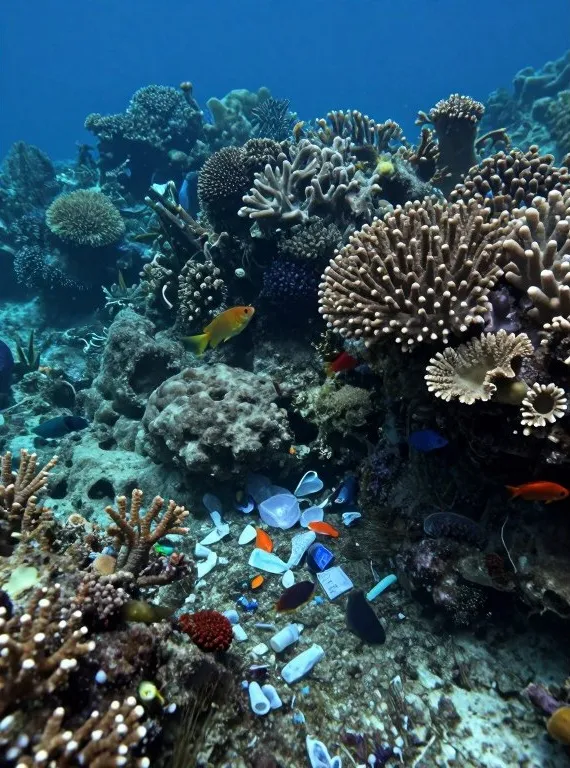
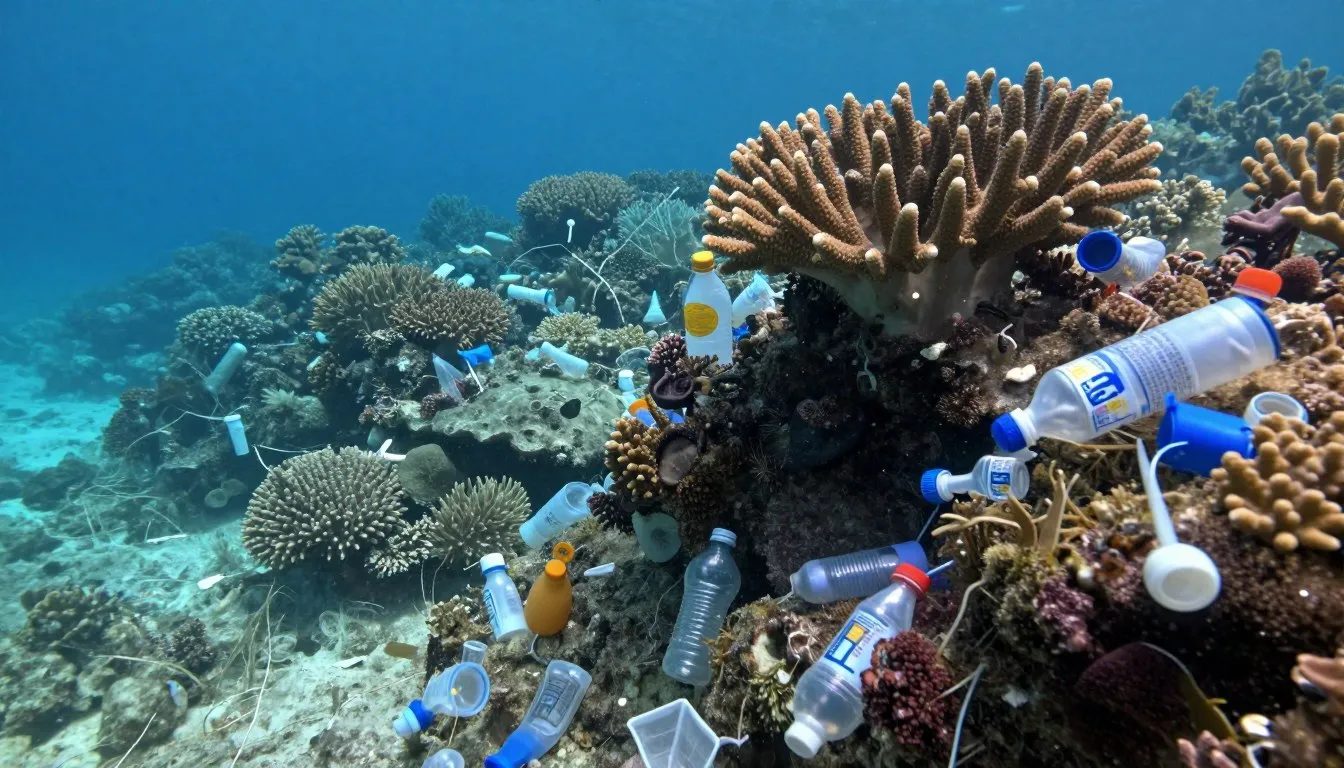
Researchers have found that the amount of plastic waste around coral reefs increases with the depth of the ocean. This poses a serious threat to fragile ecosystems.
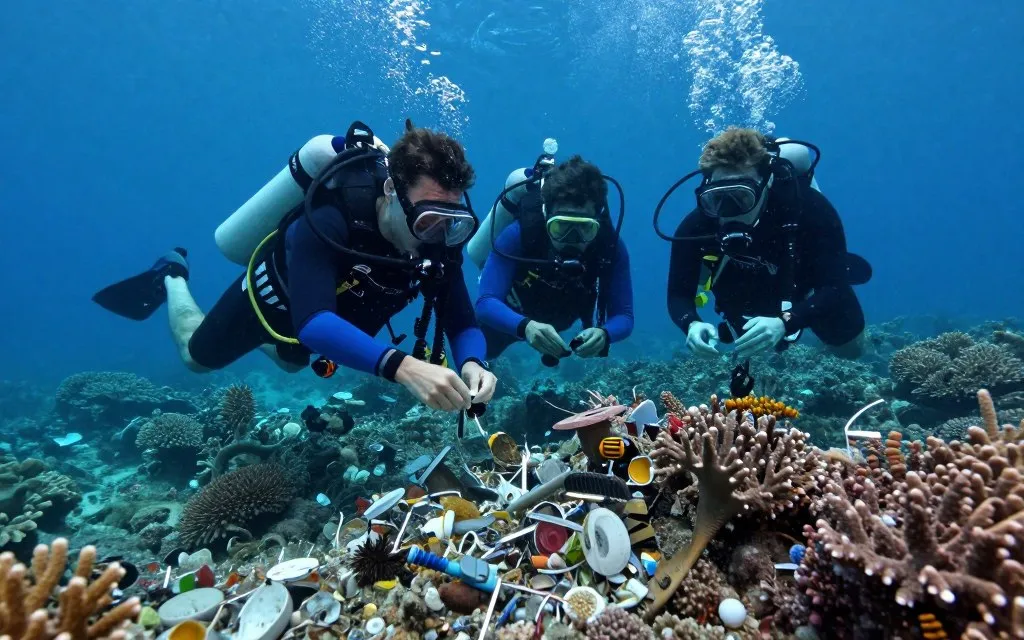
Scientists used specialized diving equipment to capture footage at depths of 30-150 meters in the Indian, Pacific, and Atlantic Oceans. They discovered that deeper areas are more severely polluted with debris.
"It was astonishing to find that the amount of waste increases with depth, considering that deeper reefs are generally farther away from sources of plastic pollution," the researchers reported.
Oceanographers noted that plastic can spread diseases among corals, while fishing lines and nets can damage reef structures, causing harm to the abundance and diversity of fish.
Why plastic waste in the ocean increases with depth
The ocean surface is the most visible place to find plastic pollution, but it is not the only place where waste collects. Wind, waves, and currents move bottles, bags, rope, and fragments across large areas. Some items remain at the surface for long periods. Others become waterlogged, break apart, or attach to biological material and sink.
Plastic does not behave in one fixed way. A lightweight item may float when it first enters the ocean. Sunlight and wave action can weaken it over time. The item can then split into smaller plastic particles. These particles may have different densities and can move through several layers of the sea.
Rivers are one route by which global plastic reaches the ocean. Coastal activity, fishing, shipping, and lost equipment add other sources. Once waste enters the water, currents can carry it away from the place where it was released. Distance from land does not mean that a reef or deep-sea habitat is protected from marine debris.
Depth also changes the physical conditions around waste. Light becomes weaker, pressure rises, and temperatures can fall. These conditions do not make plastic disappear. Instead, they can affect where particles settle and how organisms interact with them.
One important process is the attachment of organic matter. Small particles can become covered with algae, microbes, or other material. This added mass may change their movement. A particle that once floated can sink, while another may remain suspended between the surface and the seafloor.
Marine snow is another part of this process. Marine snow consists of natural particles that descend through the water. Plastic particles can become associated with this falling material. The result is a pathway that may transport microplastics into deeper parts of the ocean.
- Floating items can be carried by wind and surface currents.
- Sunlight and wave action can break larger debris into smaller particles.
- Organic material can attach to particles and change their movement.
- Currents can move waste far from its original source.
- Marine snow can help carry some particles toward deeper water.
These processes help explain why researchers must study more than the surface. A surface survey may record only part of the plastic present in an area. Underwater observations provide additional data about debris at reef depths and along the seafloor.
How plastics affect marine organisms at different depths
Large debris can cause direct physical damage. Fishing lines and nets may wrap around corals, fish, turtles, and other organisms. Hard fragments may scrape reef surfaces or become lodged in narrow spaces. The effects depend on the material, the location, and the time that debris remains in the habitat.
Microplastics create a different problem. These small pieces can be difficult to see and may be eaten by organisms. They can move through food webs when one organism consumes another. The presence of particles does not mean that every organism will experience the same effect, but it creates an exposure route that researchers continue to examine.
Coral reefs are complex environments. Their surfaces provide shelter and feeding areas for many organisms. Plastic waste can cover living coral, reduce available space, and carry microorganisms. Waste can also change the way animals move through a reef.
At greater depths, organisms may encounter plastic in suspended particles, settled debris, or contaminated food. Deep-sea animals often live in low-light conditions and depend on material falling from upper waters. If plastic becomes part of that material, it can enter habitats that are difficult to inspect and clean.
The term plastic pollution covers many forms of waste. A complete assessment should distinguish between large marine debris, fishing gear, fragments, fibers, and microplastics. Each type can move in a different way. Their risks also vary according to shape, size, density, and the organisms that encounter them.
Plastic found below the surface is not necessarily produced at that depth. Currents, sinking, biological attachment, and the breakdown of larger waste can transport it through the ocean.
Researchers use different tools to study these patterns. Divers and remotely operated equipment can record images around reefs. Nets, pumps, and other sampling methods can collect particles from the water. Sediment samples can provide information about material that has settled on the seafloor.
Each method has limits. A camera records visible objects but may miss small particles. A water sample covers a limited location and time. Sediment data may show what has settled but not how the material arrived. Combining methods gives a broader view of plastic movement through the ocean.
Data from one reef should not automatically be treated as a measure of all oceans. Conditions differ between regions. Currents, reef structure, local activity, depth, and seasonal changes can affect the amount of waste found in a particular survey.
- Record the location, depth, and type of debris.
- Separate visible waste from microplastic particles.
- Compare surface observations with underwater samples.
- Track how currents and habitats may influence accumulation.
- Report uncertainty when data covers only a small area or period.
What the finding means for ocean research
The discovery that plastic waste increases with depth changes how ocean pollution is measured. Monitoring only beaches and the surface can leave out important parts of the problem. Research must also consider reefs, midwater layers, sediments, and deep-sea habitats.
Better data can help identify where debris is concentrated and which organisms face the greatest exposure. It can also separate short-term movement from long-term accumulation. A single year of observations may show conditions at one point in time, while repeated surveys can reveal whether pollution is increasing, decreasing, or shifting location.
The scale of the issue is often described in tons or million tons, but these figures do not describe every part of the ocean equally. Global estimates combine information from many regions and methods. Local measurements are needed to understand the conditions experienced by particular reefs and marine communities.
Scientists also need to study the relationship between large waste and marine microplastics. A net or container can remain intact, or it can fragment into many smaller pieces. Those pieces may be transported differently from the original object. Understanding this change is important for models of plastic pollution.
There is no single depth at which plastic stops moving. Some material may stay near the surface. Some may remain suspended in the water column. Other waste may settle on the seabed and later be moved again by currents, storms, or activity on the seafloor.
Public understanding also depends on precise language. Saying that plastic increases with depth does not mean that every ocean location has more waste at every deeper point. It describes a pattern found in the reported observations. The pattern requires further study across regions, depths, and habitat types.
The finding has practical importance for conservation planning. Reef protection cannot focus only on shallow areas or visible shoreline litter. It must account for debris that arrives from distant sources and waste that is already below the surface.
Plastic can move between the surface, water column, reefs, and seafloor, so ocean pollution data must include more than floating debris. Deeper surveys are needed to measure exposure among corals and other marine organisms.
Additional photos of ocean plastic pollution are available in the gallery below.