BTS vs Blackpink: why one fandom acts like a church
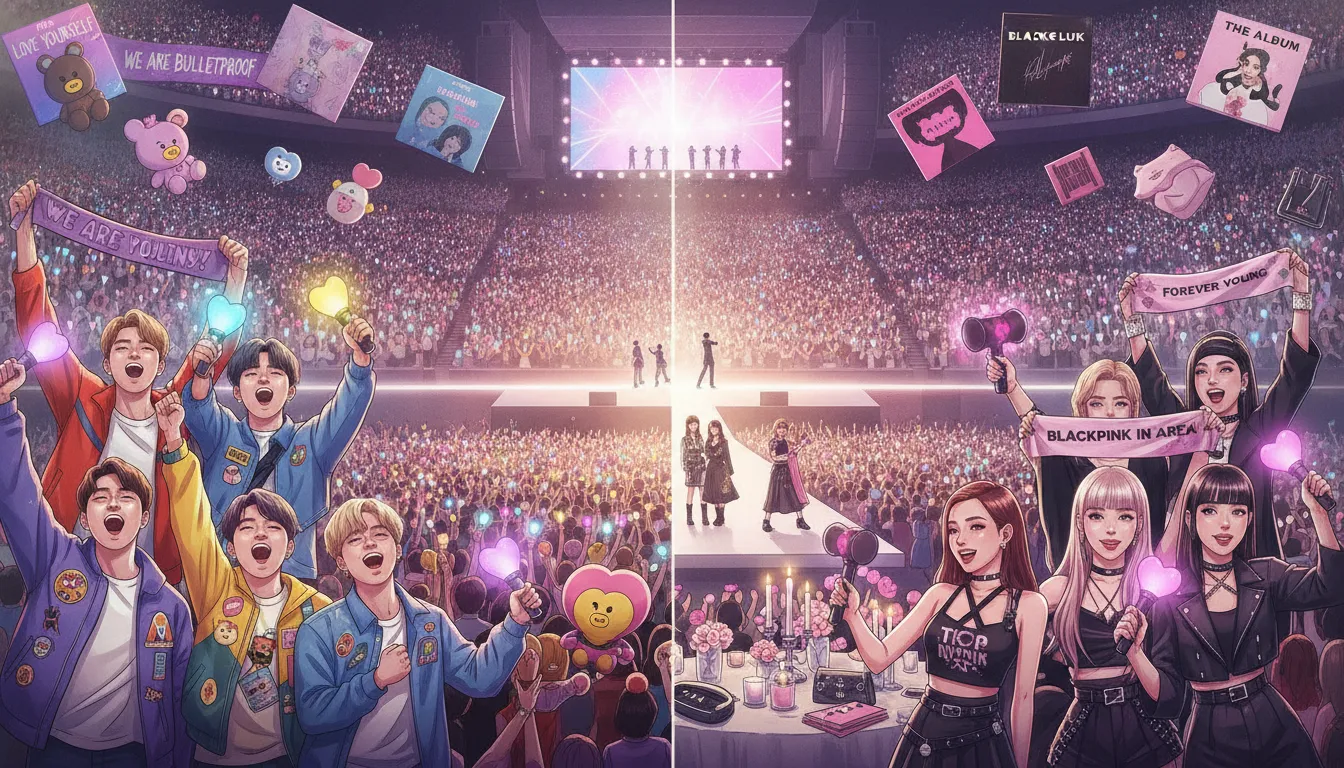
In 2020, BTS fans raised more than $1 million for the Black Lives Matter movement in roughly 24 hours. They matched a donation BTS had just made. No label or sponsor organized it; strangers online simply decided to give.
That moment reveals much about the BTS Blackpink conversation. Both acts stand at the top of global pop, fill stadiums, and break streaming records. Yet their fanbases behave in strikingly different ways.
The ARMY fandom follows near-liturgy: message-driven lyrics act as doctrine, and comeback cycles feel like holy seasons. Fans study sprawling BTS Universe lore like scripture, while translation accounts serve as clergy. Charity drives resemble tithing, while the BLINK fandom favors fashion, visual spectacle, and fierce chart advocacy.
This framing offers analysis, not mockery. Scholars of religion have used the same lens on sports crowds and political movements.
The scale demands attention. BTS addressed the United Nations General Assembly in 2018 and again in 2021. They repeatedly topped the Billboard Hot 100 and sold out stadiums across four continents. Blackpink headlined Coachella in 2023 and holds YouTube records few artists approach.
This article examines where the rivalry began and how K-pop fandom culture creates intense fan devotion. It explores why parasocial connection can become a quasi-religious fandom. It also weighs the genuine good from collective giving and the real price of extreme loyalty.
The Fandom Divide That Sparked a Cultural Debate
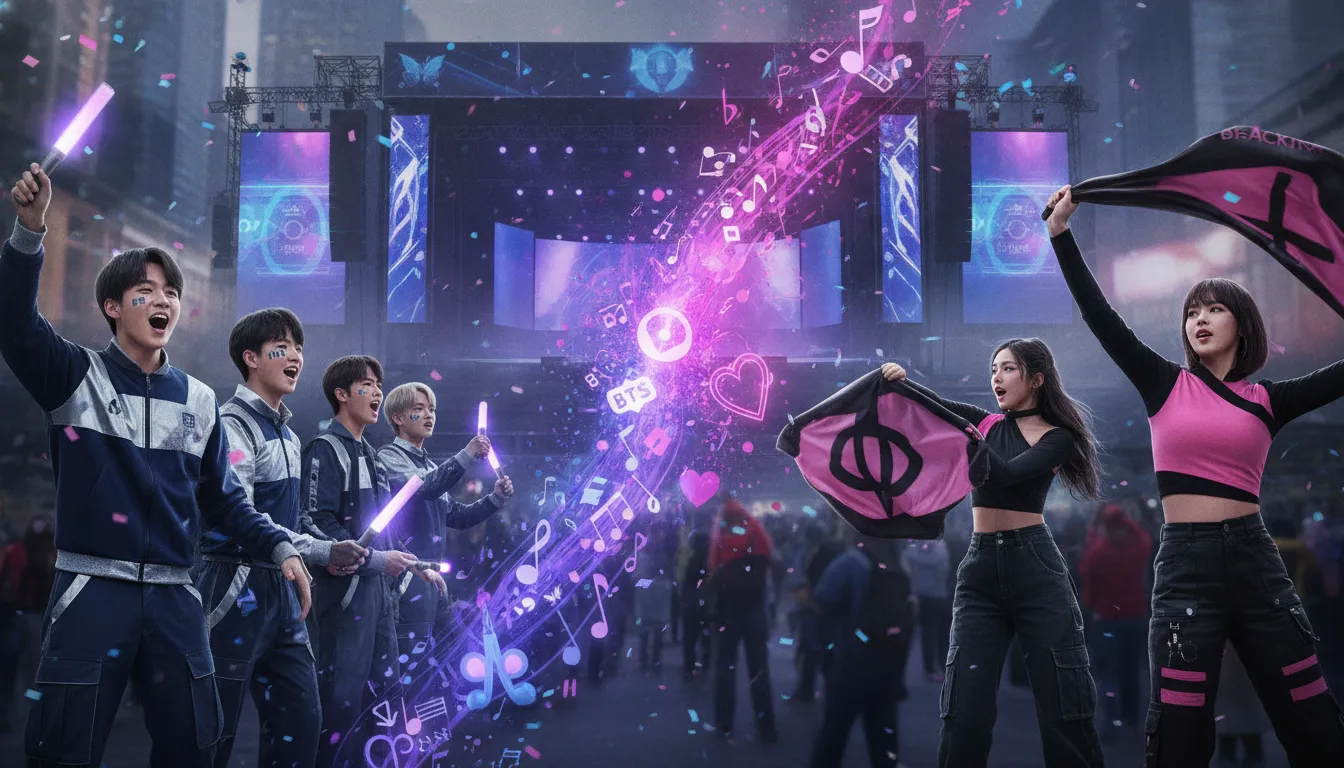
The BTS vs Blackpink debate did not come from the artists. BTS records under HYBE, while Blackpink records under YG Entertainment. Neither group has traded a single public jab; the conflict grows from comparison culture, chart accounts, and awards voting blocs that treat music like a scoreboard.
Most K-pop fan wars start with a number, such as a YouTube 24-hour view record falling. A Spotify milestone gets screenshotted, or a Billboard Hot 100 placement drops one spot, and stan Twitter cites it. Grammy nomination discourse adds fuel because Western recognition carries symbolic weight beyond a trophy.
The contrast between the groups makes the ARMY vs BLINK comparison interesting. One fandom mobilizes through structure and mission; the other uses aesthetics, viral moments, and fashion cycles.
| Fandom Trait | ARMY (BTS) | BLINK (Blackpink) |
|---|---|---|
| Primary engagement style | Organized campaigns, streaming projects, translation teams | Moment-driven posting, visual edits, fashion coverage |
| Common vocabulary used by press | Devotion, gospel, congregation, conversion story | Fanbase, followers, supporters |
| Typical flashpoint | Chart placements and awards recognition | MV view records and brand ambassadorships |
| Coordination level | Highly centralized, with volunteer subgroups | Loose and decentralized |
That vocabulary gap matters. Journalists, academics, and fans use religious language for ARMY, but almost never for BLINK. This fandom rivalry raises a key question: why does one group's loyalty look like faith?
Understanding the Foundations of the BTS Blackpink Rivalry
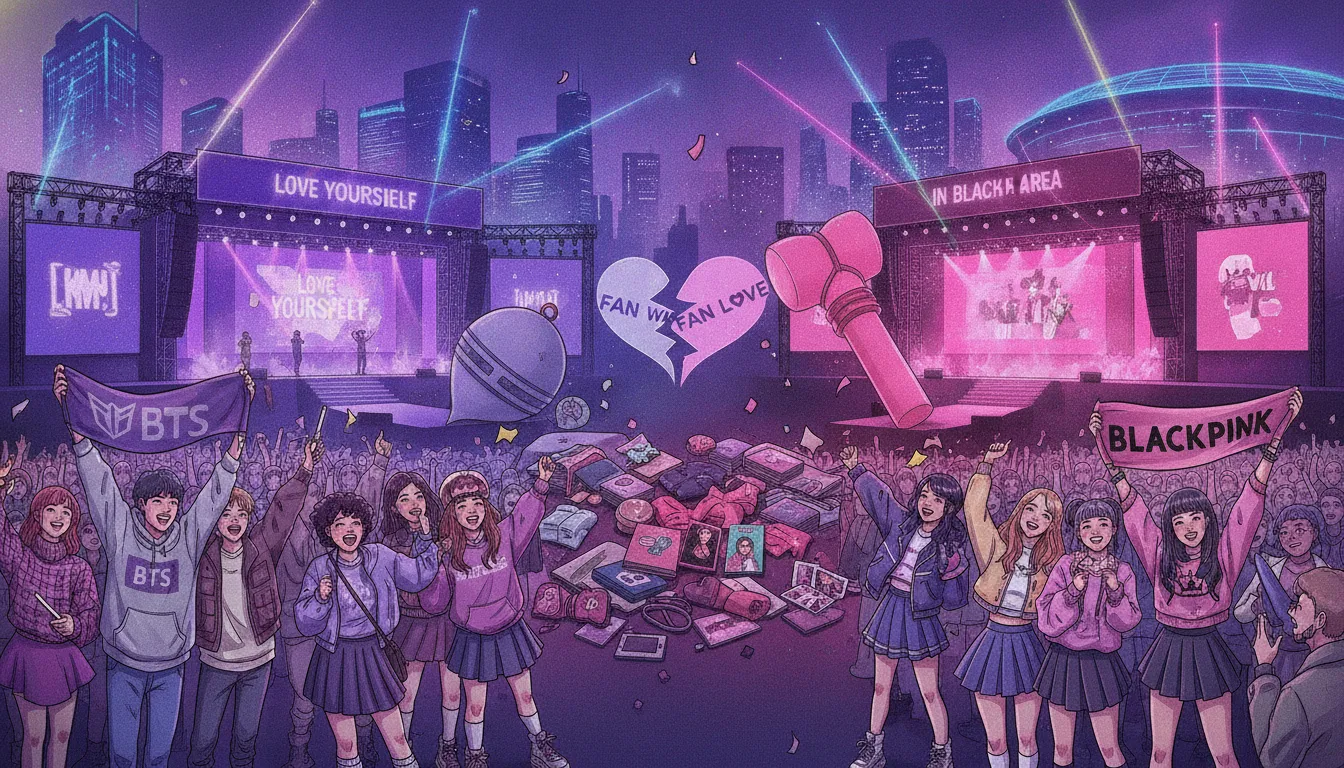
BTS history began in June 2013 with 2 Cool 4 Skool, released by Big Hit Entertainment, then a small label under financial strain. The seven members wrote, produced, and rapped about their struggles. This gave fans a story of shared survival.
The Blackpink debut came in August 2016 through YG Entertainment, one of the industry's most established companies. The four members arrived polished, fashion-forward, and linked to luxury branding. Both acts belong to the K-pop third generation, but they inherited opposite emotional blueprints.
ARMY adopted a "we built this together" mindset and treated chart wins as personal victories. BLINKs embraced icon admiration, focused on four figures who seemed untouchable. Big Hit Entertainment later became HYBE, a publicly traded giant, but fans kept the underdog memory.
Release frequency also matters. Frequent output creates weekly habits, while selective releases bring long waits and intense bursts of attention.
| Factor | BTS | Blackpink |
|---|---|---|
| Debut | June 2013 | August 2016 |
| Label at debut | Big Hit Entertainment (now HYBE) | YG Entertainment |
| Members | Seven | Four |
| Creative role | Heavy songwriting and production input | Curated concepts with select member credits |
| Release pattern | Frequent albums, mixtapes, solo work | Fewer, high-impact singles and albums |
| Fan narrative | Underdogs who rose with their fans | Global icons of aspiration and style |
Doctrine and Message: The Sermon Built Into BTS Lyrics
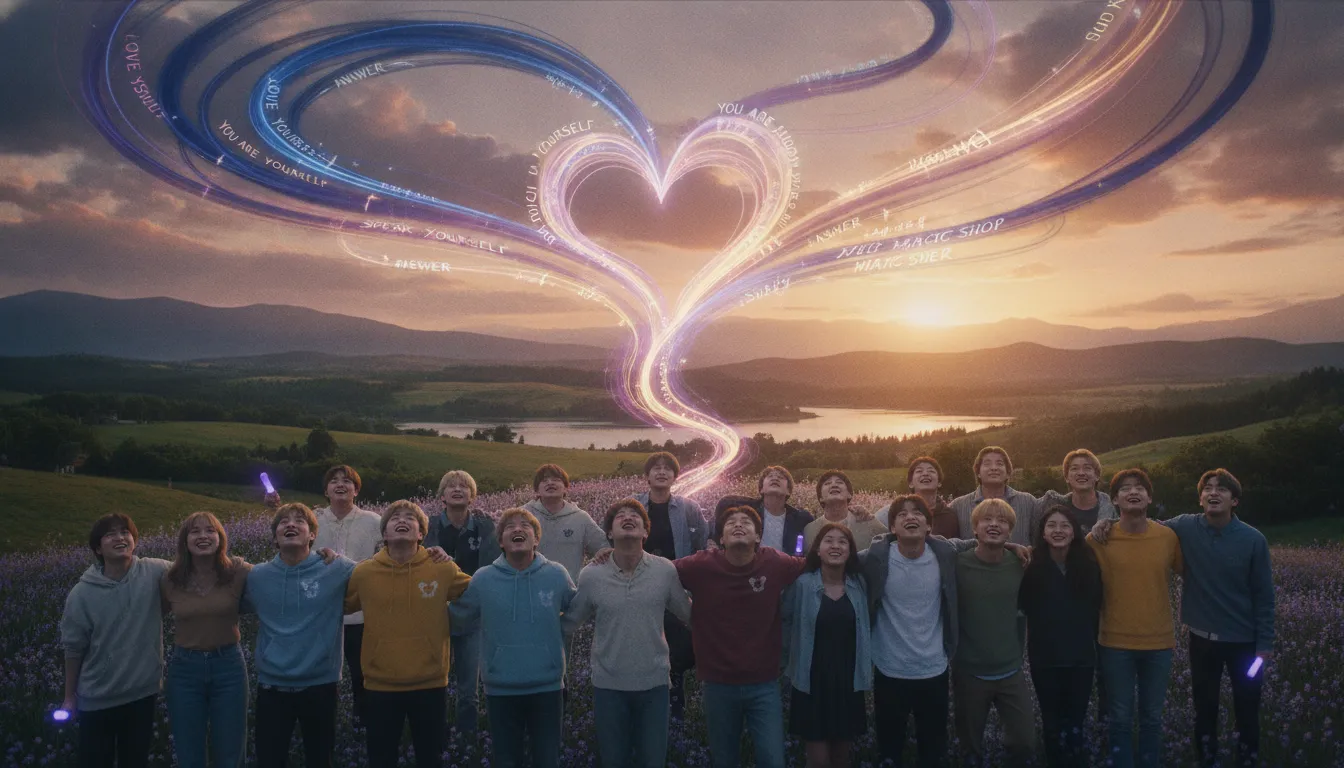
Devotion needs content. ARMY's congregation-like behavior begins with what BTS songs say. BTS lyrics meaning often centers on self-worth, burnout, class pressure, and fear of failing a generation.
The early school trilogy questioned South Korea's grueling academic culture. The Love Yourself series turned inward, closing with "Answer: Love Myself," a track fans quote like proverbs. This arc gave the group a rare ethical spine in mainstream music.
Public moments sharpened the effect. RM's 2018 BTS UN speech introduced the "Speak Yourself" call worldwide. The group returned to the UN General Assembly in 2021 as youth envoys, making both appearances feel like sermons, not promotion.
"Speak yourself" became less a slogan and more a personal instruction fans carry into therapy sessions, classrooms, and difficult conversations.
Repetition matters. Hearing the same moral themes across albums can turn them into doctrine. Fans credit mental health K-pop conversations sparked by these records with changing discussions of depression and self-hatred.
Blackpink's catalog is magnetic and fiercely stylish, but it offers attitude, not an explicit belief system. Its power is easy to feel, yet harder to turn into scripture.
Ritual, Repetition, and the Weekly Rhythms of ARMY Life
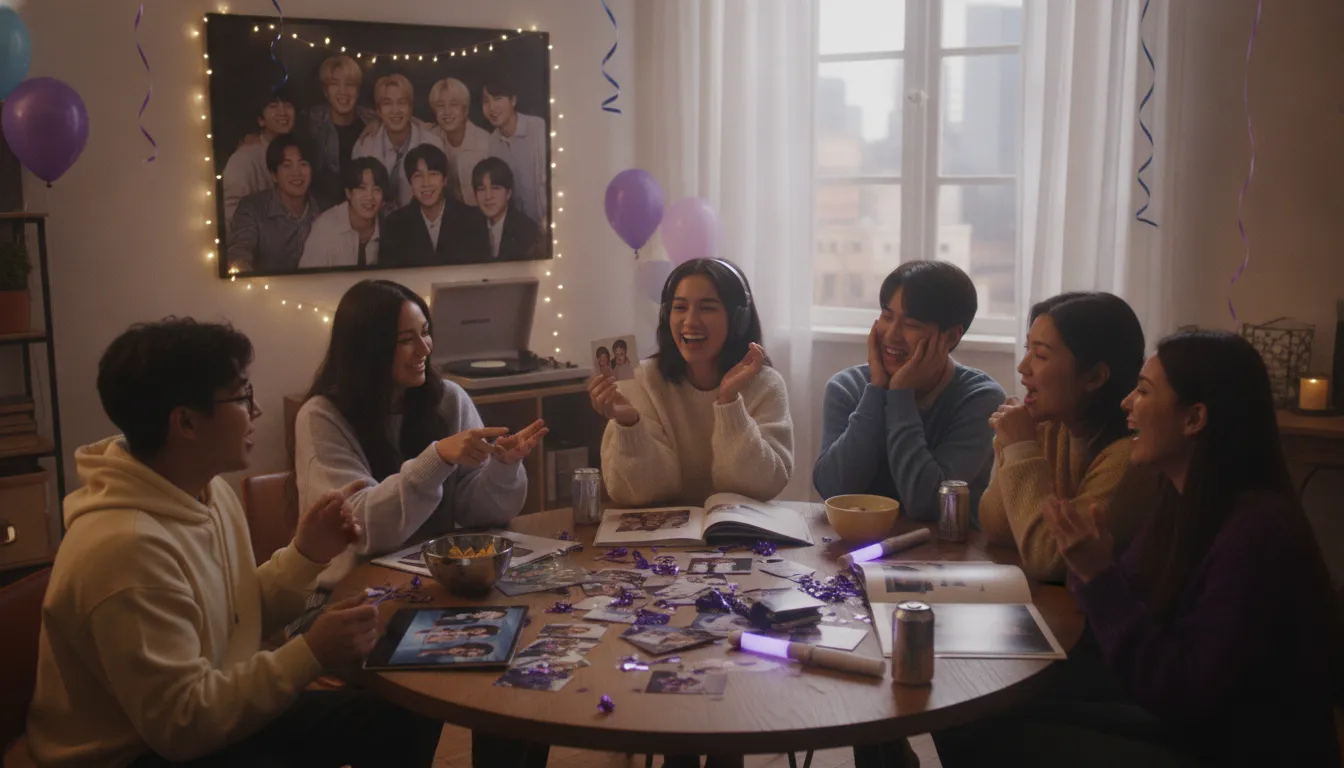
Devotion needs a calendar. For ARMY, that calendar follows repeating cycles like a liturgical year, with each BTS comeback as a high holiday.
The buildup follows a familiar order: logo trailers, concept photos, tracklist reveals, and countdown livestreams. Streaming parties lead to a midnight release that pulls fans online across every time zone. Between those peaks, smaller observances keep the rhythm steady.
- Streaming parties organized by fanbase accounts with playlist rules and hourly goals
- Radio request drives aimed at U.S. pop stations during release weeks
- Coordinated hashtag hours timed to trend a phrase worldwide
- Fanchants memorized line by line and performed in unison at shows
- ARMY Bomb light-stick sync, turning a stadium into one moving color field
- Birthday and anniversary projects, from billboard funds to subway ads in Seoul and New York
Daily ARMY rituals matter as much as the big events. Weverse posts, Bangtan Bombs, and members' late-night messages give fans reasons to check in each morning, like a daily reading.
Sociologists have a name for repetition meeting synchrony: collective effervescence, Émile Durkheim's term for emotional charge when people act in unison. It uses the same mechanism as congregational singing.
BLINK K-pop fan routines exist too, including chart pushes, Coachella watch parties, and comeback countdowns. However, they gather around less frequent releases instead of a continuous weekly pulse.
Sacred Texts, Lore, and the Archives Fans Study Like Scripture

Weekly rituals give ARMY rhythm, while the BTS Universe turned casual listeners into close readers. This alternate story world appears in music videos, short films, and the Notes books. Fans map timelines, trace repeated symbols, and debate which details count as canon.
The HYYH era remains the core scripture. Its short films, hidden numbers, and mirrored scenes fueled thousands of BTS theories across YouTube, Reddit, and Tumblr. The webtoon Save Me expanded BU lore, giving readers a fuller view of events hinted at in the videos.
Interpretation depends on labor. Fan translation accounts subtitle livestreams, annotate lyrics, and explain Korean wordplay within hours of a broadcast. These volunteers interpret doctrine across language barriers, while K-pop fan archives store variety clips, award speeches, and old fancams with startling precision.
Long-form films serve as chronicles. Burn the Stage, Bring the Soul, and BTS Monuments: Beyond the Star are rewatched as congregations revisit familiar readings.
Community Structure: Congregations, Leaders, and Gatekeeping
Devotion needs structure. ARMY fanbases use layered systems that resemble working institutions, with clear roles and shared expectations. This fan base organization supports large efforts.
Large project and voting accounts lead by sharing streaming instructions, chart goals, and translated updates. Regional and language chapters follow, with moderators handling disputes and everyday participants providing volume. This online community hierarchy resembles clergy, deacons, and congregants more than many fans admit.
Doctrine spreads informally. Popular K-pop fan accounts guide followers on ethical streaming, when silence beats a reply, and which controversy stories deserve attention. Moderation keeps messages focused and tones consistent.
Gatekeeping appears through purity tests. The long conflict between "solo stans" and "OT7" loyalists resembles an orthodoxy debate. Members must prove commitment through spending, streaming, and public alignment.
Belonging is rarely automatic. It is demonstrated, measured, and renewed.
Charity, Tithing, and the Ethics of Collective Fan Giving
For ARMY, ritual creates a shared faith, while giving creates a practice like tithing. Fans see regular contributions as membership, not a single gesture.
One In An ARMY leads, highlighting a vetted cause monthly and showing pooled fan donations can match corporate gifts. Launched with UNICEF, Love Myself campaign supported UNICEF's End Violence initiative, created an official channel, and raised millions since 2017.
In June 2020, ARMY matched BTS's $1 million Black Lives Matter donation in about one day. That speed made the fandom a recognized force in K-pop fan philanthropy.
Birthday giving acts as merit offered to someone beloved. Fans plant forests, fund wells, and send school supplies in a member's name, timing projects to his birth month.
| Aspect | ARMY | BLINK |
|---|---|---|
| Structure | Organized collectives with monthly cycles | Mostly independent fanbase drives |
| Flagship effort | Love Myself campaign with UNICEF | Birthday donation projects for each member |
| Reporting | Public receipts and running totals | Varies by fanbase account |
Critics ask fair questions: Does BTS charity become a scoreboard or quietly manage a group's image? Transparency—posted receipts, named charities, and open ledgers—remains the strongest available answer.
Identity, Belonging, and Why Devotion Feels Like Faith
Community psychology helps explain these behaviors. Social identity theory, developed by Henri Tajfel and John Turner, says groups can shape self-worth.
ARMY offers a name, a color, a light stick, and a private vocabulary. That package turns casual listening into fandom identity and a sense of belonging worth defending.
Constant contact deepens the bond. Weverse posts, Weverse Live streams, and handwritten notes create parasocial relationships that seem two-directional, although exchanges remain one-sided.
Fans read a 2 a.m. livestream as a personal check-in. That is how emotional intimacy grows.
BTS lyrics offer a framework for understanding pain. Love Yourself and Answer: Love Myself give listeners words for shame, burnout, and self-doubt. This kind of meaning-making mirrors a role religion has long provided.
Researchers have documented real gains for fan wellbeing, along with risks when identity becomes too narrow.
| Documented Benefit | Associated Risk |
|---|---|
| Cross-border friendship networks and a strong sense of belonging | Social withdrawal from offline relationships |
| Korean language learning and cultural literacy | Time displacement from school or work |
| Peer mental health support during hard seasons | Emotional dependence on idol activity cycles |
| Shared purpose through charity and streaming goals | Guilt over unmet fandom expectations |
| Creative output: art, translation, editing | Burnout from unpaid volunteer labor |
The church comparison describes structure and function, not literal worship. Most ARMY members separate admiration from belief with clear eyes, treating the group as a community rather than a creed.
Criticism, Backlash, and the Cost of Extreme Loyalty
Devotion has a price, and structures that create meaning can also cause harm. Both ARMY and BLINK have subgroups that turn passion into pressure against critics, journalists, and rival listeners. These targets may question their favorite act.
Fan wars rarely stay contained. A lukewarm review can spark thousands of quote tweets, while online harassment follows people into their inboxes. Music writers at outlets like Billboard and Rolling Stone have described coordinated pile-ons after ordinary criticism.
Chart manipulation accusations circulate constantly between fandoms. Claims include bulk buying, mass gifting, and stream farming. These disputes damage credibility for everyone, including fans who bought one album they wanted.
Then comes the quieter cost. Comeback season brings doomscrolling, streaming quotas, and spending beyond real budgets. Financial and emotional burnout hits younger fans hardest when loyalty seems measured in receipts.
Cancel culture K-pop cycles move fast, and stepping away can feel like leaving a congregation. When identity joins fandom, silence can seem like betrayal.
"Please take care of yourselves first. We can wait."
Healthier norms can challenge toxic fandom, and they cost nothing:
- Spend proportionally, never beyond what a person can lose comfortably
- Refuse to join harassment campaigns, including silent amplification
- Mute accounts that fuel toxic fandom behavior
- Separate self-worth from chart positions and award results
- Take breaks during comeback weeks without guilt
Conclusion
The BTS Blackpink comparison was never really about vocals, choreography, or chart positions. It shows how a modern community forms when people find something to believe in. BTS offered self-worth, a running narrative across albums, and a steady schedule fans could build their weeks around. These features created doctrine, ritual, shared texts, local congregations, and collective giving, like the parts churches use to unite people.
Blackpink's fans are no less passionate, drawing devotion from style, spectacle, and cultural swagger rather than sermon-like lyrics. BLINKs celebrate an aesthetic, while ARMY organizes around a mission. Both show K-pop global influence, but only one built the scaffolding that turns admiration into an institution.
Religious affiliation keeps falling among young Americans, while fandoms fill the space it leaves. They offer belonging, purpose, and moral language to millions who feel unmoored, with warmth and charity alongside groupthink and harassment.
The fandom future likely includes more quasi-spiritual communities, not fewer. Readers can admire what ARMY and BLINKs built while demanding honest ethical standards from groups with such power.