Viewing dead relatives reduces the lifespan of flies

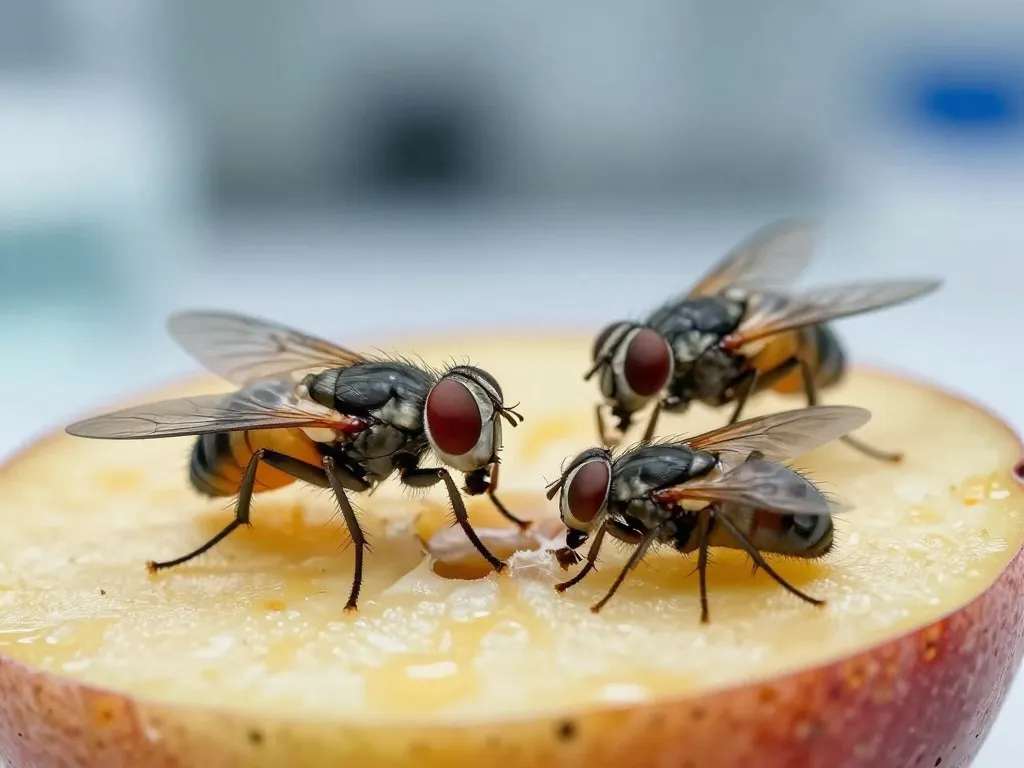
A dead fruit fly may seem like a minor detail in a laboratory dish. Yet for living flies, seeing a corpse can trigger a measurable biological response. Researchers found that viewing dead relatives reduces the lifespan of flies, linking visual perception, brain activity, metabolism, and aging.
A striking finding in fruit flies
The study focused on Drosophila melanogaster, a species commonly used to study genetics and aging. These fruit flies share many basic biological pathways with other animals, which makes them useful for controlled experiments.
Researchers observed living flies after they were exposed to dead fruit flies. The living insects did not simply encounter a corpse by chance. The team controlled the setting so they could study the impact of visual exposure and separate it from other signals.
Flies that saw dead relatives showed a shorter life span than flies kept in comparable conditions without that exposure. The result was not presented as proof that the insects understood death in the same way people do. Instead, it suggested that death perception can activate a biological process that affects aging.
“The perception of death can have profound effects on health and longevity.” — Research summary describing the study’s broader significance
Neurons connect perception with aging
The effect involved specific neurons in the fly brain. Two groups, known as R2 and R4, became active when living flies viewed dead relatives. These cells are located in the ellipsoid body, a region of the central nervous system involved in processing information and guiding behavior.
R2 and R4 neurons express a receptor for serotonin. Serotonin is often called a “happiness hormone,” but that simple label does not capture its wide role. In insects and humans, serotonin can influence movement, feeding, mood-related behavior, and several body systems.
The researchers did more than watch the neurons respond. They artificially activated the R2 and R4 circuits in living flies. This produced a similar effect on life span, even when the flies were not viewing dead flies at that moment.
That result connected the visual experience to a specific neural pathway. It also showed that the brain response was not merely an accidental detail of the experiment. Activity in these neural circuits could influence the aging process.
| Study feature | Observed or tested response | Meaning |
|---|---|---|
| Dead fruit flies in view | R2 and R4 neurons became active | Visual perception reached a defined brain circuit |
| Artificial neuron activation | Life span was reduced in a similar way | The neural pathway could drive the effect |
| Metabolic measurements | Insulin function and stored fat were implicated | Brain signals may alter body-wide aging systems |
Metabolism may carry the signal
Neurons do not work in isolation. Their activity can alter hormones, feeding behavior, energy use, and the way the body stores nutrients. In this study, the shortened life span was associated with impaired insulin function.
Insulin helps regulate sugar and energy balance. In fruit flies, insulin-like signaling also plays an important role in growth and aging. When this system is disturbed, the effect can reach tissues throughout the body.
The researchers also examined stored fat. Changes in fat storage suggested that the response to dead flies involved more than a brief emotional-like reaction. The perception of death appeared to influence the fly’s internal environment over time.
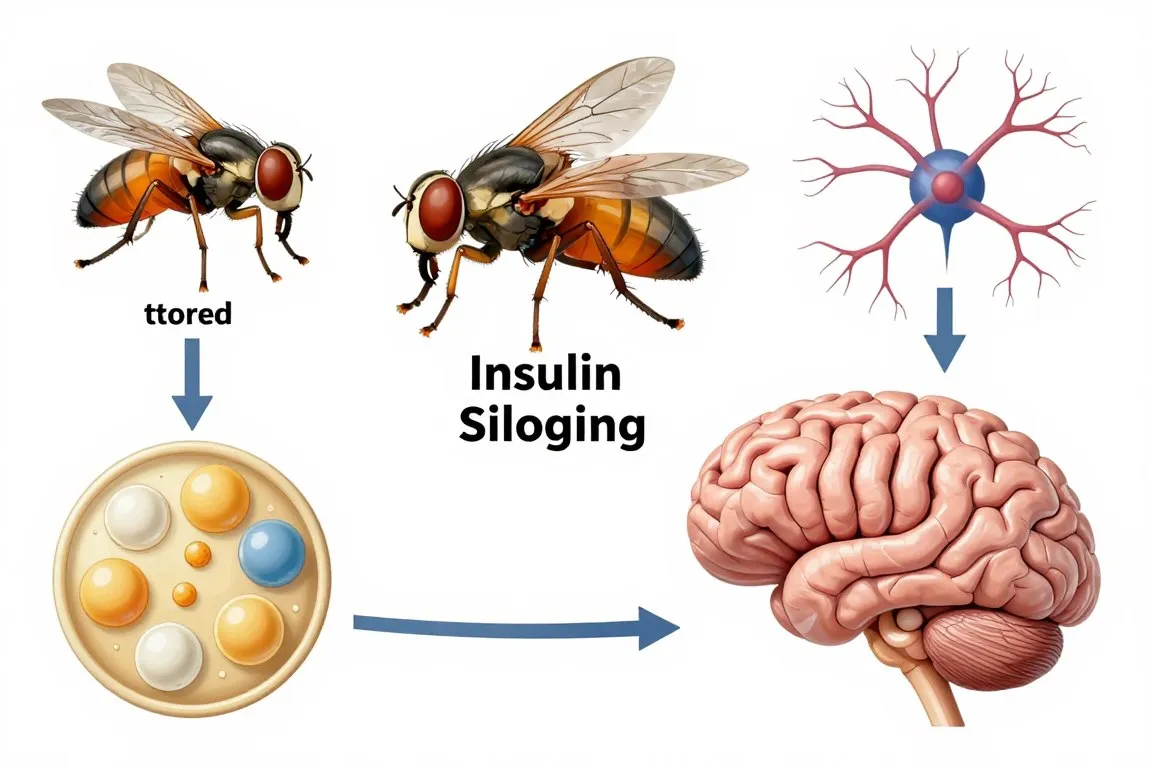
The findings do not mean that every stressful experience produces the same result. They show that a sensory signal can activate neural circuits, change metabolic function, and affect life. This chain gives scientists a useful model for studying how the brain and body communicate.
Limits and meaning for human health
The work was conducted in flies, not people. Fruit flies have simpler nervous systems, shorter life spans, and different social behavior. People routinely think about death through memory, language, culture, and conscious reflection. Those experiences cannot be equated with a fly seeing a corpse.
Still, the study raises an important question about how perception can affect health. The human brain constantly interprets signals from the environment. Those signals may influence sleep, appetite, stress hormones, immune activity, and metabolism.
The work was led by researchers including Christi Gendron and Scott Pletcher, with findings reported in PLoS Biology. Future experiments may clarify how long the neural effect lasts, whether other senses produce a similar response, and which metabolic steps are most important.
Scientists may eventually use this model to test treatments that protect healthy insulin signaling or slow aging. That possibility remains a research goal, not a current treatment for humans. For now, the study offers a clear lesson: in living systems, perception can reach deep into the biology of life and death.