Even when turned off, a phone on the table can disrupt work

A silent phone can look harmless. It may sit beside a notebook, screen, or coffee cup without lighting up once. Yet the phone can still pull part of the mind away from the task in front of it.
Research suggests that the mere presence of a smartphone can reduce available attention. The effect is subtle, but it matters during demanding work, complex conversations, and important meetings.
The science behind phone on the table disrupts work
In one study from the University of Paderborn, 42 adults between ages 20 and 34 completed attention tasks under different phone conditions. Some participants kept a turned-off phone nearby. Others left the device in another room.
Those who placed the phone out of sight switched between tasks more effectively and showed stronger attention. The study does not prove that every phone creates the same effect. It does show that physical distance can change the mental demands of a task.
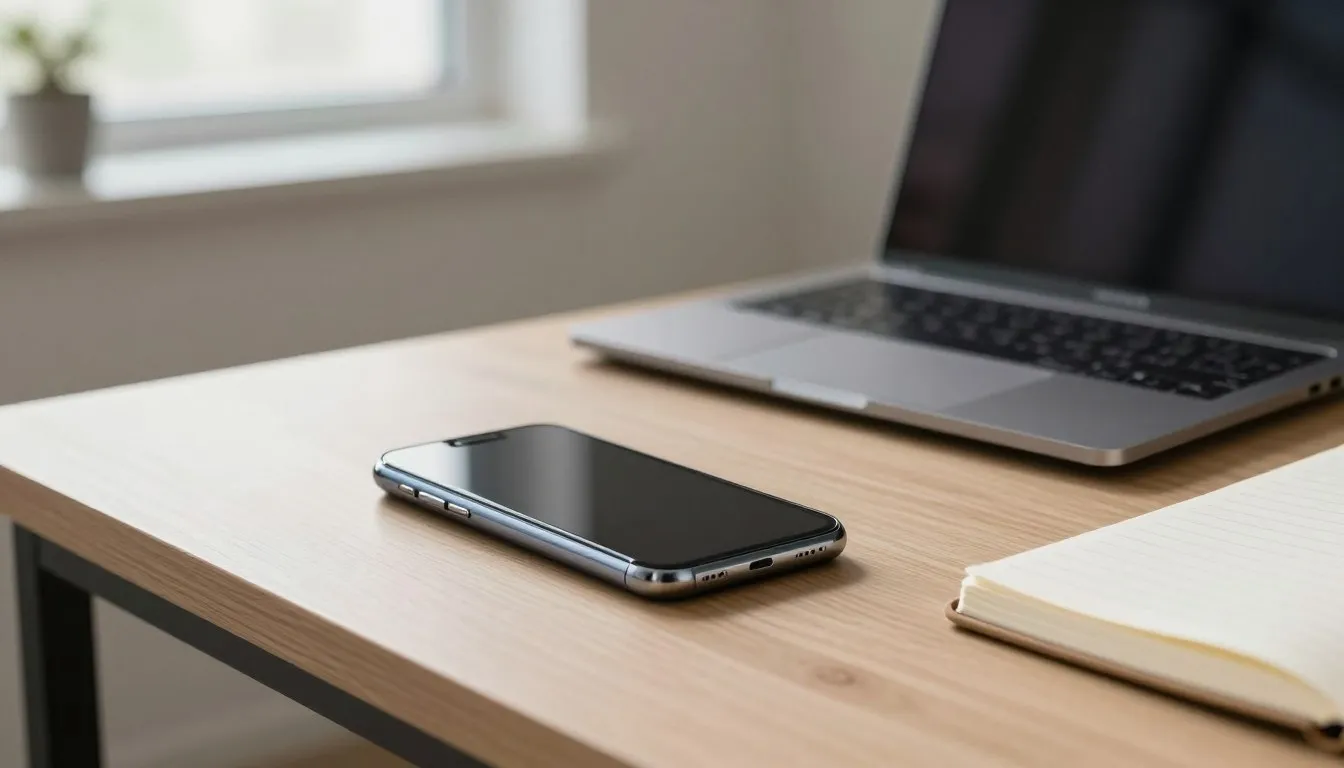
A related line of research has described this pattern as a “brain drain.” The phone does not need to ring. The mind may still spend energy resisting the urge to check a message, review social media, or wonder whether a call has arrived.
“The mere presence of one’s own smartphone may adversely affect available cognitive capacity.” Ward, Duke, Gneezy, and Bos, Journal of Social Psychology research
Working memory is limited. It helps a person hold instructions, compare options, and remember details while completing a task. If some of that capacity is occupied by phone-related thoughts, less may remain for the work itself.

Working memory under quiet pressure
Phone use often begins with a small interruption. A person sees the screen, reads one text, and returns to the task. The visible cost is only a few seconds. The hidden cost may be a longer recovery period.
After a break, the brain must recall the last step, rebuild context, and decide what deserves attention next. During a busy workday, these small resets can happen many times. A five-minute check repeated across the day can become a meaningful loss of productive time.
Notifications add pressure, but they are not required. A phone on a desk can act as a reminder of unfinished conversations, news, entertainment, or an important call. Even a person who does not touch the device may monitor it mentally.
| Phone placement | Likely mental demand | Best use case |
|---|---|---|
| On the work table | Highest temptation and visual checking | Low-focus tasks with no sensitive discussion |
| Face down nearby | Reduced visual cues, but device remains available | Short tasks or casual collaboration |
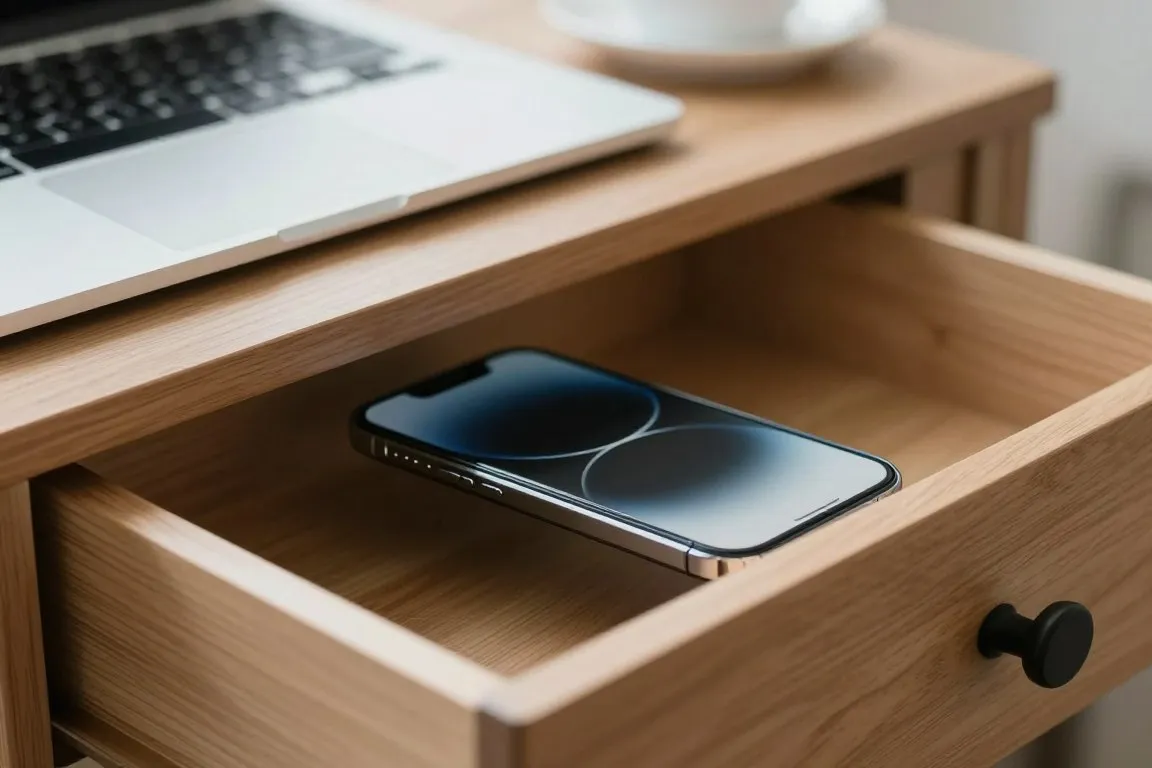
| In a bag or drawer | Lower access and fewer automatic glances | Writing, analysis, and deep work |
| In another room | Lowest immediate phone-related demand | Important work and complex meetings |
This comparison is not a promise of identical results for every person. Habit, anxiety, job demands, and phone settings all influence the outcome. Still, it offers a practical rule: make the desired behavior easier by increasing distance.
A practical phone policy for focused work
Good cell phone etiquette should protect attention without ignoring real life. Employees may need to take a call from a doctor, school, client, or family member. A rigid ban can create stress and may harm trust.
A better workplace policy sets clear expectations for different types of work. Teams can agree that phones remain away during planning meetings, customer discussions, and tasks that require undivided attention. They can also define exceptions for an important call.
- Silence nonessential notifications before a demanding task.
- Put the phone in a bag, drawer, or separate room.
- Tell coworkers when you are available for urgent calls.
- Take personal calls away from shared work areas.
- Schedule short phone checks during natural breaks.
Managers should model the same behavior. If a supervisor checks a cell phone during every meeting, employees receive a stronger message than any written etiquette guide can provide.

Better attention in meetings and shared spaces
Face-to-face interaction depends on more than hearing words. People read pauses, expressions, and small changes in tone. A phone on the table can weaken that connection, even when no one uses it.
Researchers have found that visible phones can reduce feelings of closeness and conversation quality in some social settings. These findings support a reasonable interpretation: people may feel less fully heard when a device remains within reach.
During a meeting, the cost can spread across the room. One person checks a text. Another notices. A third begins thinking about a message. Soon, the group has lost shared attention.
Try a simple routine. Before the meeting begins, ask everyone to silence devices and place them outside the main viewing area. Keep one agreed channel open for urgent calls. At the end, give people a short break to check messages.
The same approach works at home. Put phones in another room during meals, difficult conversations, or focused study. Small changes in placement can protect attention without demanding perfect discipline.

The strongest response is not fear of technology. It is intentional design. Keep the phone close when access matters, and create distance when concentration, memory, or human connection matters more.