Saturn is now the leader of the Solar System with 146 moons

Saturn’s 146 moons made headlines in 2023, when astronomers confirmed dozens of faint objects orbiting the ringed planet. The result briefly placed Saturn ahead of Jupiter in the moon-count race. It also revealed a more complex history of collisions, captured bodies, and changing orbits.
The 146-moon milestone in planetary history
The figure of 146 came from a major survey announced in May 2023. Researchers used large ground-based telescopes to identify faint objects moving around Saturn. These bodies were later recognized as irregular satellites, meaning their paths differ from the nearly circular orbits of the planet’s larger moons.
Saturn overtook Jupiter because astronomers added 62 newly confirmed moons to its official total. Jupiter had 95 known moons at that point, while Saturn reached 146. The comparison was not a contest between planets in a physical sense. It was a count of objects that met strict standards for discovery and confirmation.
Moon totals can change. A new object may first receive a provisional designation. Scientists must then observe it over time and calculate its orbit. If the path remains consistent, the object can be accepted as a confirmed satellite. Some candidates may disappear from the record if later observations show that they were imaging errors or temporary identifications.
| Feature | Saturn’s 2023 count | Jupiter’s 2023 count |
|---|---|---|
| Official moons reported | 146 | 95 |
| Main reason for the increase | New irregular satellites | Earlier satellite surveys |
| Typical outer-moon size | About 2–5 kilometers | Varies widely |
| Count status | A historical confirmed total | Subject to later updates |
How astronomers identify and confirm moons
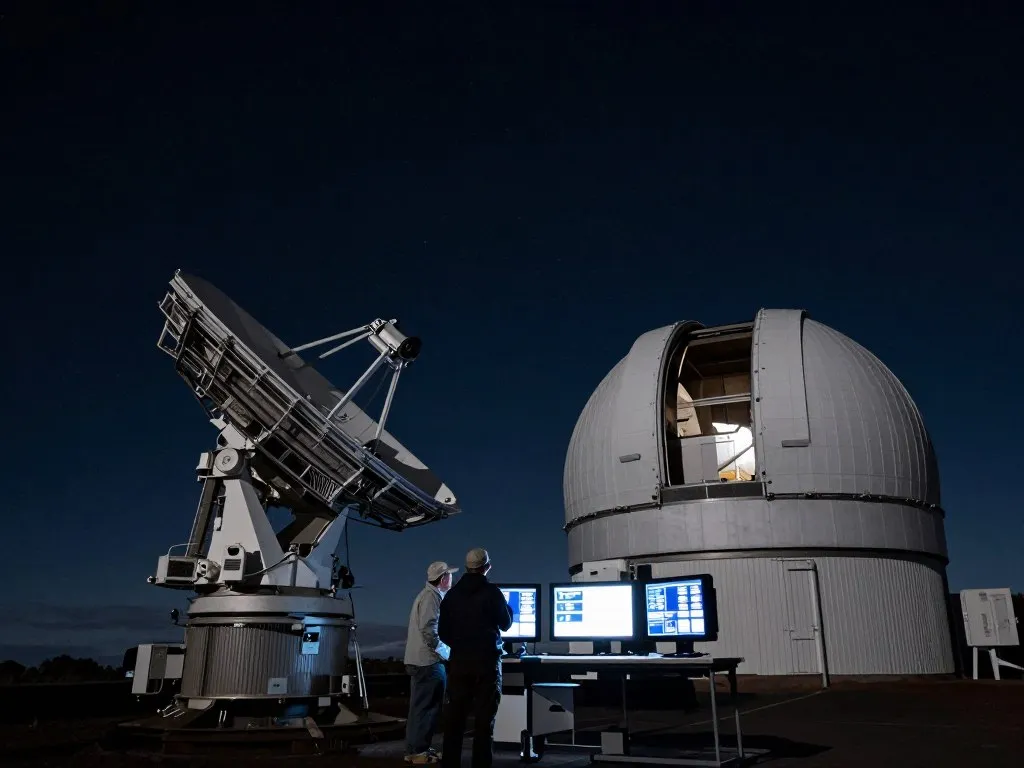
Finding a small moon is not as simple as taking one picture. A telescope may record a faint point of light near Saturn, but that point could be a distant asteroid, a background star, or a camera artifact. Scientists need repeated images taken at different times.
By comparing those images, astronomers measure the object’s movement against the background sky. A true moon moves in a way that fits an orbit around Saturn. The team also checks whether the object appears in observations from more than one night, telescope, or research group.
- Detection: A faint moving object is recorded near Saturn.
- Tracking: Follow-up observations measure its changing position.
- Orbit calculation: Scientists test whether the path is gravitationally bound to Saturn.
- Confirmation: The object receives an official designation after its orbit is secure.
Teams connected with Scott Sheppard, Jan Kleyna, David Jewitt, Brett Gladman, John Kavelaars, and other researchers have helped expand knowledge of Saturn’s outer satellites. Surveys using the Canada-France-Hawaii Telescope and Subaru Telescope on Mauna Kea were especially useful. These instruments combine large mirrors, sensitive cameras, and repeated observations of the same region.
“The irregular satellites are remnants of the processes that shaped the outer Solar System.” — A summary of the scientific importance of Saturn’s distant moon population
Irregular moons reveal Saturn’s violent past
Saturn’s best-known moons include Titan, Enceladus, Rhea, Dione, and Iapetus. These larger bodies generally have more orderly orbits. Many of the newly counted objects are different. Their paths can be highly elliptical, tilted, and far from Saturn’s equatorial plane.
Irregular satellites may have been captured by Saturn’s gravity. Others may be fragments created when earlier moons or asteroids collided. Their surfaces are often heavily cratered, which suggests that they have remained exposed to impacts for billions of years.
Researchers have identified groups of moons that share similar orbital directions and inclinations. A group moving with Saturn’s rotation is called prograde. A group moving in the opposite direction is retrograde. These patterns can point to a common origin, such as the breakup of a larger captured body.
Small differences also matter. A leading hemisphere may face more impacts than a trailing hemisphere, depending on the direction of travel. Over time, collisions can produce clouds of fragments and create families of small moons. This helps scientists reconstruct the evolution of Saturn’s rings and satellite system.
A changing view of the Solar System
The 146-moon milestone changed the way scientists describe a planet’s satellite system. Saturn is not simply a planet with rings and a few famous moons. It is a large, dynamic system containing worlds with different sizes, compositions, and histories.
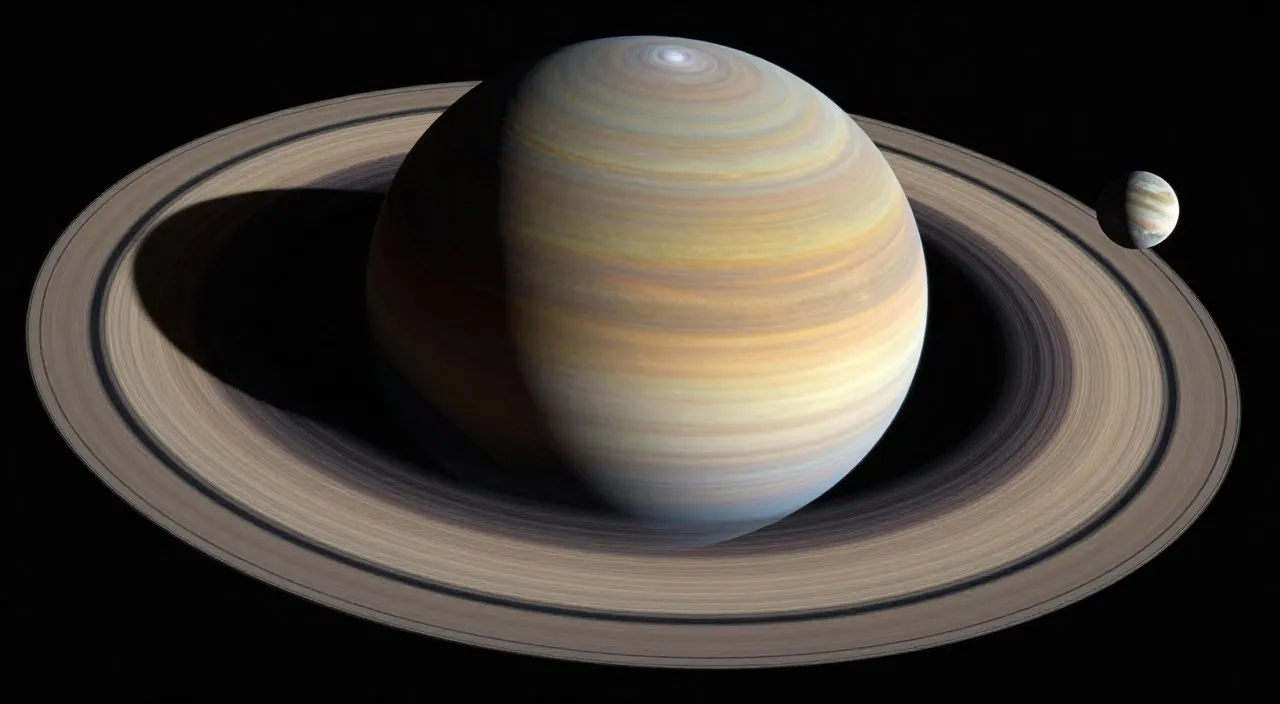
The count also shows the limits of observation. Large moons are easy to detect, while a small moon can be lost in glare from the planet or rings. Better cameras and longer surveys can reveal new satellites that were always present but too faint to notice.
Saturn’s moons also connect distant astronomy with familiar planetary science. Titan has a thick atmosphere and lakes of liquid hydrocarbons. Enceladus sprays water ice from an underground ocean near its south pole. These larger moons may be more important for habitability studies, while the tiny outer satellites preserve clues about the system’s early history.
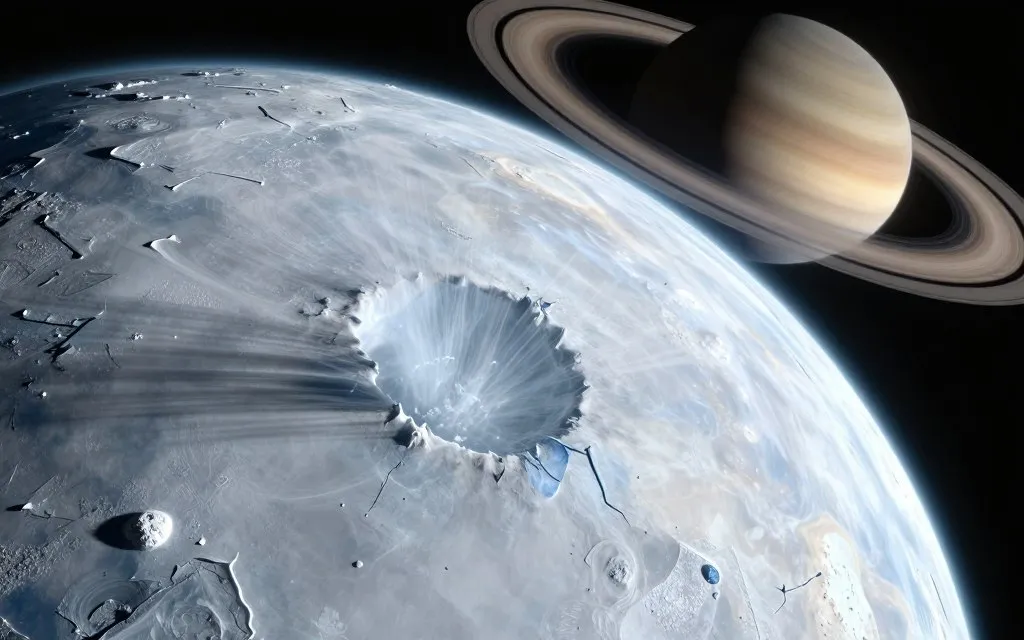
For that reason, “Saturn’s 146 moons” is best understood as a landmark in discovery, not a permanent final number. As astronomers improve observations and confirm more orbits, the total may rise, fall, or be revised. Each update adds another piece to the history of Saturn and the wider Solar System.