Football Managers’ Fashion and Style: Seven Coaches Who Changed the Touchline Look
Football Managers’ Fashion and Style: Seven Coaches Who Changed the Touchline Look
A football manager is judged by results, but the camera records everything else. A coat, a scarf, a pair of glasses, or a familiar hat can become part of a public image. Over time, these details turn coaches into fashion figures as recognizable as the players they lead.
The modern touchline is no longer ruled by identical tracksuits. Some managers prefer sharp tailoring. Others choose technical jackets, luxury streetwear, or one memorable accessory. Together, they show how football managers’ fashion and style can carry character, history, and even a little humor.
Football Managers’ Fashion and Style Beyond the Tracksuit
For decades, the classic football manager wore one of two uniforms: a dark suit or a team tracksuit. Both choices were practical. A suit suggested authority, while sportswear connected the coach with the players on the pitch.
That simple split has changed. Modern football is closely linked with luxury, media, and global culture. Premier League matches reach viewers across the world, and every touchline image may appear online within seconds. A manager’s clothes now help shape the story around a club.
Some coaches use clothes to look calm and controlled. Others use them to show energy, individuality, or regional identity. The strongest looks rarely feel random. They repeat a few clear ideas: a certain color, a familiar jacket, a signature scarf, or a consistent approach to fit.
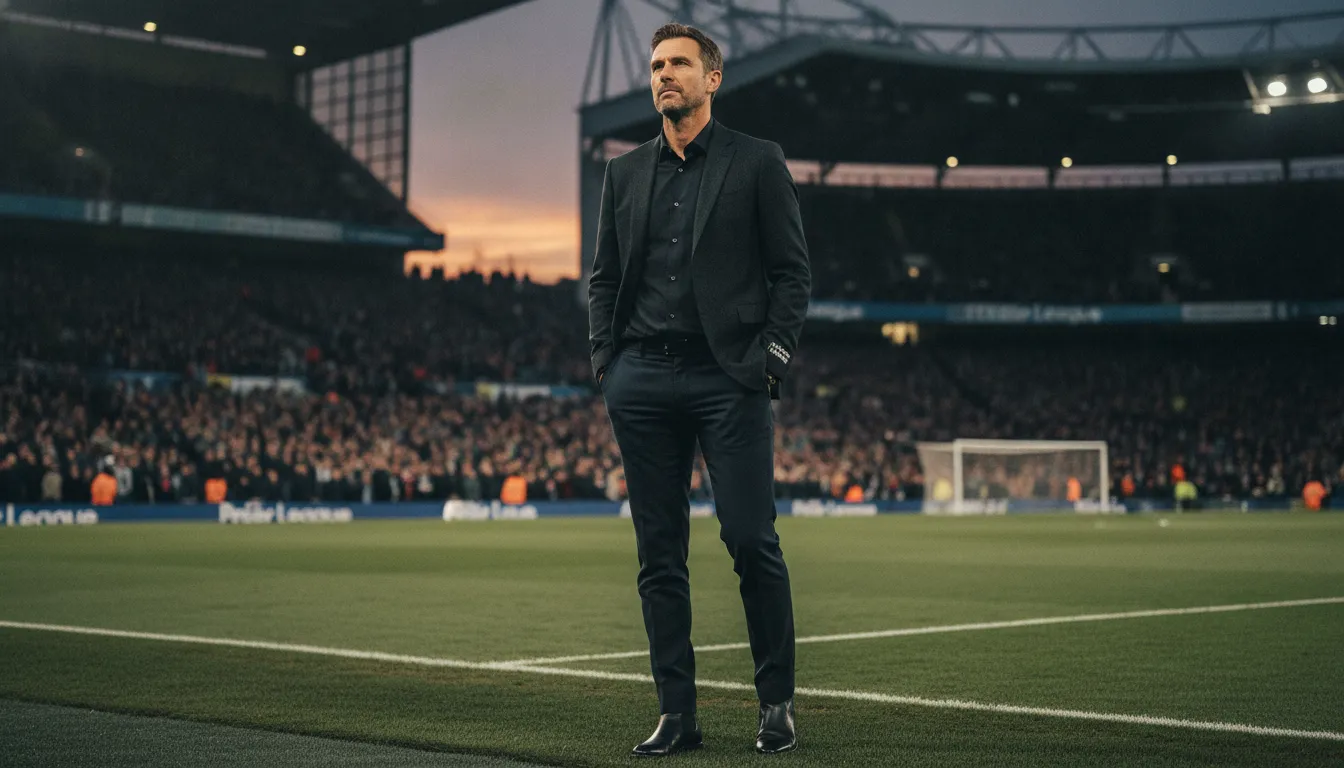
| Style language | Typical pieces | Public impression | Best setting |
|---|---|---|---|
| European classic | Suit, tie, wool coat | Authority and control | Formal fixtures and media events |
| Luxury casual | Technical jacket, knitwear, premium sneakers | Modern confidence | Premier League match days |
| Signature accessory | Scarf, hat, glasses, beads | Memory and identity | Long careers with one club |
| Weather-led dressing | Puffer, parka, gloves | Practicality and personality | Cold-weather football |
Arsène Wenger and the Rise of the Oversized Puffer
Arsène Wenger changed Arsenal and left a lasting mark on the Premier League. He managed the London club from 1996 to 2018, winning three league titles and seven FA Cups. His greatest league season came in 2003–04, when Arsenal went unbeaten across all 38 Premier League matches.
Early in his English career, Wenger often wore loose suits and distinctive glasses. The silhouette looked unusual beside the tighter tailoring favored by many coaches. It made him seem like an academic who had wandered from a university lecture into a football stadium.
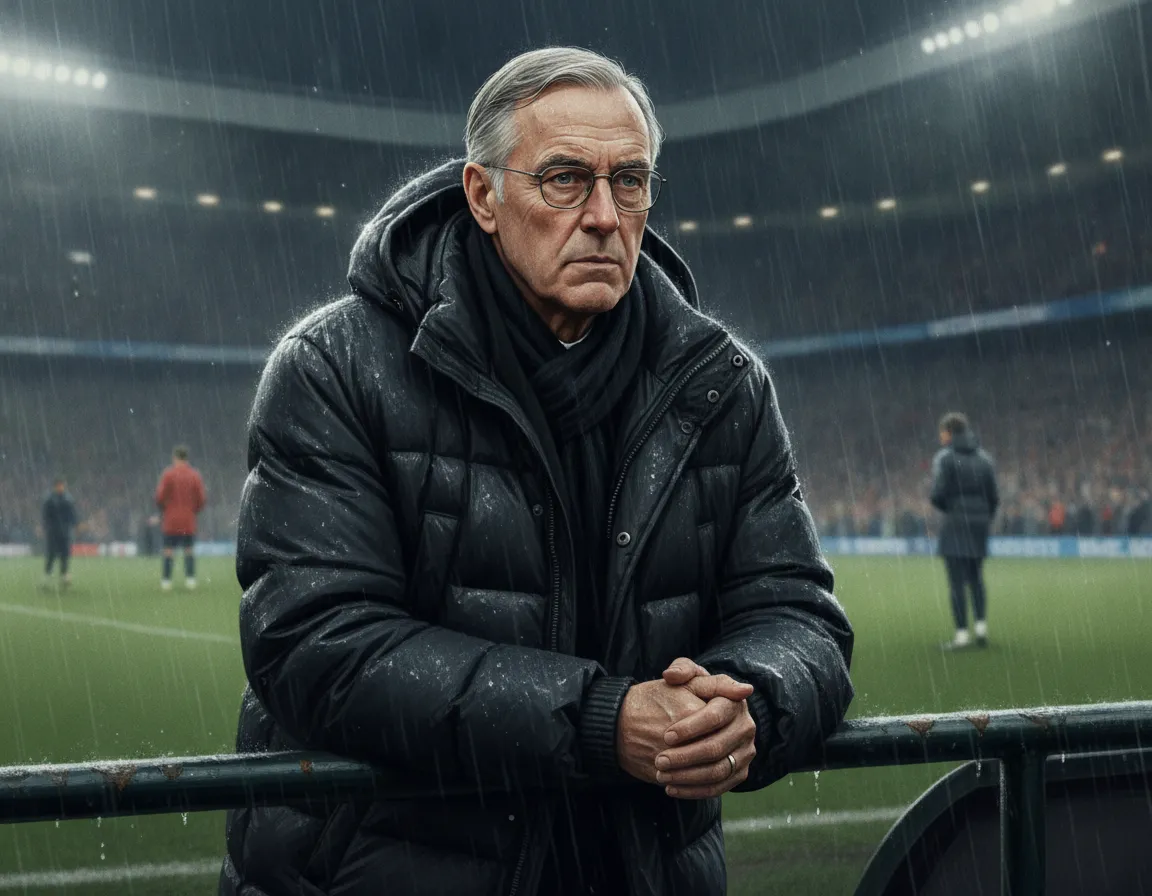
Later, the oversized puffer jacket became his most famous piece. The long, padded coat protected him from cold evenings, but it also created a memorable outline. After difficult matches, television cameras often showed Wenger wrapped inside the jacket, wrestling with its zipper or standing with his hands buried in the pockets.
The coat became a visual joke, yet it also proved how quickly practical clothes can become fashion. The large puffer returned to streetwear and winter collections years later. Wenger’s look now feels less like a mistake and more like an early version of the relaxed, volume-heavy style seen in modern fashion.
The lasting style lesson
- Practical clothing can become an unmistakable signature.
- Volume gives a simple winter look a strong image.
- Consistency helps fans connect clothes with personality.
The risk
- Very large outerwear can hide the shape of the outfit.
- A practical coat may dominate every photograph.
- Weather-based choices can become an unintended visual joke.
José Mourinho and the Power of the Tailored Coat
José Mourinho turned confidence into a complete public image. His coaching career moved through Porto, Chelsea, Inter Milan, Real Madrid, Manchester United, and Tottenham Hotspur. His first Champions League title came with Porto in 2004, before he became one of the most visible figures in world football.
His clothes matched that rise. During his first Chelsea period, Mourinho often appeared in a dark overcoat, fitted trousers, leather shoes, and a clean shirt. The look was formal but not old-fashioned. It suggested control without the stiffness of a traditional suit.
The coat worked because it created a strong shape from a distance. On a crowded touchline, the dark outer layer gave Mourinho a clear silhouette. It also made his gestures feel larger. A raised arm, a turn toward the fourth official, or a sudden walk to the technical area became part of the performance.
In 2012, one of Mourinho’s coats was sold at a charity auction for a reported £500,000. The sale showed that football clothing can carry emotional value beyond fabric and labels. Fans were not only buying an item. They were buying a piece of a famous football era.
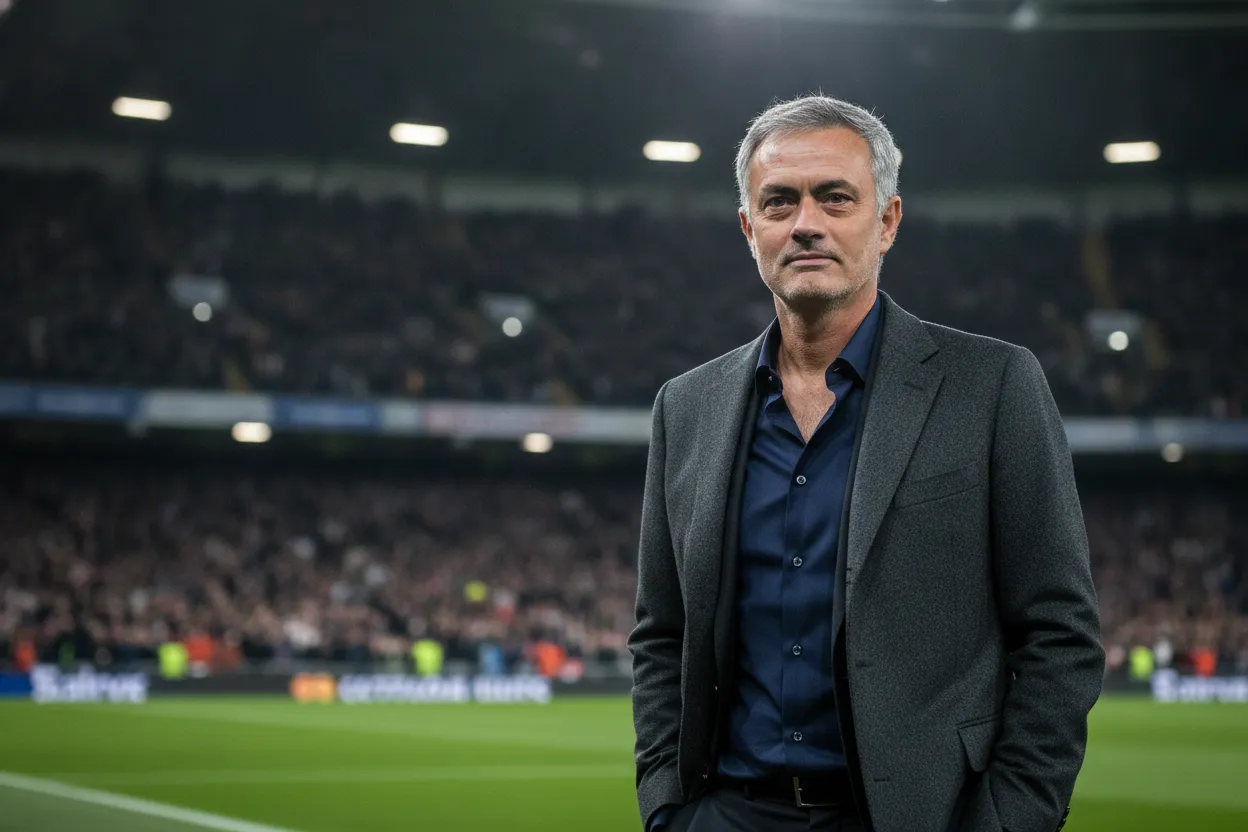
“The special one.” José Mourinho, a self-description that became one of football’s most famous nicknames
Mourinho’s approach remains useful for anyone building a polished match-day wardrobe. A simple coat can look powerful when the fit is clean and the colors stay restrained. The key is not excess. It is the relationship between the garment, the posture, and the moment.
Pep Guardiola, Julian Nagelsmann, and Luxury Casual Dressing
Pep Guardiola began his senior coaching career at Barcelona and later led Bayern Munich and Manchester City. His teams have won major domestic honors and Champions League titles, but his clothing has also become part of his public image.
Earlier in his career, Guardiola often wore suits on the touchline. With time, his wardrobe moved toward relaxed luxury. Technical jackets, knitwear, dark trousers, sneakers, and understated accessories became common. Brands such as Stone Island and C.P. Company fit this direction because they combine sports function with a strong design language.
At Manchester City, the change feels natural. The club’s modern identity is linked with technical football, global reach, and a polished but flexible image. Guardiola’s clothes mirror that balance. He is formal enough to look like the leader, yet relaxed enough to appear close to the game.
Julian Nagelsmann represents a younger version of this movement. His jackets, sneakers, and layered outfits often look more connected to contemporary streetwear than to old coaching traditions. During his Bayern Munich period, his appearance attracted media attention because it challenged the idea that a football manager should dress without personal taste.
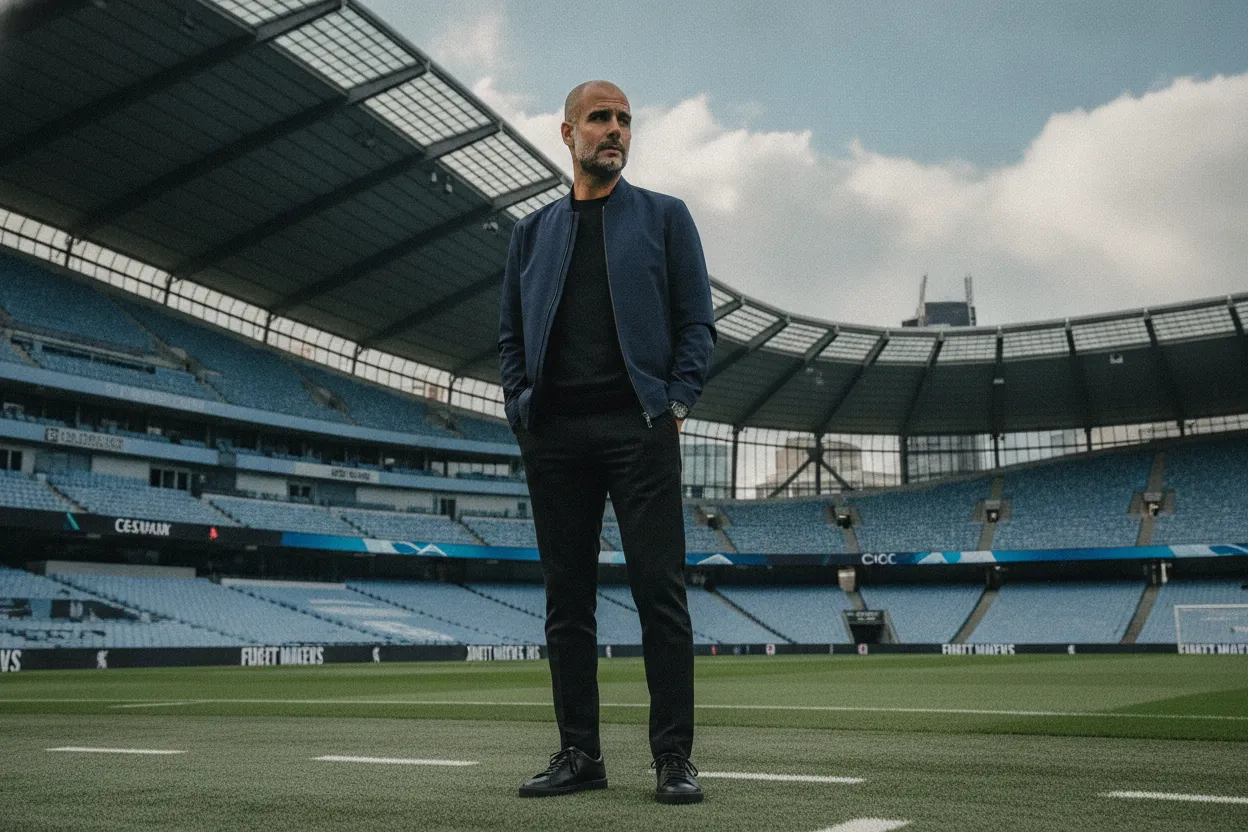
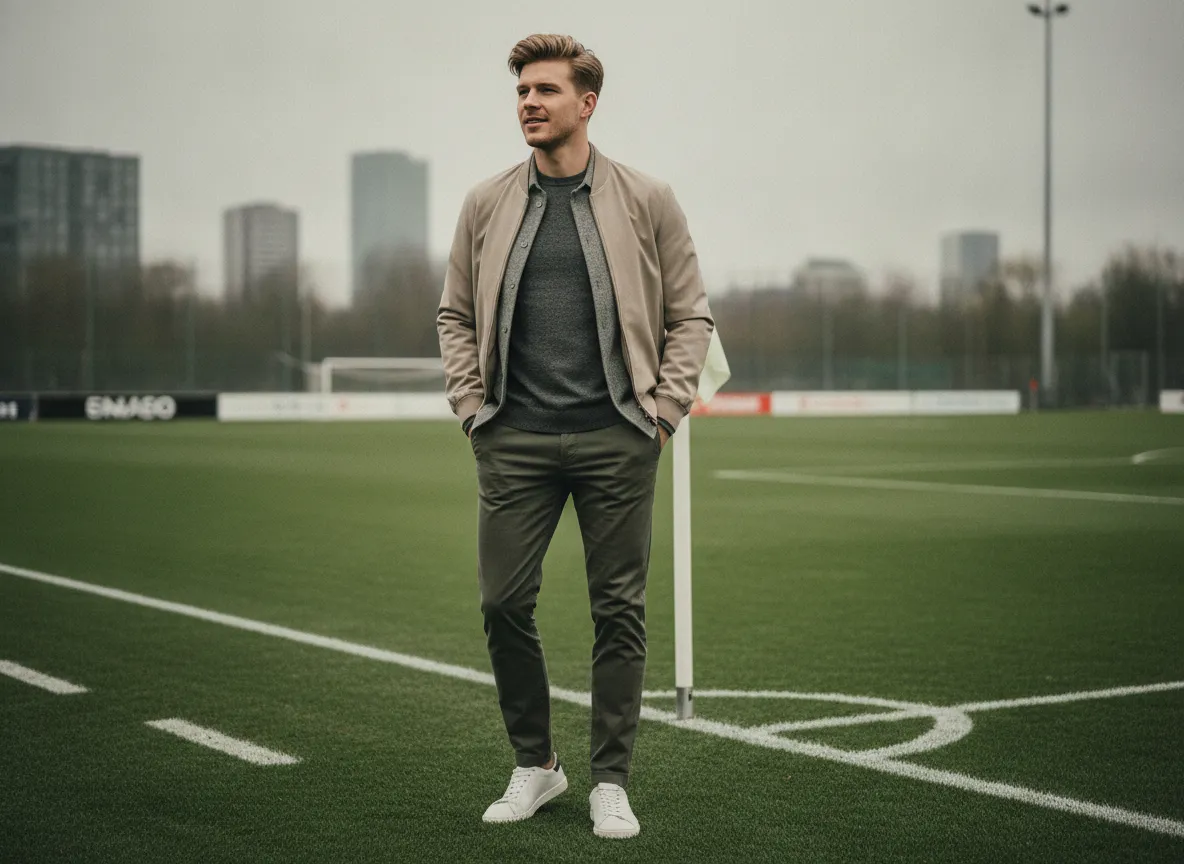
The shared lesson is restraint. Casual does not mean careless. The strongest outfits use a limited palette, quality materials, and one clear point of interest. A technical jacket may be the focus, while the shirt and shoes provide balance.
- Choose navy, charcoal, black, cream, or olive as a reliable base.
- Mix one performance piece with one refined garment.
- Keep branding subtle when the silhouette already makes a statement.
- Use layers to adjust comfort without losing structure.
Roberto Mancini and the Signature Scarf
Roberto Mancini proves that a small accessory can carry an entire style story. The Italian coach is known for elegant tailoring, neat shirts, and a calm touchline presence. His scarves, however, often provide the most memorable detail.
Mancini has worn scarves in the colors of the teams he managed. At Zenit Saint Petersburg, the white and blue scarf became especially recognizable. Rather than treating an accessory as an afterthought, he used it to connect personal presentation with club identity.
This approach works because a scarf can change the mood of a suit without changing the whole outfit. It adds color, movement, and a visible link to the supporters. It also suits football better than a purely corporate accessory. The piece belongs to the stadium, the weather, and the emotion of the game.
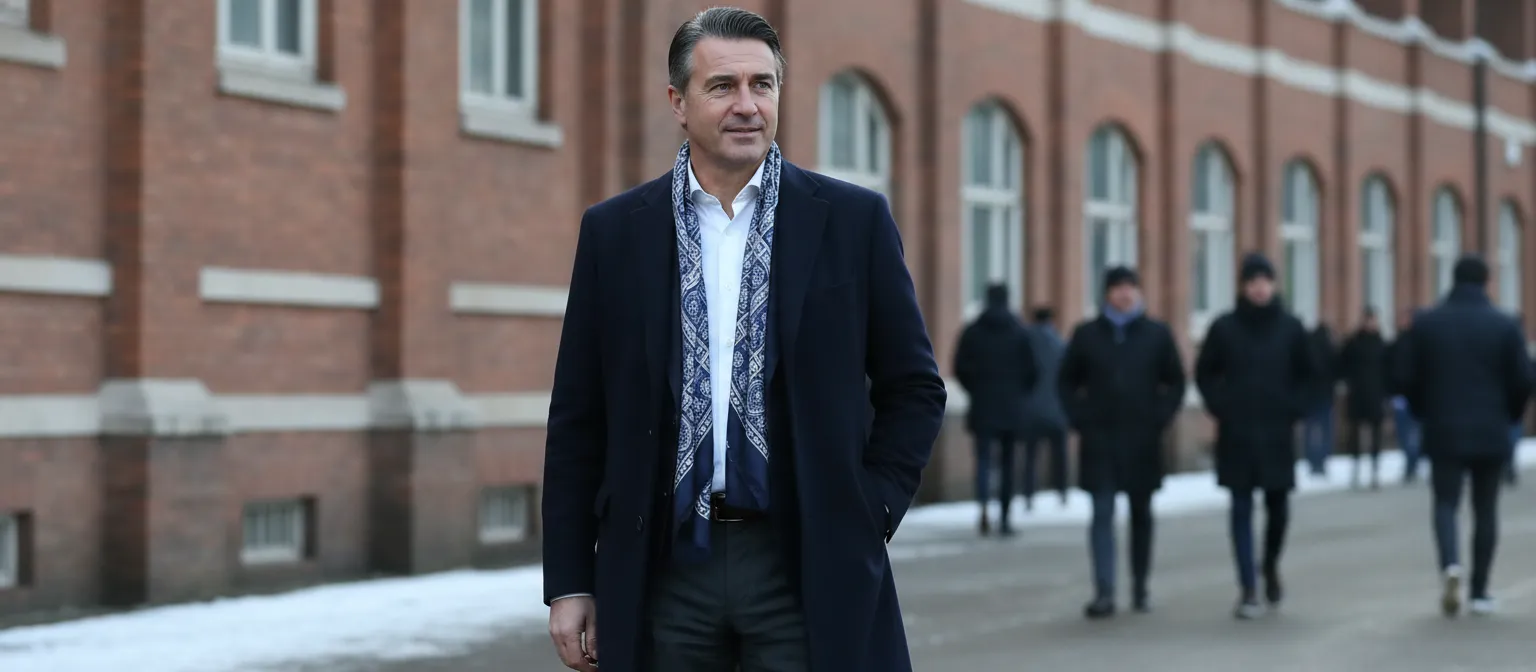
A scarf is also one of the easiest details to adapt. It can replace a tie, soften a formal coat, or bring a neutral jacket into the club’s color scheme. The best version feels personal rather than promotional.
Yuri Semin and Kurban Berdyev: Accessories With Memory
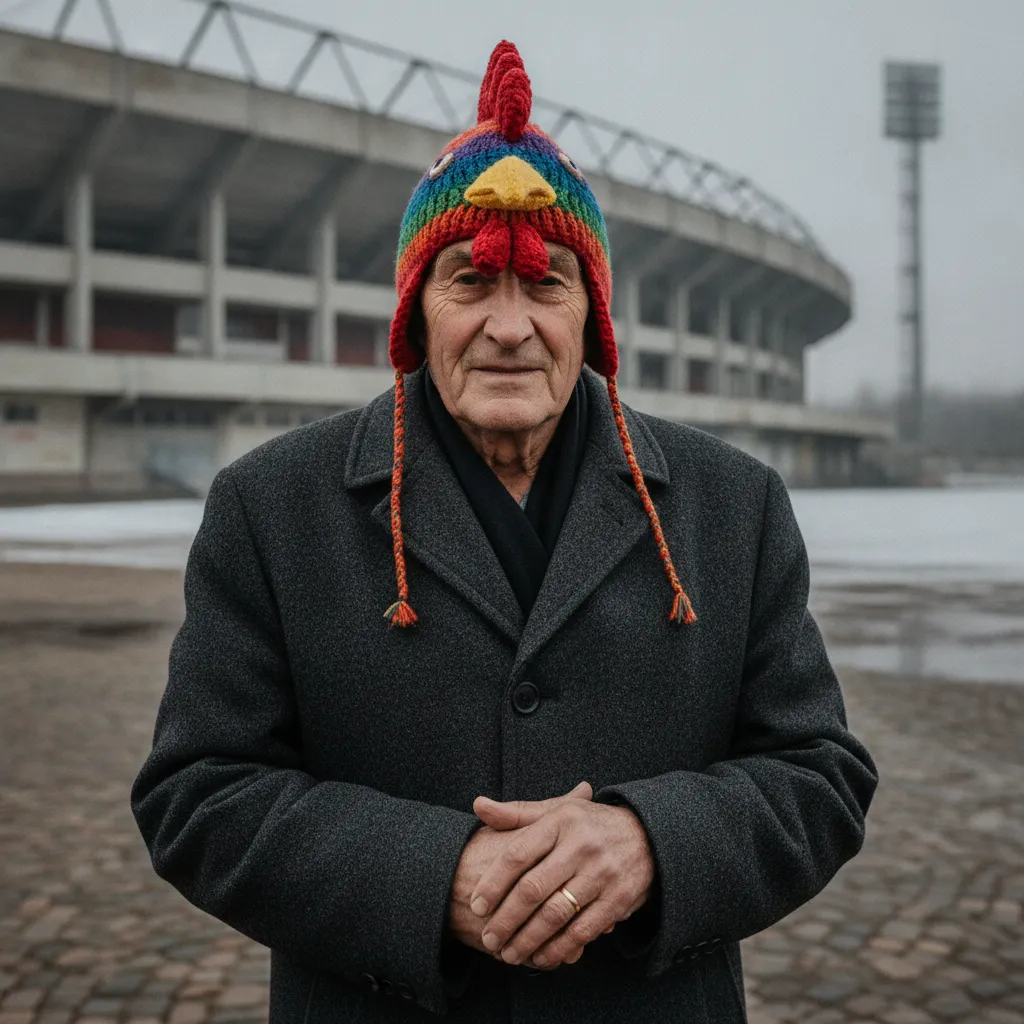
Not every memorable football look comes from luxury fashion. Yuri Semin became closely linked with a traditional Soviet-style “rooster” hat. He wore it for comfort and believed it brought his team good fortune. Over time, the hat became part of his public identity at Lokomotiv Moscow.
The accessory was unusual, but its meaning was easy to understand. Supporters saw it again and again. It became connected with familiar match days, important wins, and the coach’s long relationship with the club. Lokomotiv later produced a limited run of 500 replica hats based on photographs of Semin.
This is a useful reminder that style does not need to be expensive. A repeated item can become powerful when it carries a story. The hat worked because it was authentic to Semin, not because it followed a seasonal trend.
Kurban Berdyev offers another example of quiet visual identity. He was rarely associated with flashy clothes. His usual outfits were practical and restrained, often built from simple sportswear or a plain jacket. Yet his dark wooden prayer beads became inseparable from his image.
Berdyev led Rubin Kazan to Russian league titles in 2008 and 2009. In 2009, Rubin also defeated Guardiola’s Barcelona in the Champions League group stage. Cameras often caught Berdyev moving the beads through his fingers on the bench, creating a small, repeated gesture during tense matches.
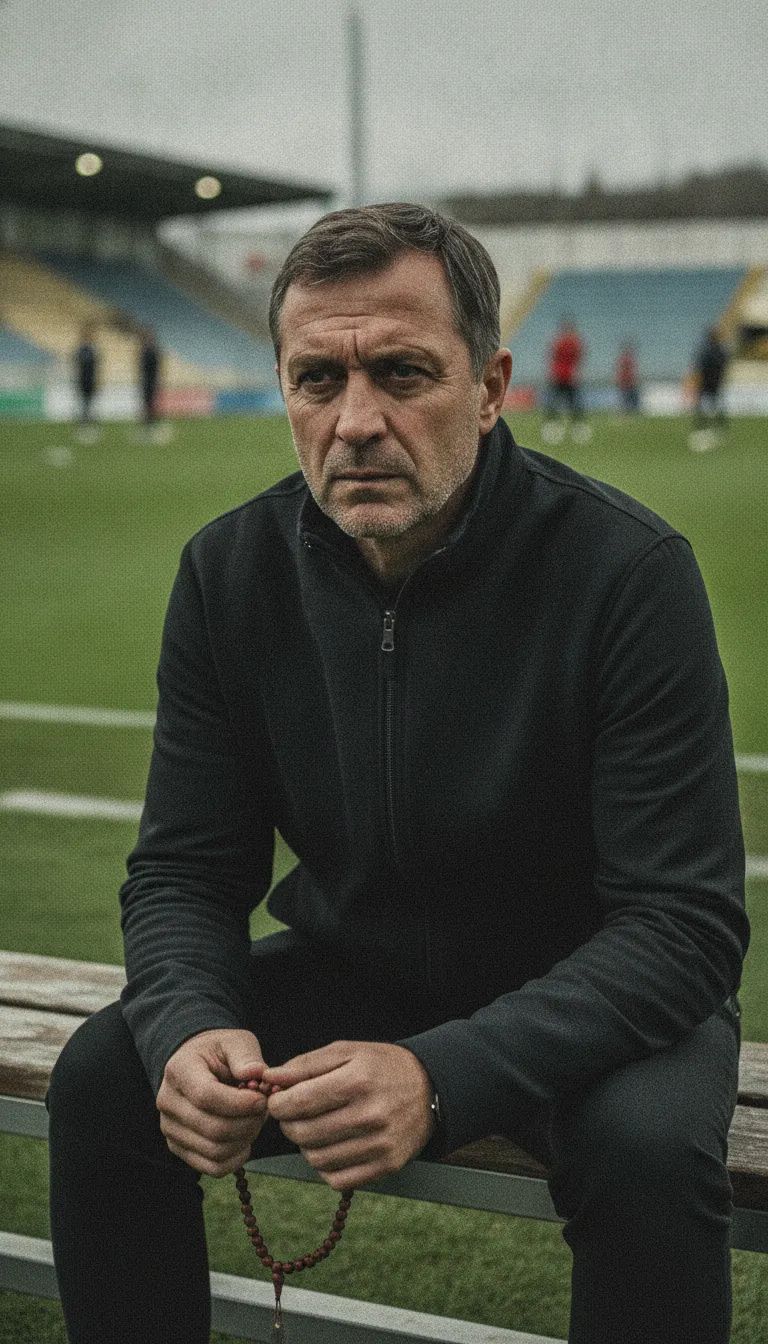
Both managers show that fashion can exist in repetition rather than novelty. A familiar object gains meaning through time. For supporters, these details can become as memorable as a club badge.
Semin’s approach
Choose one unusual object and let it become part of the public image.
- Comfort comes first.
- Memory grows through repetition.
- Club history strengthens the look.
Berdyev’s approach
Keep the clothes quiet and allow one meaningful gesture to stand out.
- Simple clothes can feel authoritative.
- Personal ritual creates recognition.
- Details may matter more than brands.
A Practical Guide to the Modern Coach’s Wardrobe
The seven managers above use different clothes, but their outfits share a clear sense of purpose. Each look communicates something before the coach speaks. That message may be authority, warmth, modernity, loyalty, or independence.
For a football manager, comfort remains essential. A coach may stand, walk, gesture, and react for more than 90 minutes. The best clothes allow movement while keeping a clean shape. Stretch fabric, soft tailoring, and weather-ready layers can solve that practical problem.
Color also matters. Navy suggests calm authority. Black creates a strong image. Gray feels measured and professional. Club colors can appear through a shirt, tie, scarf, or pocket square rather than through a full branded outfit.
Fit is more important than price. An expensive jacket can look weak if the shoulders are too wide or the sleeves are too long. A simple coat can look excellent when it sits correctly and works with the rest of the outfit.
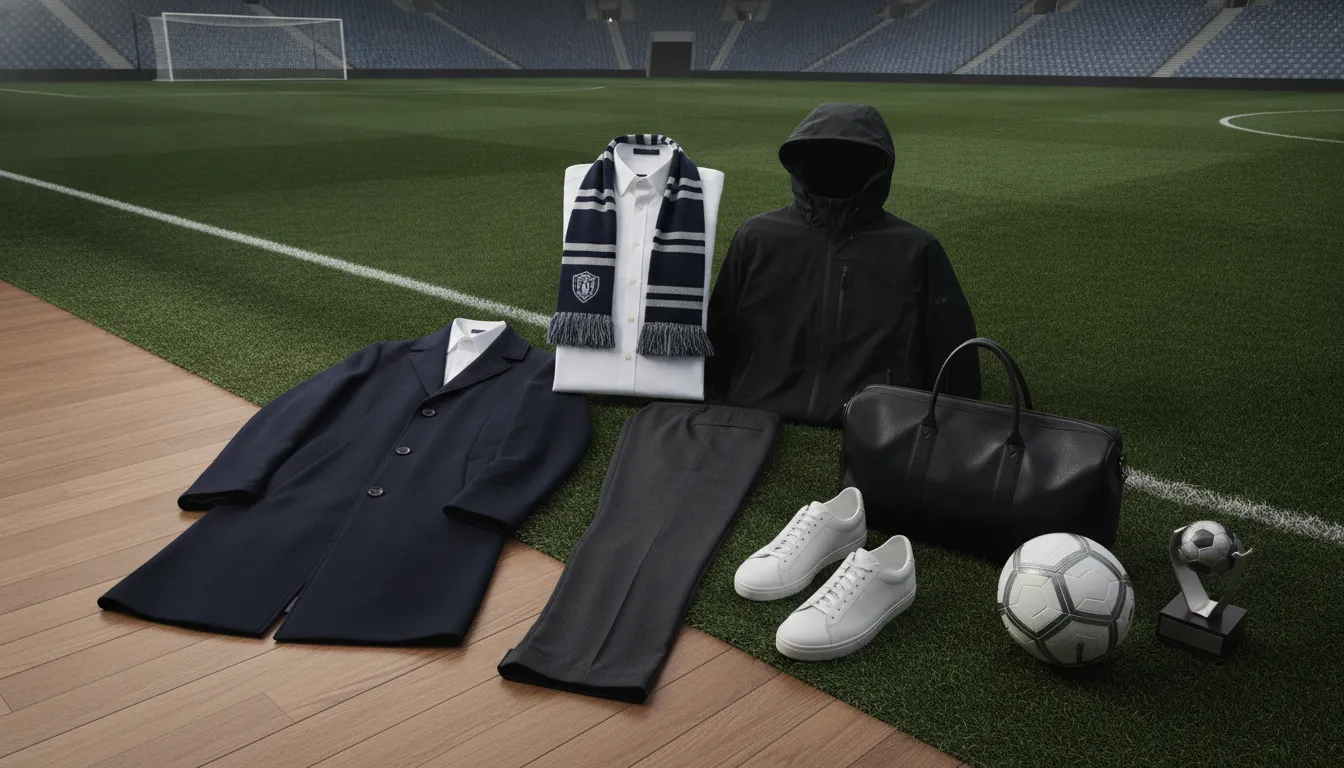
- Navy or charcoal suit
- White or pale blue shirt
- Simple tie and leather shoes
- Wool coat for cold days
For a formal look
- Technical jacket or overshirt
- Fine knit shirt
- Tapered trousers
- Minimal sneakers
For a relaxed look
- One repeat accessory
- A clear color connection
- Comfortable outerwear
- A story people can remember
For a signature look
Managers should also think about the difference between the pitch and the press room. A tracksuit may suit a training session, while a suit may work better for a Champions League press conference. Changing clothes for the setting does not mean losing identity. It shows awareness.
Players are often judged for their clothes, and coaches now face the same attention. Yet the strongest managers do not dress like players. They develop a separate visual role. Their clothes should support leadership rather than compete with the team.
Football managers’ fashion and style now sits between sports, luxury, and personal storytelling. Wenger made the puffer memorable. Mourinho gave the coat drama. Guardiola and Nagelsmann made technical casualwear feel natural. Mancini used the scarf, while Semin and Berdyev showed the power of meaningful accessories.
None of these looks depends on a single brand or expensive wardrobe. Their strength comes from recognition. When clothes match a person’s role, habits, and history, they become more than clothes. They become part of the game.