Chandrayaan-3 has successfully landed on the moon

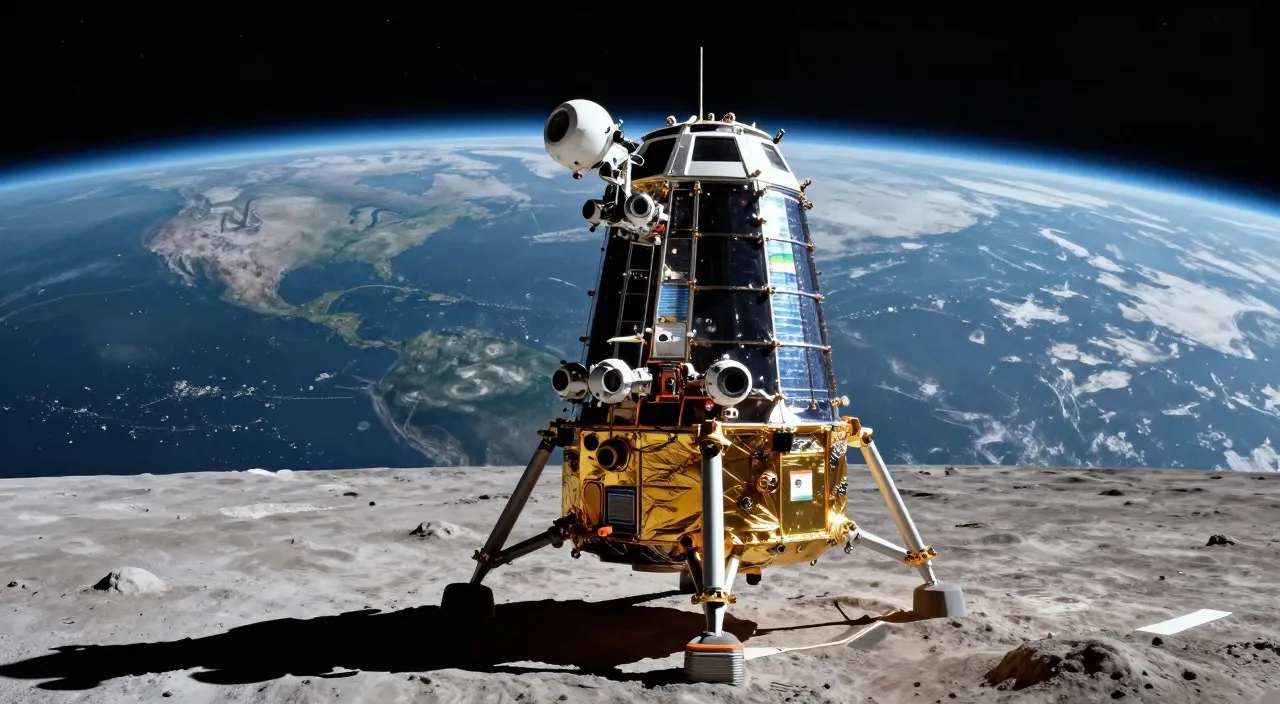
On August 23, 2023, India reached a historic moment in space exploration. Chandrayaan-3 successfully landed on the Moon at 12:33 UTC, placing the country among the few nations to achieve a controlled lunar landing. The event also marked a major step toward studying the moon south region, an area that may hold valuable clues about the early solar system.
A historic soft landing near the lunar south pole
The Vikram lander touched down at about 69.37 degrees south latitude and 32.35 degrees east longitude. This location is close to the lunar south pole, where long shadows, rough ground, and limited sunlight make a landing especially difficult.
The landing was the central goal of the mission. India’s earlier Chandrayaan-2 mission reached lunar orbit in 2019, but its lander lost contact during the final descent. Chandrayaan-3 was designed to show that the country had solved key navigation, braking, and hazard-detection challenges.
Its successful landing made India the fourth country to achieve a controlled soft landing on the moon, after the United States, the Soviet Union, and China. It was also the first successful landing in the moon south polar region.
“India is now on the Moon.” — Prime Minister Narendra Modi, addressing the nation after the landing

Spacecraft components and mission milestones
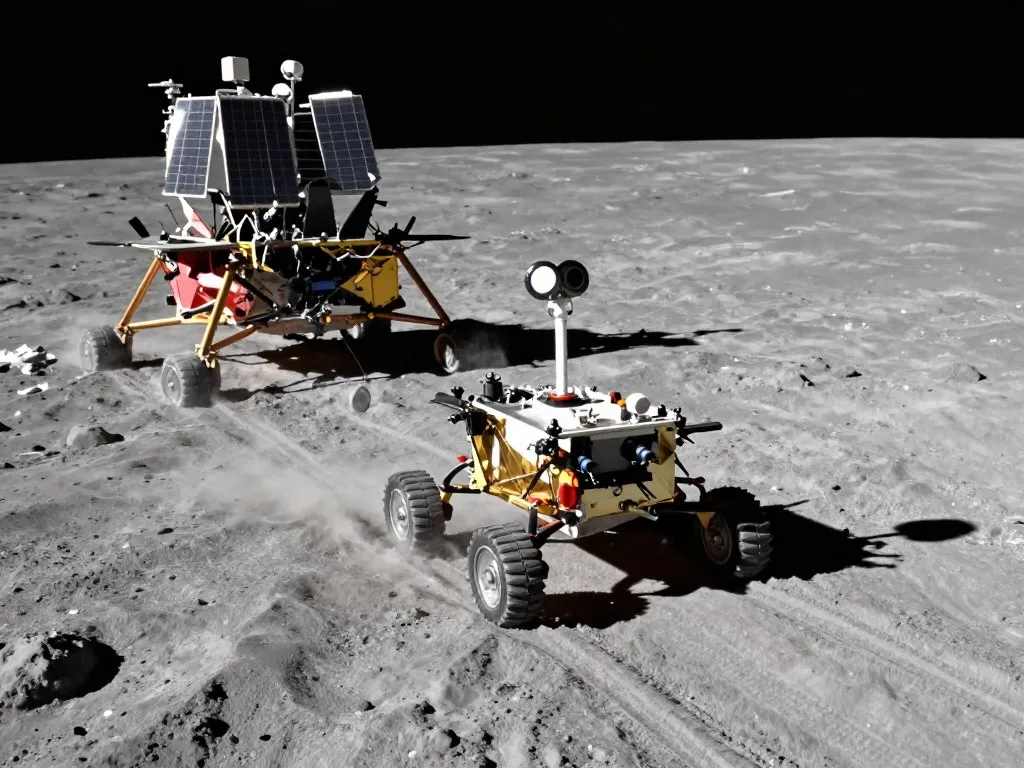
Chandrayaan-3 consisted of three main parts: a propulsion module, the Vikram lander module, and the Pragyan rover. The propulsion module carried the landing system from Earth orbit toward the moon. After reaching lunar orbit, Vikram separated and began its descent to the surface.
Vikram carried cameras, sensors, a seismometer, a thermal probe, and an instrument for studying the local plasma environment. Pragyan was a six-wheeled rover built to travel across the surface moon and examine nearby soil and rocks.
| Milestone or component | Purpose or date | Key detail |
|---|---|---|
| Launch | July 14, 2023 | Lifted off from India’s Satish Dhawan Space Centre. |
| Landing | August 23, 2023 | Vikram reached the lunar south pole region. |
| Vikram lander | Surface operations | Hosted scientific instruments and deployed Pragyan. |
| Pragyan rover | Surface exploration | Used cameras and spectrometers to study local material. |
| Planned surface life | About 14 Earth days | One lunar daylight period, with solar power available. |
Scientific objectives on the lunar surface
The mission was built to perform focused space research during one lunar day. That period lasts about 14 Earth days. Because the lander and rover relied on solar energy, their work was planned around the daylight conditions at the landing site.
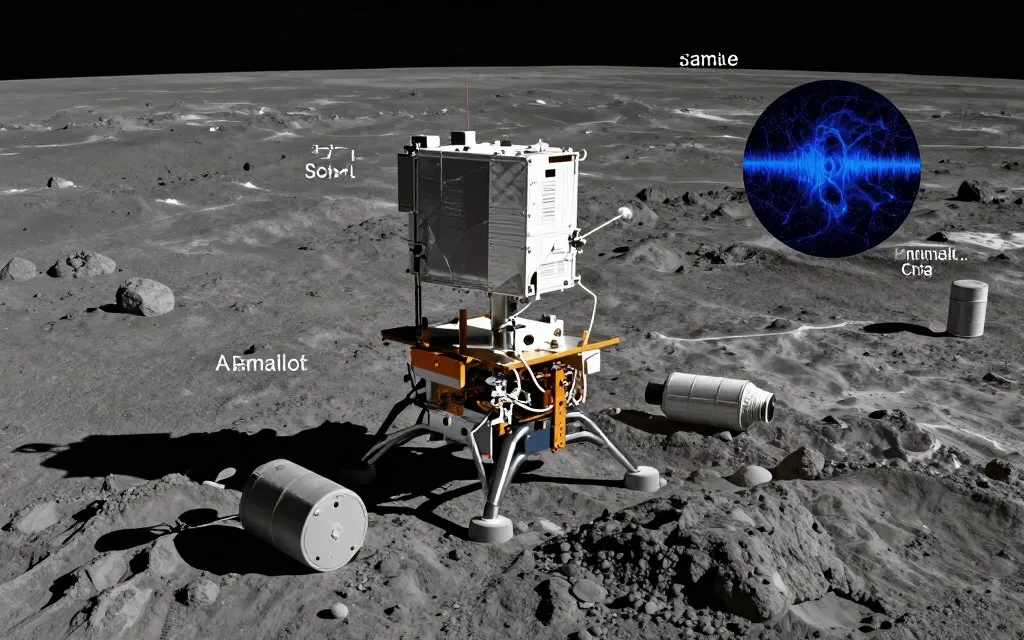
- Thermal study: The ChaSTE instrument measured temperature changes at different depths in the lunar soil.
- Seismic study: The ILSA instrument recorded vibrations and small movements around the landing area.
- Plasma study: RAMBHA-LP examined the density and movement of charged particles near the surface.
- Element analysis: Pragyan used instruments to identify materials in lunar rocks and soil.
- Navigation testing: The mission demonstrated precision landing and rover movement in a difficult region.
One notable result came from Pragyan’s laser-induced breakdown spectroscope. It confirmed the presence of sulfur in the landing region, along with elements such as aluminum, calcium, iron, chromium, titanium, manganese, silicon, and oxygen.
The mission did not directly confirm accessible water ice at its landing site. However, its work supports broader studies of the south pole, where permanently shadowed areas may preserve water ice. That water could one day support fuel production, life support, or long-duration missions.
India’s growing role in future lunar exploration
Chandrayaan-3 strengthened the reputation of the Indian Space Research Organisation and showed the value of careful engineering after a difficult earlier attempt. The mission also demonstrated that advanced space research can be completed with a practical design and controlled cost.
For India, the achievement has importance beyond national pride. It encourages students to study science, technology, engineering, and mathematics. It also expands opportunities for companies that build sensors, software, propulsion systems, communications equipment, and other space technology.
The mission’s data will help scientists compare the south pole with other lunar regions. Its findings may guide future robotic missions and support international plans for sustained activity on the moon. India’s next lunar missions are expected to build on this experience, while proposed human spaceflight programs may benefit from stronger landing and navigation expertise.
Chandrayaan-3 was more than a landing. It was a carefully planned demonstration of resilience, precision, and scientific ambition. Its successful landing moon achievement opened a new chapter for Indian space exploration and added valuable knowledge to humanity’s study of the nearest world beyond Earth.