The color of the oceans has altered due to the climate crisis

Earth’s ocean is not changing color in one simple, uniform shift. Yet satellite records show a clear global trend: many ocean regions have become measurably greener over the past two decades. The change is subtle to the human eye, but it reveals important shifts below the surface.
These changes connect climate, plankton, marine ecosystems, and the carbon cycle. They also show how satellites can detect large environmental patterns that ships and buoys may miss.
Ocean color change due to the climate crisis in satellite records
A 2023 study in Nature analyzed data collected by NASA’s Moderate Resolution Imaging Spectroradiometer, or MODIS, aboard the Aqua satellite. Researchers examined ocean color measurements from 2002 through 2022. They found that more than half of the world’s ocean surface, about 56%, experienced a significant color change during that period.

The most noticeable changes appeared in tropical and subtropical waters. Many areas shifted toward green, although the direction and strength of the trend varied by region. This does not mean that all blue ocean water has turned green. Instead, the amount and balance of light reflected from the surface changed over time.
Ocean color measurements are sensitive to materials in the upper layer of the water. Chlorophyll absorbs blue and red light while reflecting more green light. For this reason, green water often suggests a greater presence of phytoplankton. However, color can also respond to suspended sediments, dissolved organic matter, depth, clouds, and sunlight.
“The changes in the ocean’s color reflect changes in the state of its ecosystems.” — B. B. Cael, National Oceanography Centre researcher
The study team compared color trends with changes in chlorophyll estimates. In several regions, ocean color changed even when surface chlorophyll did not show the same clear trend. That result matters because ocean color contains information beyond a single pigment measurement.
| Signal in satellite data | Possible meaning | Research caution |
|---|---|---|
| More green light | A shift in plankton or other materials near the surface | Green color alone cannot identify one species or cause |
| Lower blue reflectance | Changes in particles, dissolved matter, or water clarity | Clouds, sunlight, and viewing angle affect measurements |
| A repeated regional trend | A persistent ecological or physical change | Long records are needed to separate trends from annual variability |
| Color change without matching chlorophyll change | A change in plankton communities or other optical properties | Field samples are needed to explain the biological mechanism |
Phytoplankton, sunlight, and changing marine ecosystems
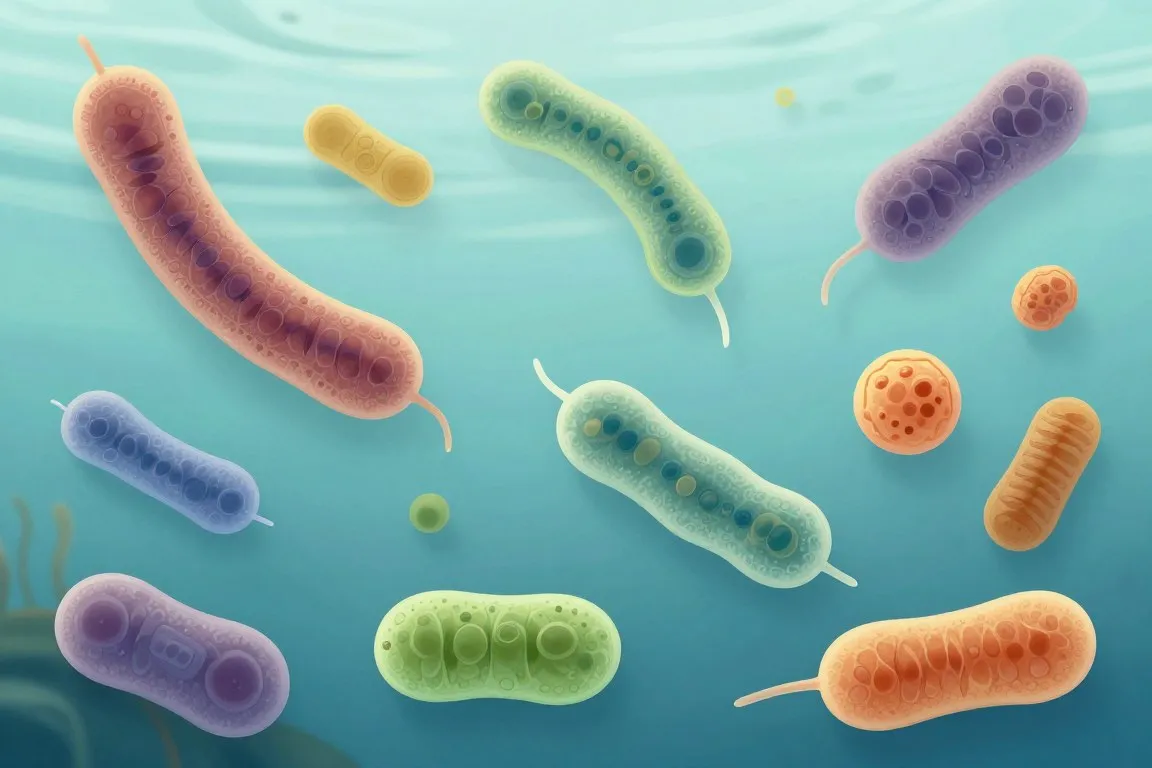
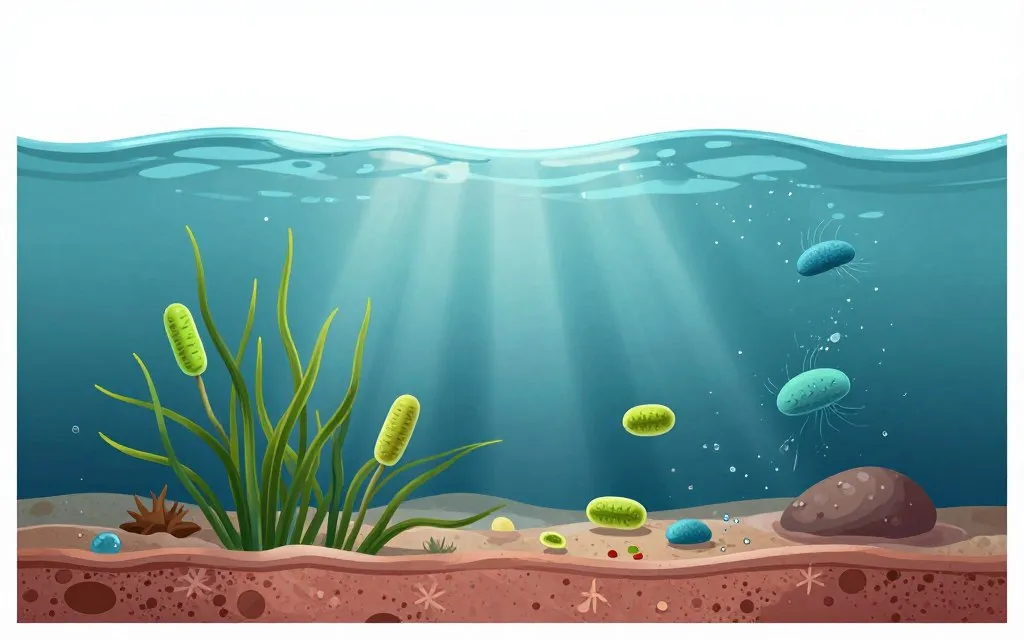
Phytoplankton are microscopic organisms that drift through the sunlit surface layer. Like plants on land, they use sunlight and carbon dioxide to make food. They form the base of much of the marine food web, supporting zooplankton, fish, seabirds, and larger animals.
A change in phytoplankton abundance, size, species, or location can alter the way ocean water reflects light. Different plankton communities contain different pigments. Some produce stronger green signals, while others may make water appear blue, turquoise, brown, or red under certain conditions.
Climate change can influence these communities in several ways:
- Warmer surface waters can become more strongly layered, making it harder for nutrients from deeper water to reach plankton.
- Changes in wind and currents can move nutrients and organisms into new regions.
- Melting ice can alter salinity, light conditions, and the timing of seasonal blooms.
- More rainfall and coastal runoff can carry sediment and nutrients into nearby waters.
These forces do not produce the same result everywhere. Some waters may support more plankton, while others may become less productive. A greener surface can indicate biological activity, but it is not automatically a sign of a healthier ocean. Excess nutrients may also fuel harmful algal blooms, which can reduce oxygen and damage marine life.
Ocean health, carbon, and the next generation of measurements
The ocean absorbs roughly one quarter of human carbon dioxide emissions and more than 90% of the excess heat caused by greenhouse gases. Phytoplankton contribute to this system by taking in carbon during photosynthesis. Some of that carbon returns to the atmosphere, while some sinks into deeper water when organisms die or are eaten.
Because of this connection, changes in ocean color may provide an early view of wider ecosystem changes. Scientists can use long satellite records to identify regions that need closer study. They can then compare those observations with measurements of temperature, salinity, nutrients, currents, oxygen, and marine life.
NASA’s PACE mission, launched in February 2024, adds stronger tools for observing ocean ecosystems. Its sensors can distinguish more detailed patterns in phytoplankton, aerosols, and clouds than many earlier instruments. PACE helps researchers study not just how much chlorophyll is present, but also the diversity and optical behavior of plankton communities.
Still, satellites cannot explain every cause on their own. A color changed over two decades may reflect climate-driven warming, natural variability, coastal runoff, circulation, or several forces at once. Scientists at NASA, the National Oceanography Centre, and other research groups combine satellite data with direct sampling to build a clearer picture.

The ocean color changed in measurable ways from 2002 to 2022, but the meaning of each regional shift must be carefully tested. The strongest lesson is that color is a living signal. It links light, chemistry, biology, and climate across an immense and changing ocean.